Taiwan Tourism Shuttle Bus Review: Taitung East Coast Line Day Trip 8101A 東部海岸線
Not driving in Taitung can make it a bit hard to see some of the more spectacular attractions on Taiwan‘s east coast as its sights are quite spread out in this rural area. Taiwan Tourism’s regular shuttle bus services are very useful for solo travellers or non-drivers as it’s a specially chartered bus tour that takes you to the main sights in the area for a very reasonable price. I hopped on the Taitung East Coast Line Shuttle Bus 8101A 東部海岸線 for a day trip up Taitung’s coast – here’s my review on what to expect on this bus tour.
If you’re further up north in Hualien, check out my experience on the Hualien East Coast Shuttle Bus instead which explores more of the eastern coast line in Fengbin from Hualien City down to Shitiping.
A side note that this isn’t sponsored – I paid for and did this tour out of my own pocket but I thought I’d share a more detailed review in case anyone else is considering whether this shuttle bus tour is for them.
About Taitung East Coast Line Bus
The Taiwan Tourism Board runs the Taiwan Tourism Shuttle Buses or the 台灣好行 (Tai Wan Hao Xing), which are basically chartered bus services that serve the main tourist attractions of different areas around Taiwan. This is especially useful for people who want an affordable and easy way to see the sights without having to worry about transportation, especially when some of these sights are out of the way.
In Taitung there are several routes available that start from Taitung City, going towards Luye as well as the sights along the coast. This particular route Taitung East Coast Line 8101A is an 8 hour bus tour – pretty much a full day trip from 830am – 515pm – that takes you 56km along the Taitung coast line up to Chenggong and back to Taitung City. There are other shorter routes and half-day journeys as well.
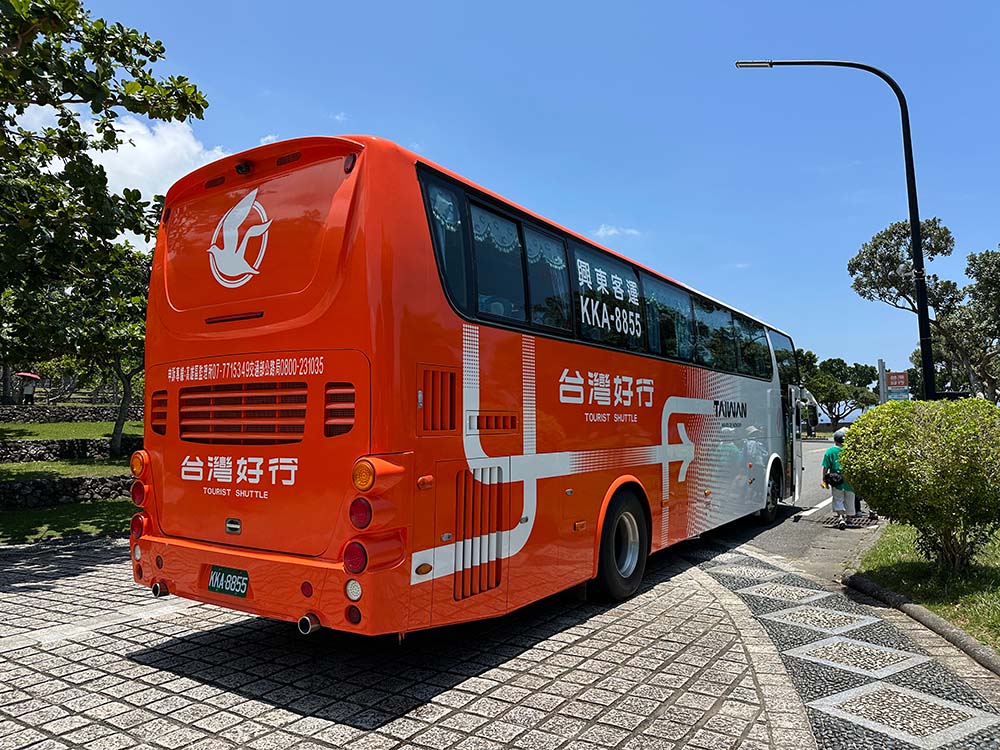
The Taiwan Tourism Shuttle is not quite a true guided tour – there are fixed stops and set durations that the bus will stop for at each location, but typically you’re left to your own devices to explore as much (or as little) as you want at each stop. You just need to make sure you’re back at the bus on time or risk getting left behind as they follow quite a strict schedule that’s GPS monitored.
Each bus has a main coordinator who also provides commentary about the locations and what to expect, but it typically all the talk is done all in Mandarin, so non-mandarin speaking folk might not get so much out of these buses other than the convenience of transport.
On my tour, besides myself as a Chinese Singaporean, there were also people from China, Hong Kong, Japan (I think they could speak some Chinese) as well as American-born Chinese, so we did have an international mix of Chinese diaspora on board.
Check out my IG Story Highlights for a visual look at this shuttle bus tour.
Taitung East Coast Line Shuttle Bus Route
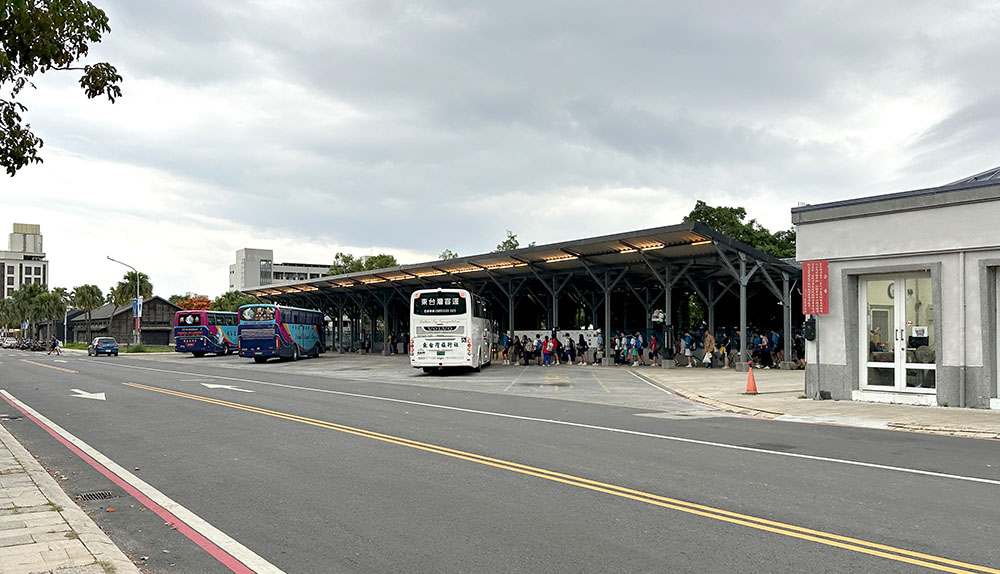
This shuttle bus starts from Taitung Bus Station at 830am (near Tiehua Village in the main downtown area) before heading up to Taitung Train Station. Then it embarks on the journey up Taitung’s East Coast all the way to Sanxiantai before heading back. Guests can embark/disembark at both Taitung Train Station and Taitung Bus Station.
I took this tour in May 2026 and it was a pretty hot day throughout, only getting slightly gloomy at our last stop, but it was nice to have an air-conditioned bus to get around.
1. Fugang Geopark 富岡地質公園 / Xiaoyeliu 小野柳
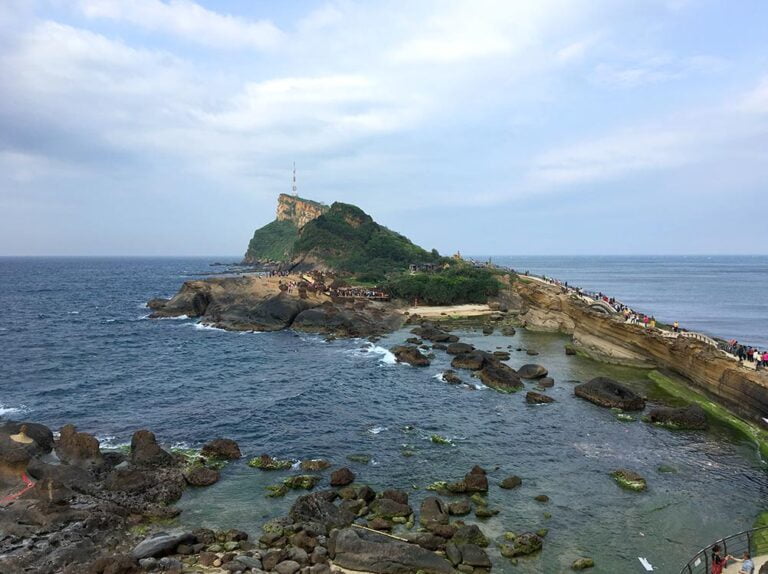
First stop of the day was a 20min drive from the Railway Station to Fugang, home to Taitung’s ferry harbour (if you’re headed to Lyudao or Lanyu) and very close to Fugang Geopark, better known by its nickname Xiaoyeliu as the rocks here have some resemblance to the more famous Yehliu in Wanli along Taiwan’s North Coast.
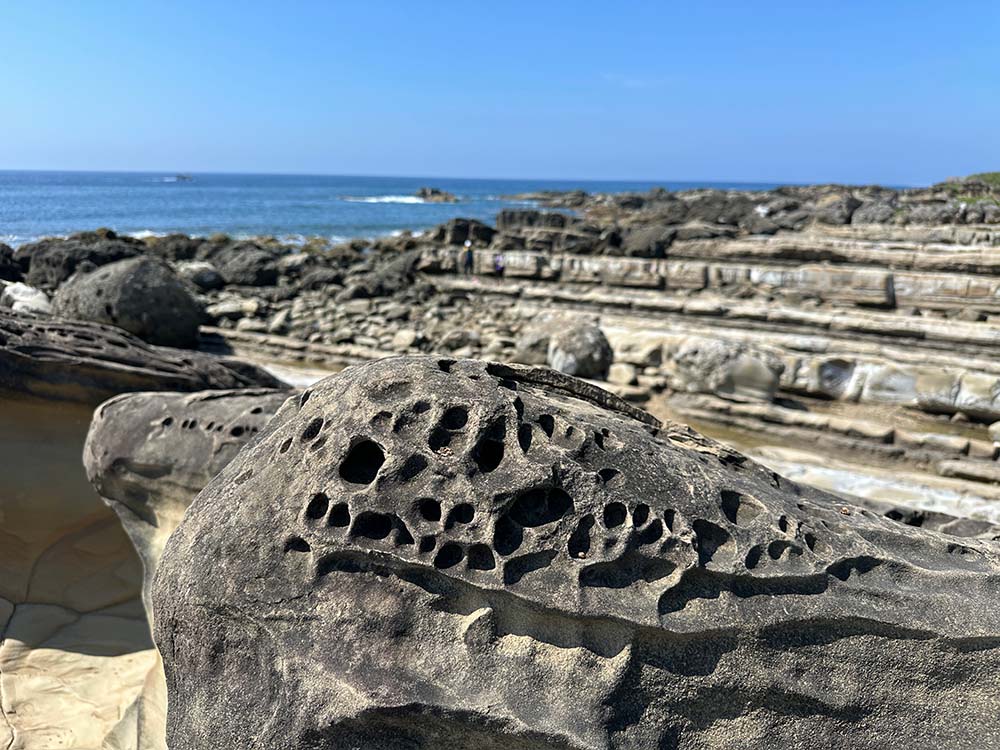
The park itself isn’t particularly big. The coach carpark is close to toilets and shops, and there are some paved boardwalks that take you out to the coastline. There’s not a lot of shade especially when you’re out on the rocks and you need decent shoes as it’s not paved there, so I mostly just wandered along the boardwalks, took some pix and enjoyed the seaview.
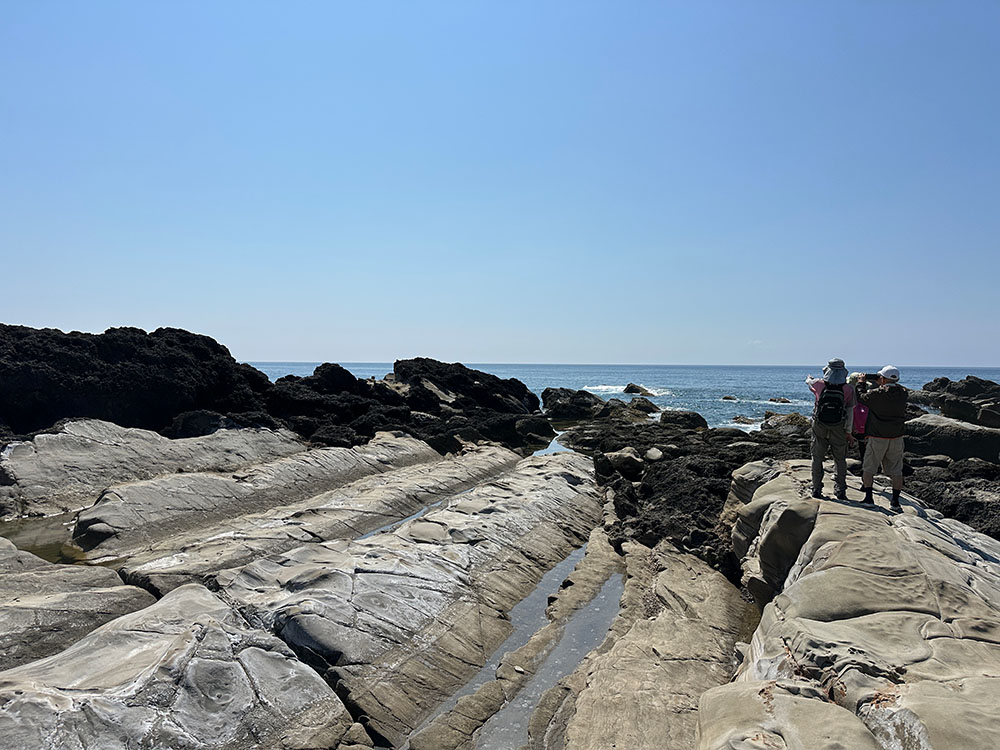
Ice cream count: 1 – it was a hot, hot day!
Fugang Geopark 富岡地質公園 / Xiaoyeliu 小野柳 [Google maps]. The bus stops here for 45mins.
2. Nagisa Bridge Rest Stop (Du Qiao) 渚橋休憩區
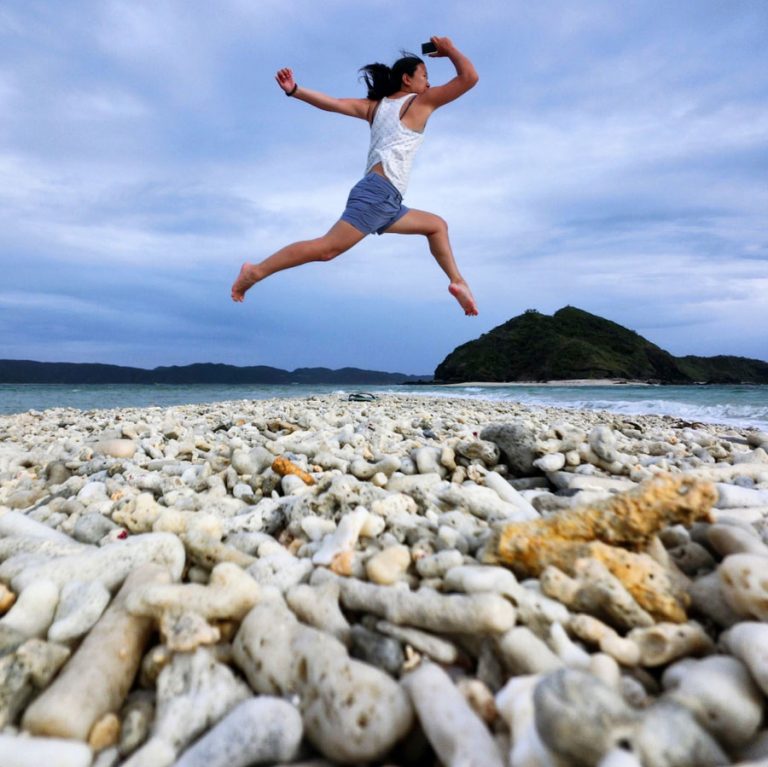
A short 10min drive brings us into Donghe where we stop at the Nagisa Bridge or Du Qiao Rest Stop. This spot seems to be more of a photo op and spot to grab a coffee/toilet break. The main sight here is a sculpture to take photos with as well as a little stair that leads you down to the pebble beach. We don’t spend a long time here, just a quick leg stretch and photos and we’re off again.
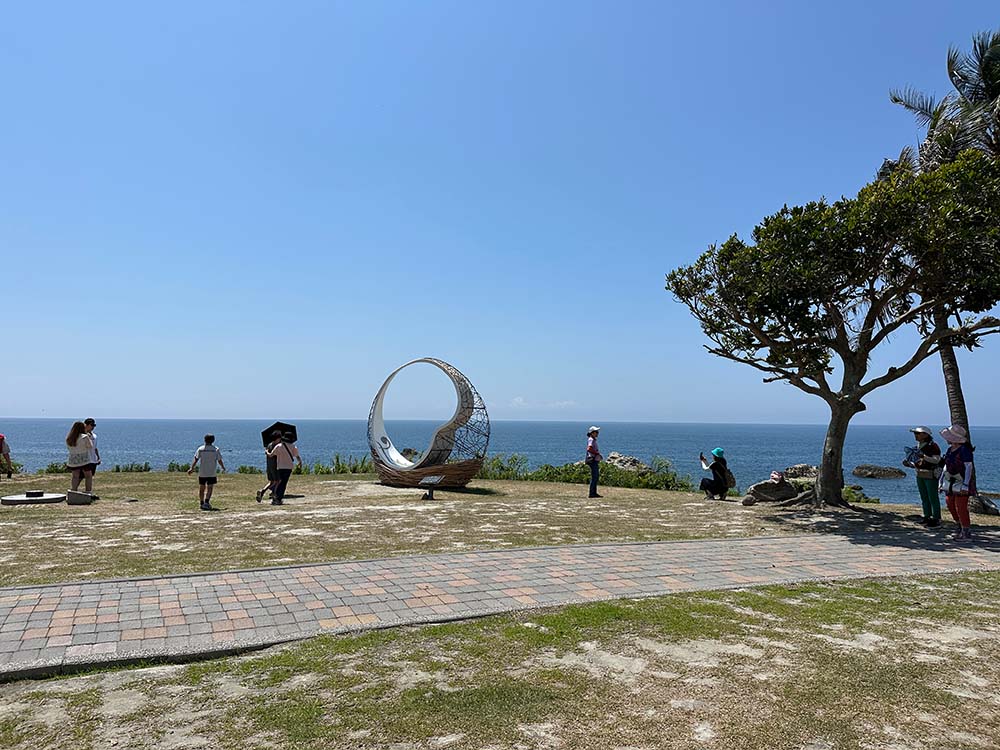
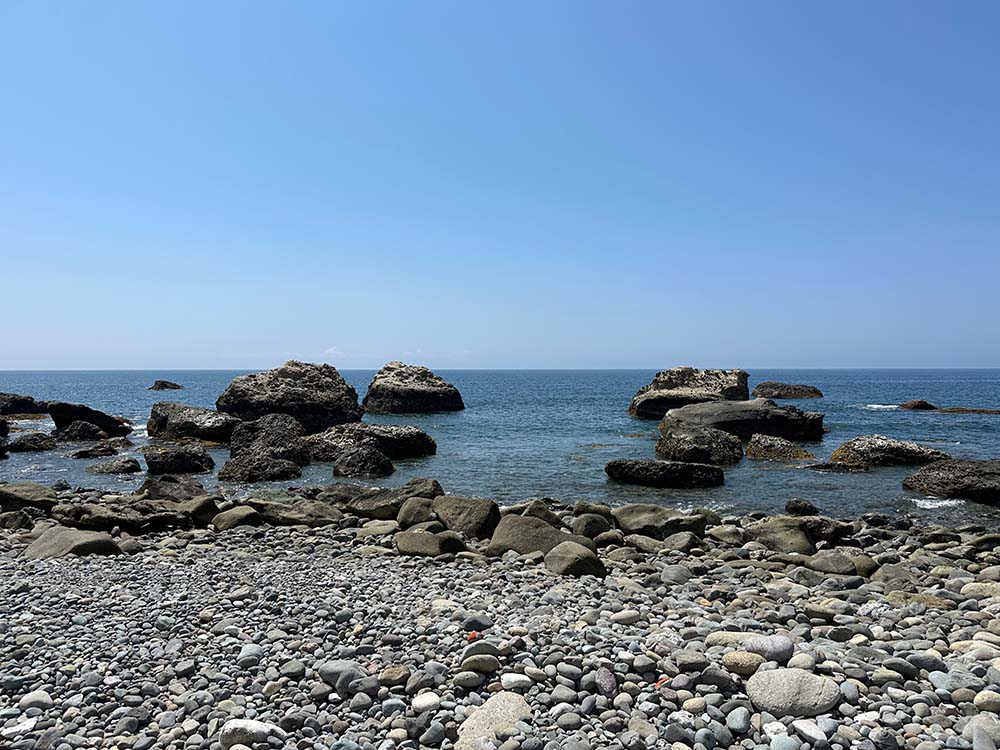
Nagisa Bridge Rest Stop (Du Qiao) 渚橋休憩區 [Google maps]. The bus stops here for 20 minutes.
3. Amis Folk Centre 阿美族民俗中心
We keep driving up northwards along the coastline through Donghe, passing by the surfer town Dulan though we don’t stop here. It’s about half an hour till we take a turn off the coast up a bit of a hill to the Amis Folk Centre.
Taiwan has plenty of indigenous people who were here before the Han Chinese came along, and many of these groups can be found in Taitung and the eastern coast. The Amis or A Mei Zu 阿美族 are the largest of the 16 officially recognised indigenous groups in Taiwan and the ones who settled along the coast have a seafaring history.
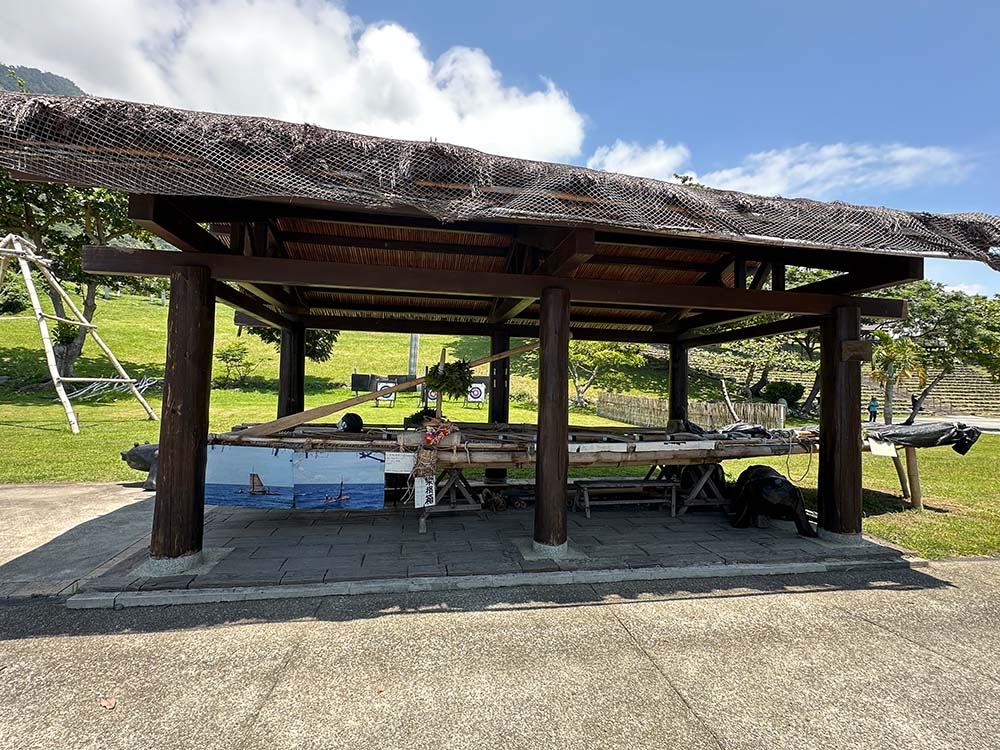
The Amis Folk Centre is a cultural centre and outdoor museum of sorts which showcases the Amis way of life through artefacts, performances and there are some little shops here too. The Amis live in the adjacent village of Du Li. The centre was’t particularly busy when we visited on a Friday afternoon, mostly just our bus load of people, so I’m not sure what the experience might be like if you came on your own. We had a bit of time to grab some food (ice cream #2 for me), poke around the shops and exhibits a bit before they started the performance.
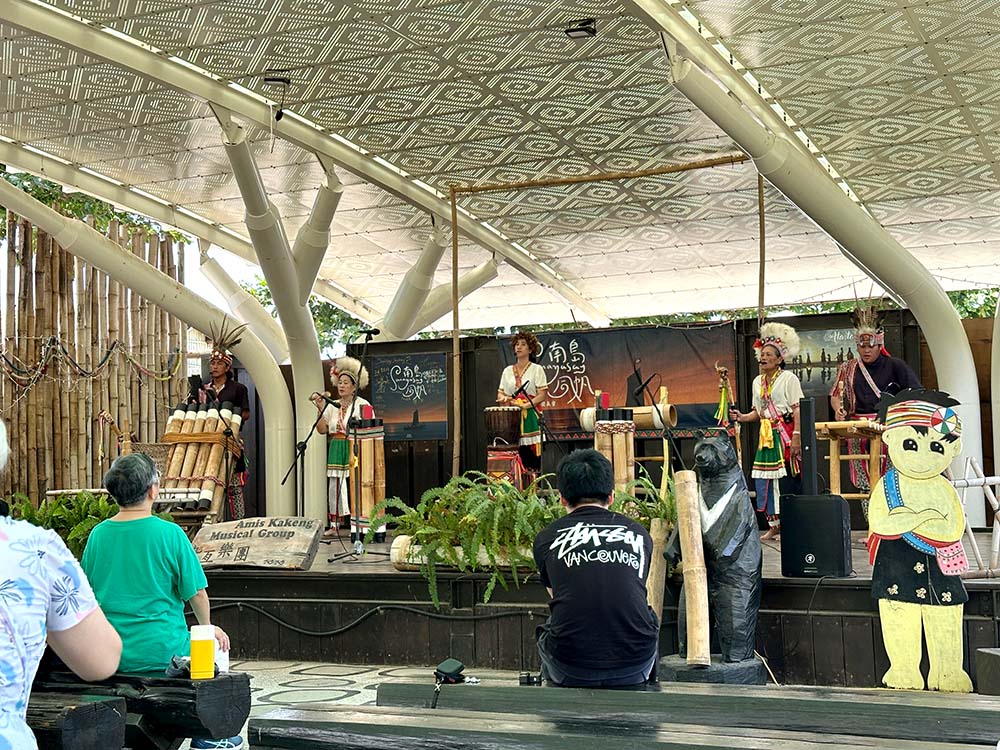
The emcee spoke in Mandarin – you can hear that the indigenous people speak with a bit of an accent – and they played instruments (a nose flute!) and sang for us. We learned that the Amis pass along traditions through song and stories. They had a welcome cannon firing for us, and a little donation box that people could (and most people did) donate to.
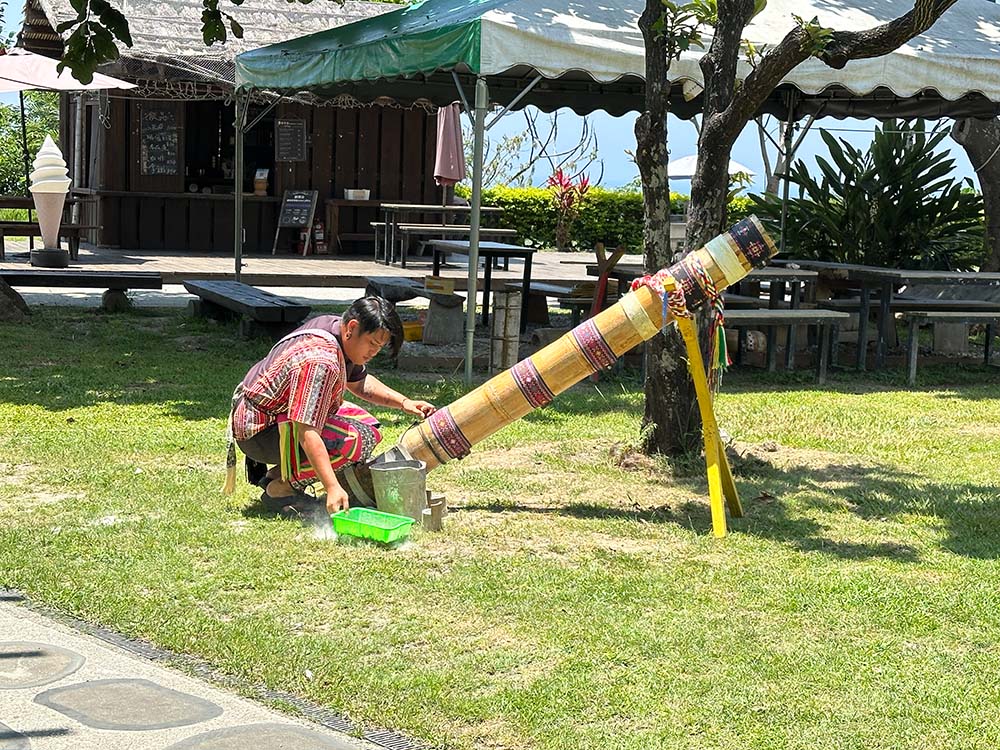
Amis Folk Centre 阿美族民俗中心 [Google maps]. We stopped here for about an hour.
4. Chenggong Fishing Pier 成功漁港
We keep heading up north and find ourselves in Chenggong, and this is where we stop for a lunch break. This portion is a bit extended as the next stop (Sanxiantai) is undergoing some refurbishment, so that additional time has been allocate here instead.
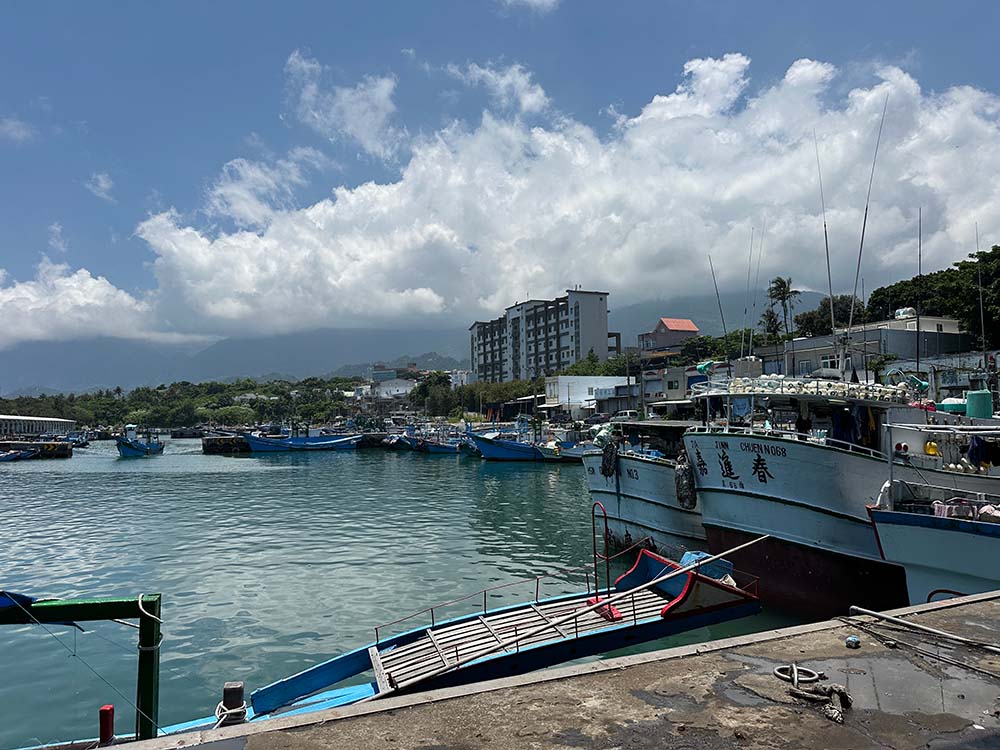
First we head over to the Xingang Fishing Pier 新港漁港 which is shaped like a narrow tall boat. Inside here, we watch the fishermen unload their catches onto the ice strewn on the market floor and sell them off. There are forklifts and crates and it’s bustling and all kinds of fishy smelling.
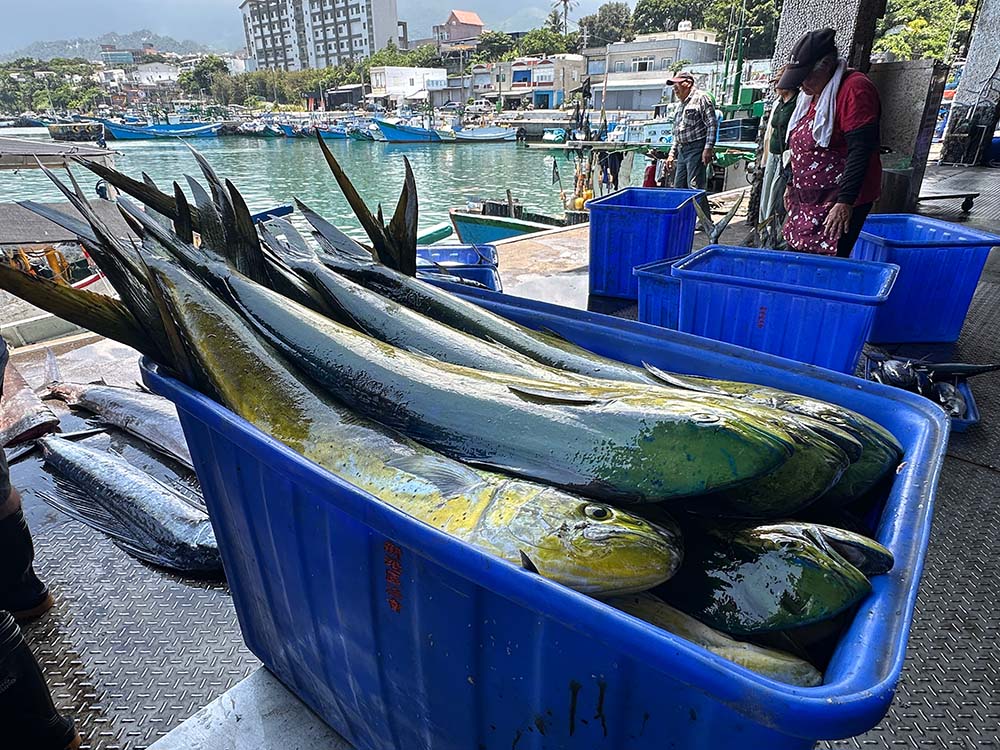
May is the season for Dolphinfish or Mahi-mahi – the local name is Gui Tou Dao 鬼頭刀 or Ghost Head Knife, as well as bluefin tuna and we saw pretty large specimens laid out on the floor.
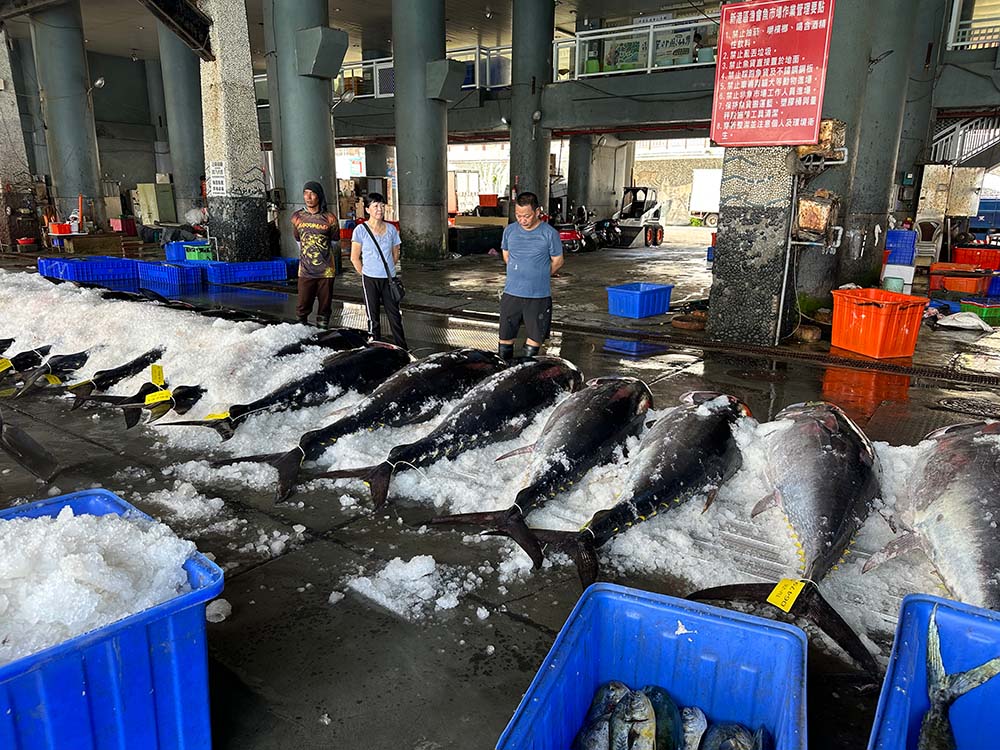
Chenggong Fishing Harbour / Xingang 成功漁港/新港漁港 [Google maps]
I made friends with a Taiwanese family on the tour – an older couple and their brother from Taichung who are in the area to attend a relative’s wedding. They kindly adopt me and let me tag along for lunch, and also refused to let me pay. That also means I got to try some quite interesting seafood which I probably wouldn’t have eaten on my own.
Sashimi is of course popular since it’s super fresh along with some prawns. The seaweed soup was great, and the fish stomachs not as icky as I thought it might be. I’m not fond of the fried fish roe, and we even tried a mahi-mahi bun from a food stall just outside.
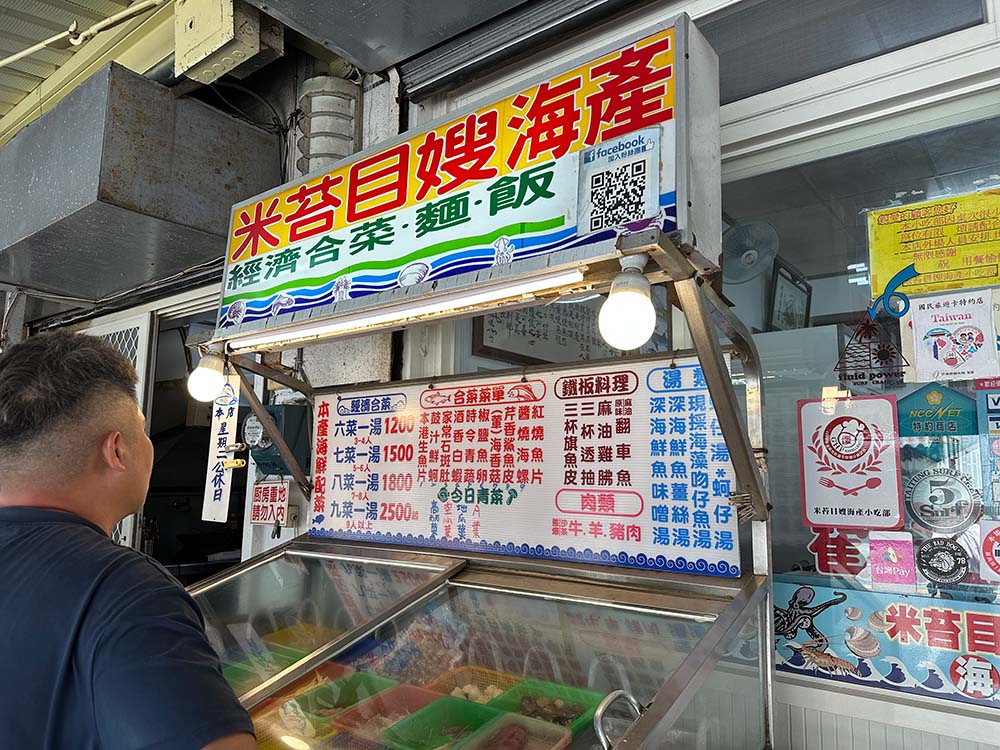
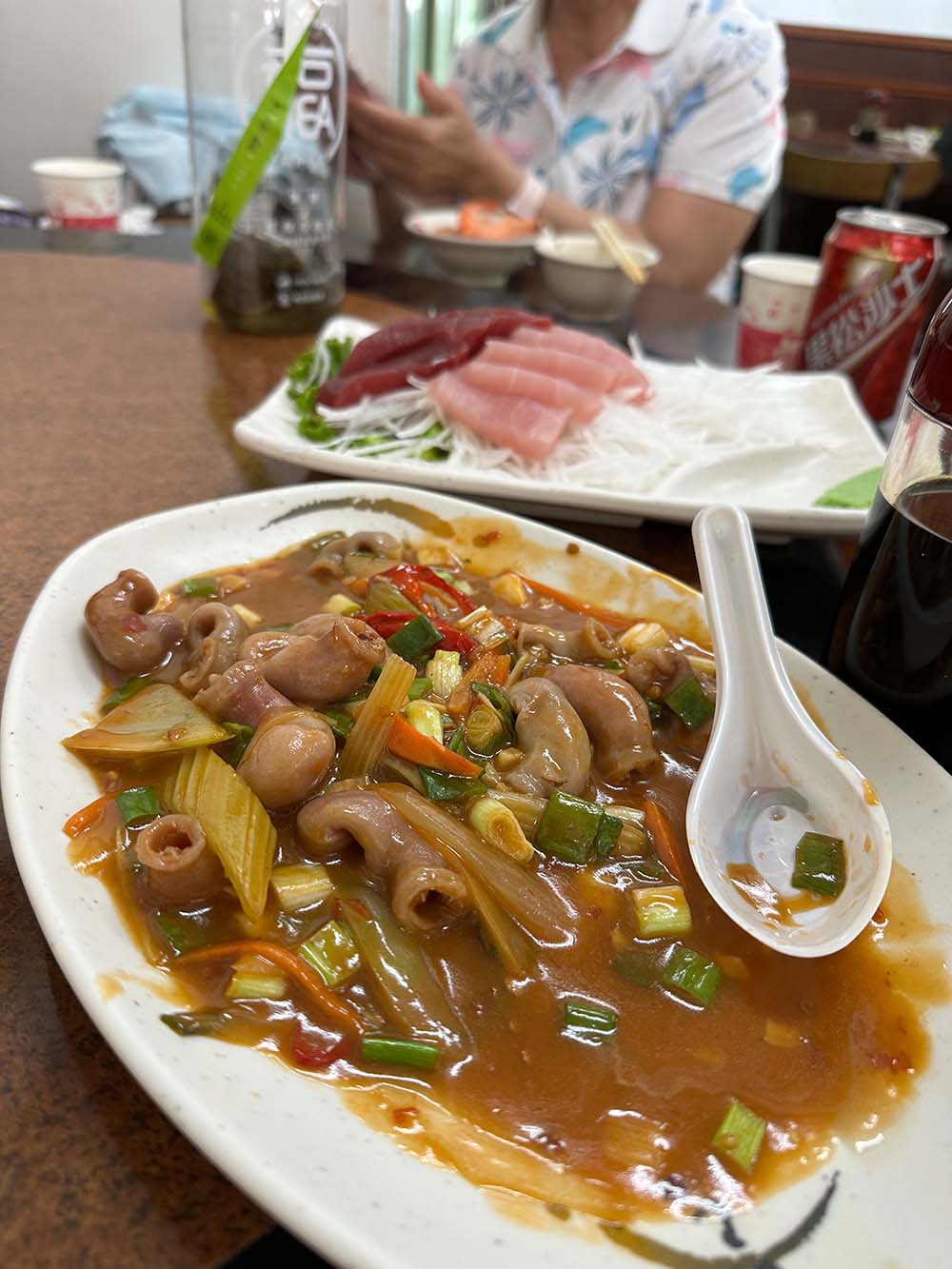
Mi Tai Mu Sao Hai Chan Dian 米苔目嫂海產店 [Google maps]
After lunch, we spent some time at the Aquatic Ecology Research Centre 水族生態研究館. They had tanks with clownfish which apparently Taiwan has done a very good job of studying and breeding, as well as some other fish and a video showcasing some of the research done around these parts. It’s not a true aquarium – don’t go expecting fancy tanks and colourful fish, but it’s enough for a bit of a diversion and sit down post-lunch (also some air-con, water points and toilets!)
A note that there is another building nearby called the Marine Environmental Education Centre 海洋環境教室 and they offer a guided afternoon tour, but unfortunately we didn’t realise it was a separate building so we missed out on that, ah well.
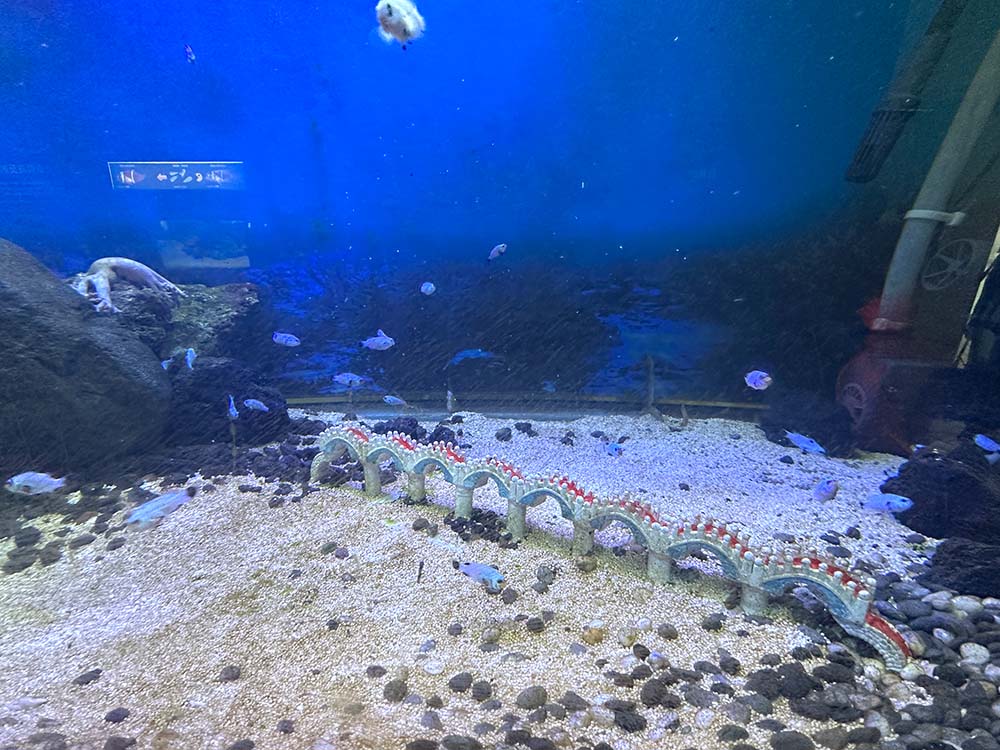
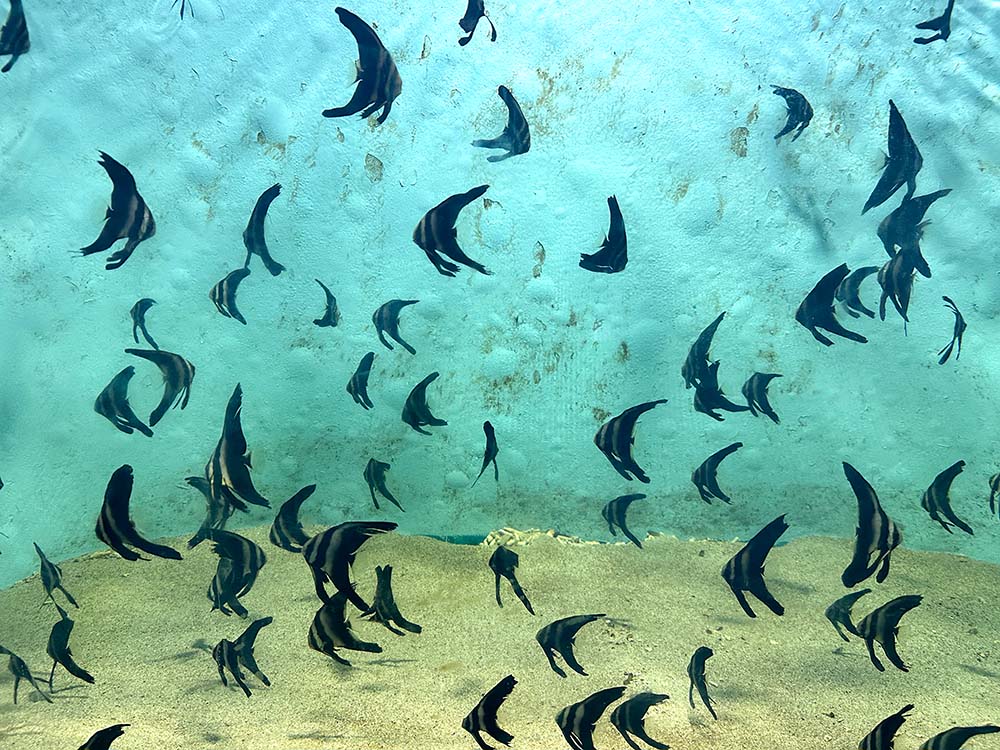
Shui Zhu Sheng Tai Yan Jiu Guan 水族生態研究館 [Google maps]
Before the bus arrival, we pop into the Kurushio Shop 黑潮旗跡 which is a souvenir shop selling all sorts of locally produced souvenirs, Taitung related goodies and even vacumn packed seafood. Here is where I indulged in ice cream #3 for the day~ I was particularly amused by the Dolphinfish shaped snacks.
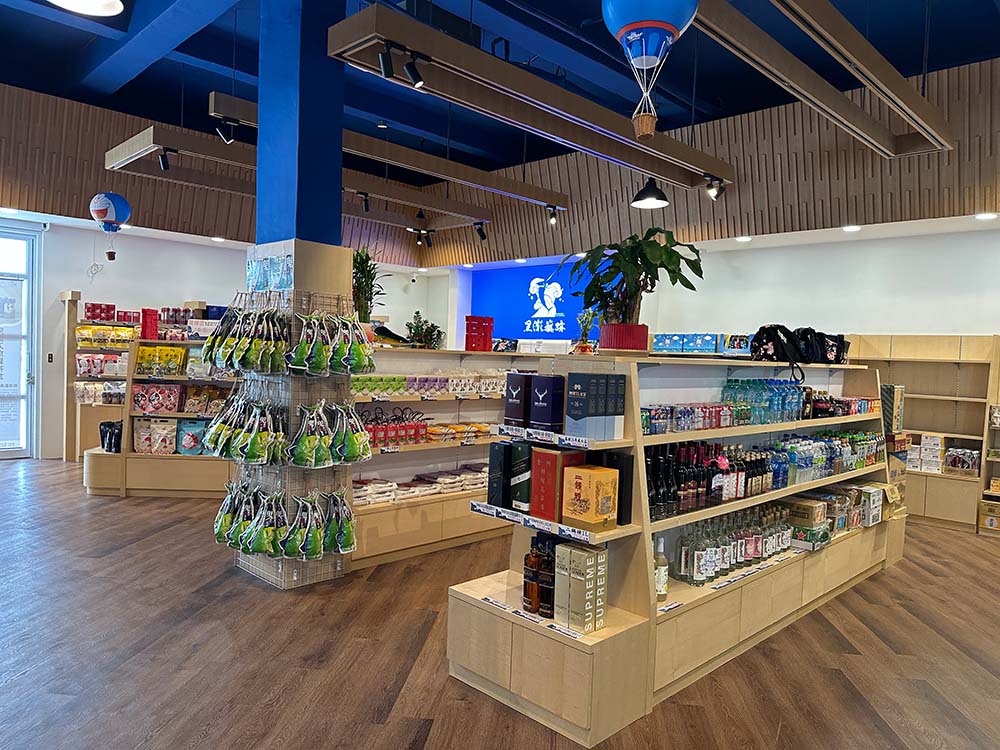
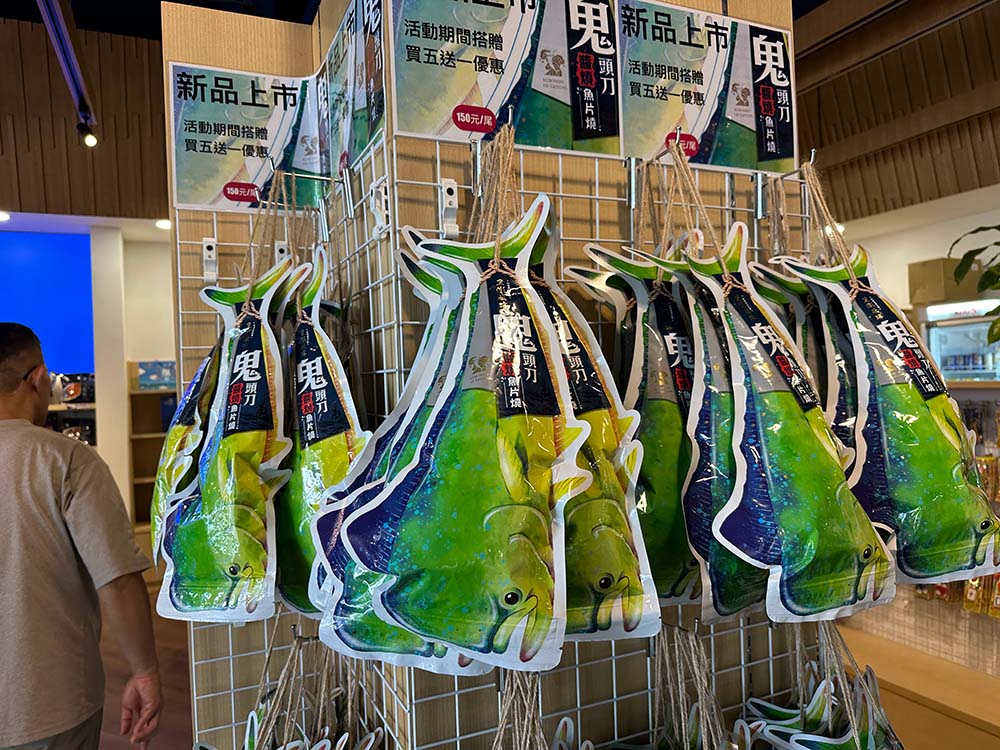
Kurushio Shop (Hei Chao Qi Ji) 黑潮旗跡成功門市 [Google maps]. We stopped here for about 2.5 hours.
5. Sanxiantai Bridge 三仙台
The highlight of the trip was its most distant point: Sanxiantai where a lovely bridge connects the mainland to an islet. Sanxiantai (3 deities platform) because there are 3 large rocks on the islet that supposedly reference 3 of the 8 deities in Chinese history.
Normally the stop here is a bit longer to give you time to cross the bridge and explore the islet a little bit, but they just started doing some repair work (they closed in May 2026 so we just missed it, and will only reopen end 2027!) so we were only able to admire the view of the bridge from the shore. The bridge is very beautiful with 8 arches and meant to look like a dragon, so it was a bit of a pity we could only admire it from afar.
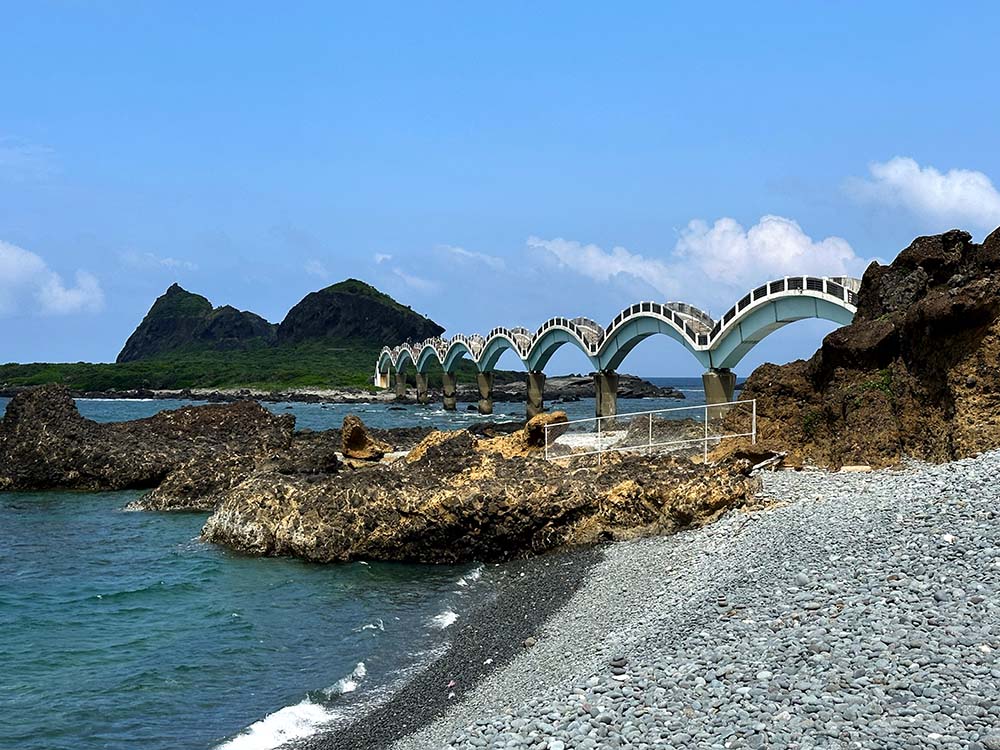
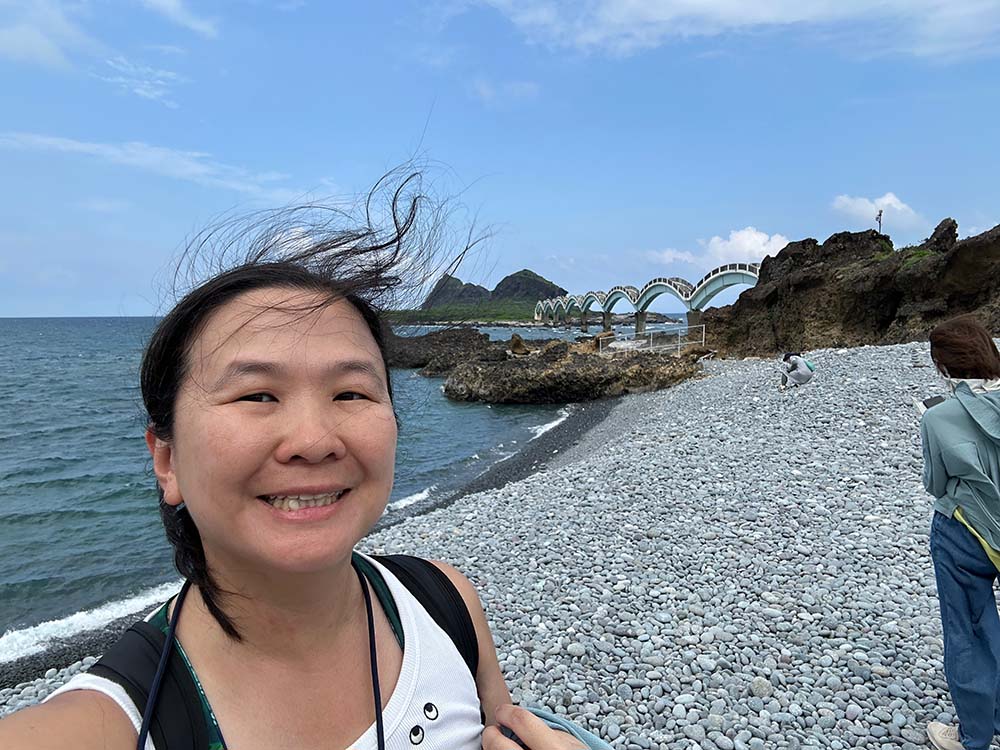
There are boardwalks on the island that lead you to various spots like caves and trails – Josh Ellis has some pretty good photos and writeup of the stories and legends associated with the island.
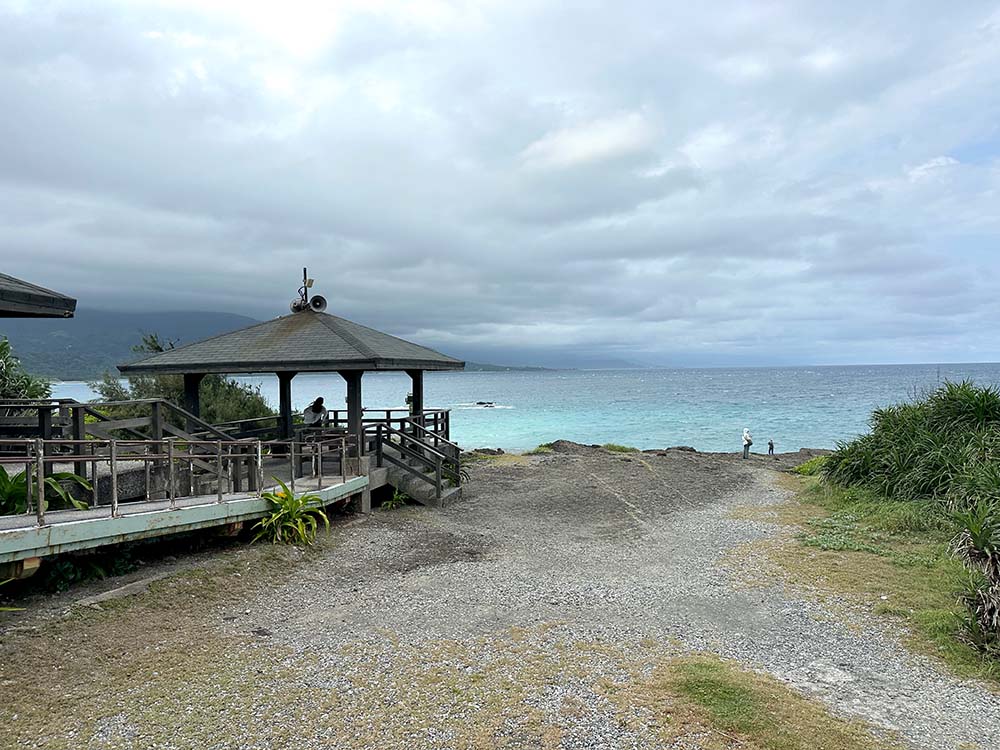
Sanxiantai 三仙台 [Google maps] We stopped here for about an hour, but if the bridge was functional you get about 1.5 hours here.
6. Water Running Upward 水往上流
Sanxiantai is the furthest point on this tour, so we head back down south past all the things we had seen along the coast until we get close to the Nagisa Bridge Rest Stop. A little before that, we make our last stop of the trip at Water Running Upward, or what our guide jokes is the most useless tourist attraction in the area.
This rest stop has a water feature (formerly a farm irrigation system) along the hillside that somehow makes it look like the water is flowing against gravity and going upstream. I’m…. not particularly impressed. The water feature is a little narrow exposed drain that runs around the hilltop, and you can see lots of leafs and pond skaters in it.
There are shops and toilets around here as well, so I’d stop here as a rest stop but luckily this was just a very short pitstop before we headed back to Taitung Train and Bus Stations.
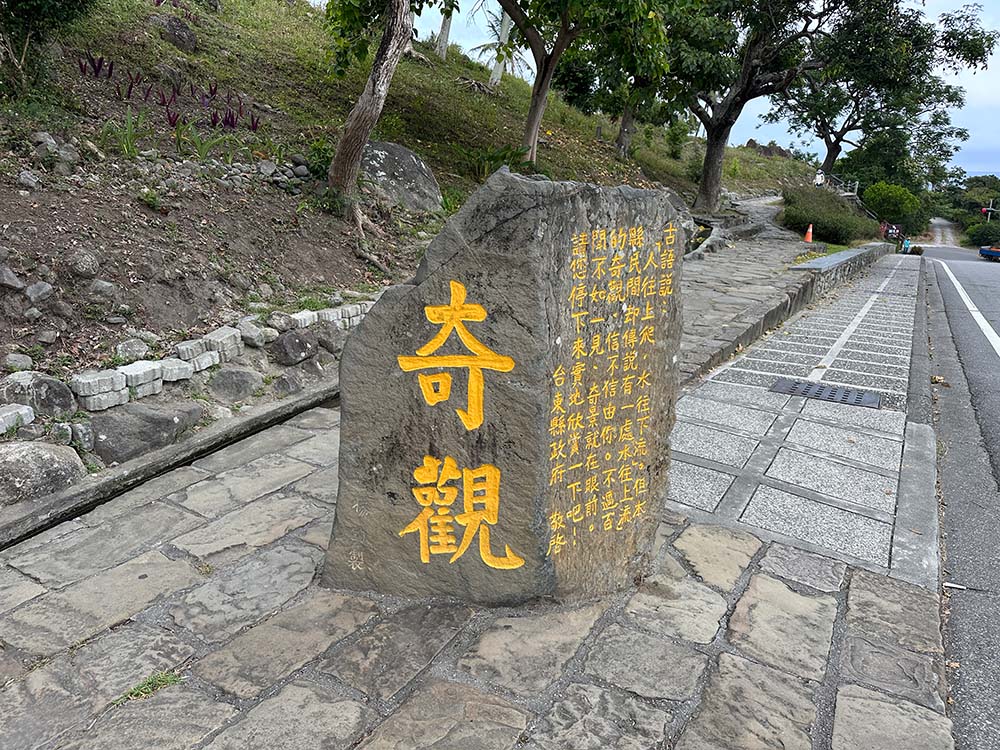
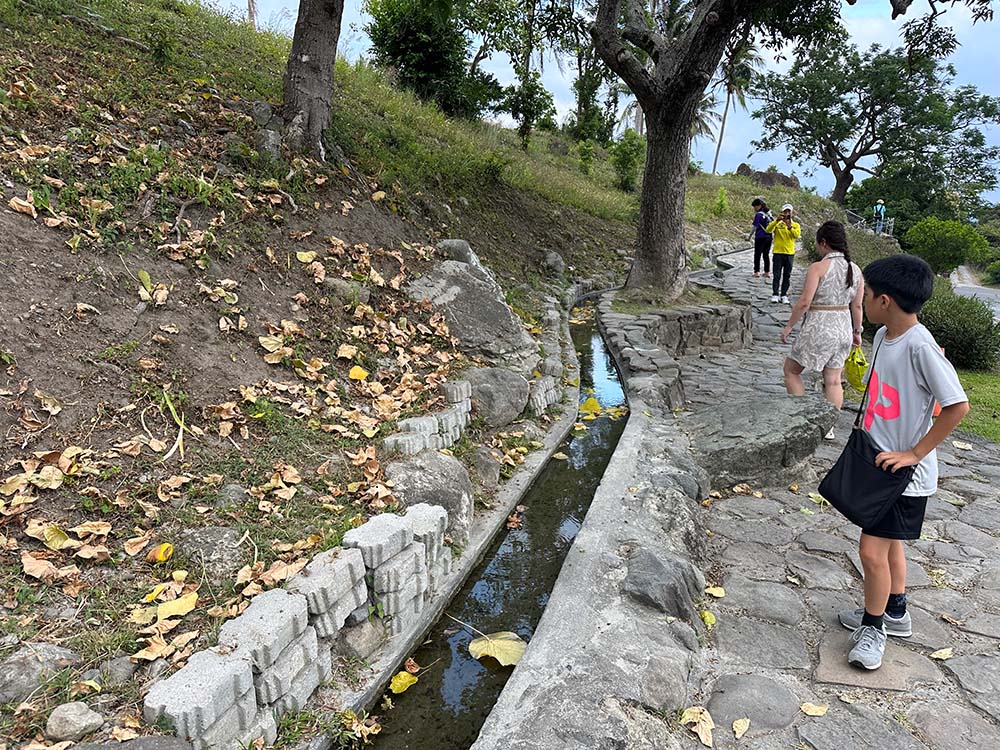
Water Running Upward 水往上流 (Shui Wang Shang Liu) [Google maps] We spent just 10 mins here.
How to book Taitung East Coast Line Shuttle Bus Tickets
More info about the East Coast Line Day Trip on Taiwan Tourism
Book online
This is the best way to guarantee a seat, but there are limited numbers and these get booked up quite quickly. But if you know way in advance what your itinerary is like, this is a good option.
Buy ticket on day
I decided to do this tour quite last minute, so while I could technically board the bus at Taitung Train Station (near my guesthouse), I decided to head down to Taitung Bus Station instead to try and guarantee myself a seat since it is the very first stop. I also did this tour on a Friday, so I was probably lucky that there was availability – you might not be so lucky during the weekends/holidays.
At Taitung Bus Station, there is a counter inside the bus station itself, but the instruction taped to the counter window was to buy the ticket on the bus itself, so I joined the queue and bought my ticket from the bus driver directly as I boarded the bus.
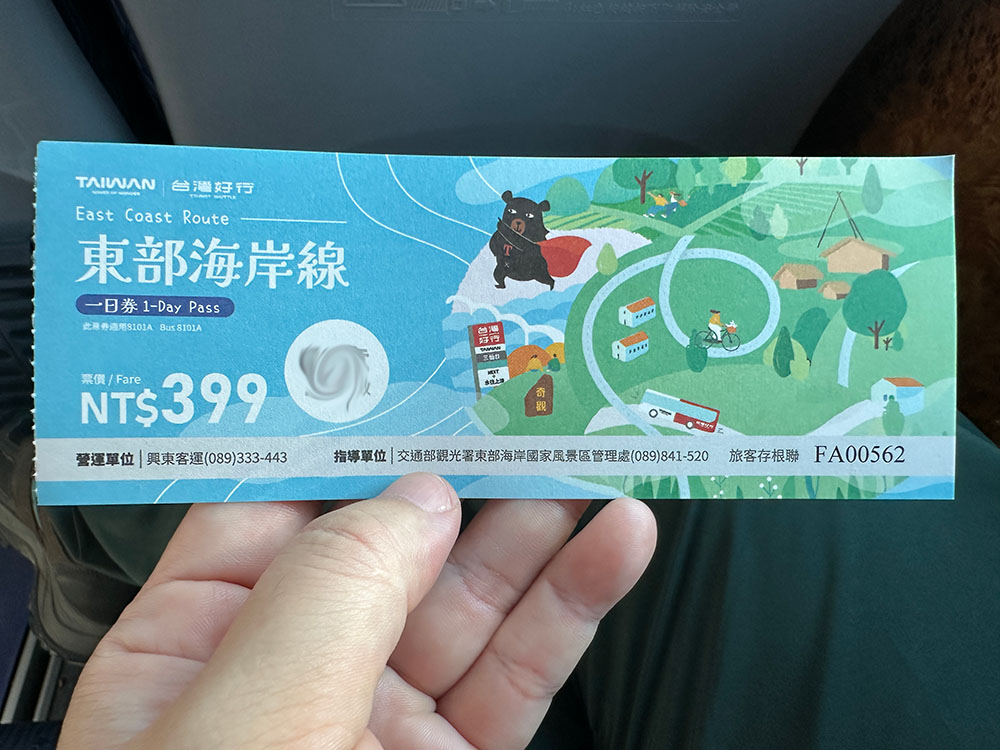
You can technically use your EasyCard or other transportation cards, but you will need to tap in and out everytime you embark and disembark. The tour ticket is more straightforward in that you just purchase it one time, and you have the additional benefit of being covered by insurance in case of any injuries/emergencies during the tour.
My ticket cost 399 NTD which I paid for in cash to the bus driver.
Have you explored Taitung’s Coast? Tell me what I missed! In the meantime check out some other Taitung and eastern Taiwan posts: