
Last Updated on 14 September, 2026

Yes there are museums in Singapore that tourists can visit for free. While most of Singapore’s major national museums charge an entrance fee for tourists (though they are mostly free for Singaporeans), there are a handful of smaller museums, heritage galleries and cultural attractions that don’t require any entrance fee no matter where you’re from, as well as some major museums that have free spaces that you can visit without an admission fee.
As a Singapore tourist guide and an arts lover, I’m often asked which museums and galleries are worth visiting in Singapore. I love a good museum when I travel – they are great places to better understand about the local history, culture and heritage. But I also know that not everyone wants to spend a bunch of hours or a chunk of their travel budget on a museum, especially on limited time and a packed Singapore itinerary.
So I created this guide that lists the best free museums in Singapore. I’ve also included some of my favourite museums that have free areas or exhibitions that are worth checking out, so you can choose what works best for your budget, schedule or interests.
I’ve been to all these places in person – click each entry to see more detailed reviews of each free museum, gallery and cultural attraction that I’ve visited. I’ll continue to update this list as I discover more spots, but if you rather a local show you around, you can also engage me as a Singapore tourist guide.
Free museums and galleries in Singapore by neighbourhood
I’ve categorised the various attractions by neighbourhood, so if you’re already planning a visit to Chinatown for example, you can easily add on any of these spots to your existing itinerary quite easily.
Bras Basah / Civic District
The former British and European quarter is the place to go for Singapore’s national museums, galleries and historic architecture
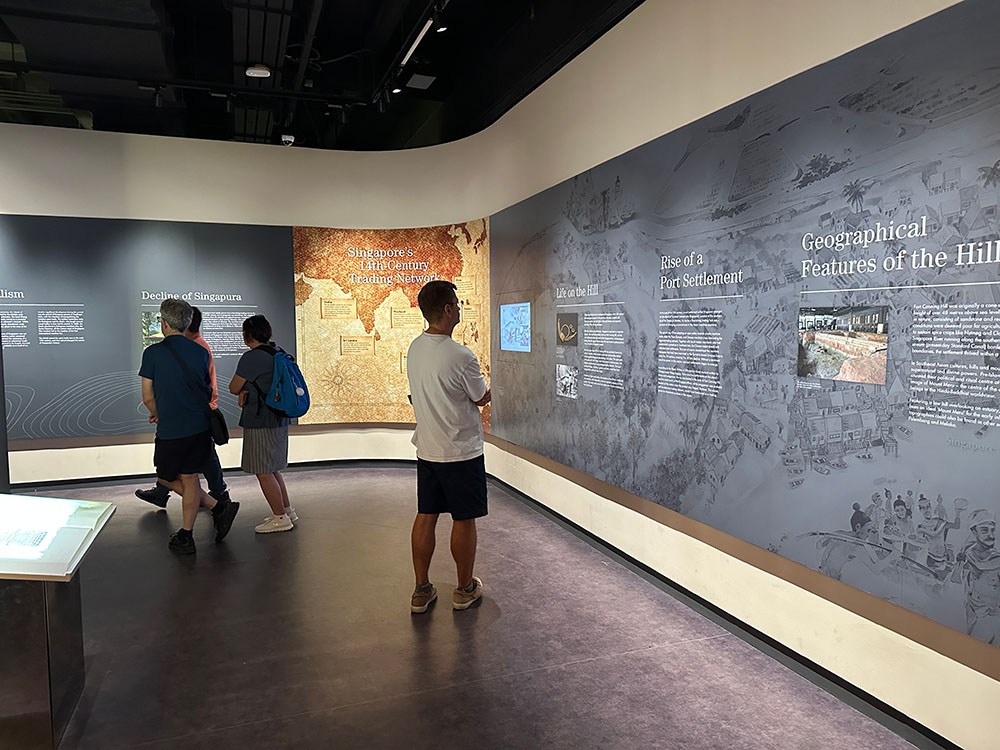
Fort Canning Heritage Gallery
Completely free for tourists
Dive into the mysteries of Fort Canning and Singapore’s early history
What is this: Located in a colonial building on the the top of Fort Canning Hill, this Fort Canning Heritage Gallery explores the long history and legends of this key site from its days as Temasek to its time under British rule.
Why visit: Fort Canning Hill is historically significant in early Singapore history, particularly during early British rule and the WWII era, but this gallery is one of the few places that also delves into the pre-British era, in particular the kingdoms around 14th century Malaya.
Good to know: The gallery is indoors and air-conditioned with seating, so it’s a welcome break if you’re exploring the Fort Canning Hill area. The hill itself is worth a walk and its sights are free – see the gravestones of early British settlers along the hillside, and see some of the spices and plants that brought the Europeans here in the first place.
Want more? If Singapore’s history has you piqued, consider getting a ticket to the nearby National Museum of Singapore at the foot of the hill which offers the most comprehensive look at Singapore’s history. If you’re curious about the British surrender during WWII, go check out the Battlebox for an audio tour in the former British command centre.
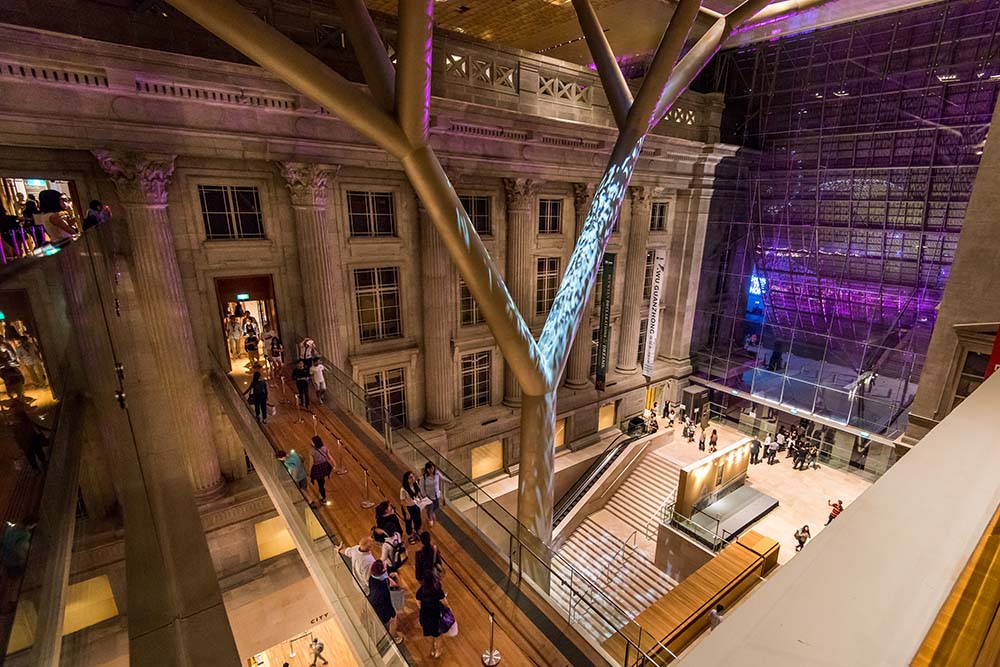
National Gallery Singapore
Partially free – hallways and some galleries are free to explore, most exhibitions require an entrance fee
Walk through the halls of Singapore’s historic former Supreme Court and City Hall buildings for free
What is this: National Gallery Singapore (NGS) is not only home to the world’s largest collection of Southeast Asian modern art, but housed in beautifully restored colonial-style buildings that are historically significant. While the main galleries with the art require an admission ticket, you can still explore parts of the building and see select artworks for free.
Why visit: Even if you’re not interested in the art, the restored architecture and historical significant spaces around the building are worth a peek, like the old courtrooms, grand staircases and even some of the holding cells for prisoners are all publicly accessible. I often bring tourists here when talking about the history of the British administration in Singapore, but also for the lovely view of the surrounding Civic District area from the Padang Deck on Level 6.
Good to know: Located in the heart of the Civic District, NGS is very easy to get to and it’s mostly indoors and air-conditioned, a perfect place to while away a few hot or wet hours. There are often many free public children’s programmes as well in the Kid’s Art Centre in the basement and lower levels, as well as notable restaurants for some local cuisine.
Want more? There are lots of colonial architecture nearby to explore for free, like the Arts House at the Old Parliament Building and Victoria Theatre right around the corner. For modern art though… this is probably your best option!
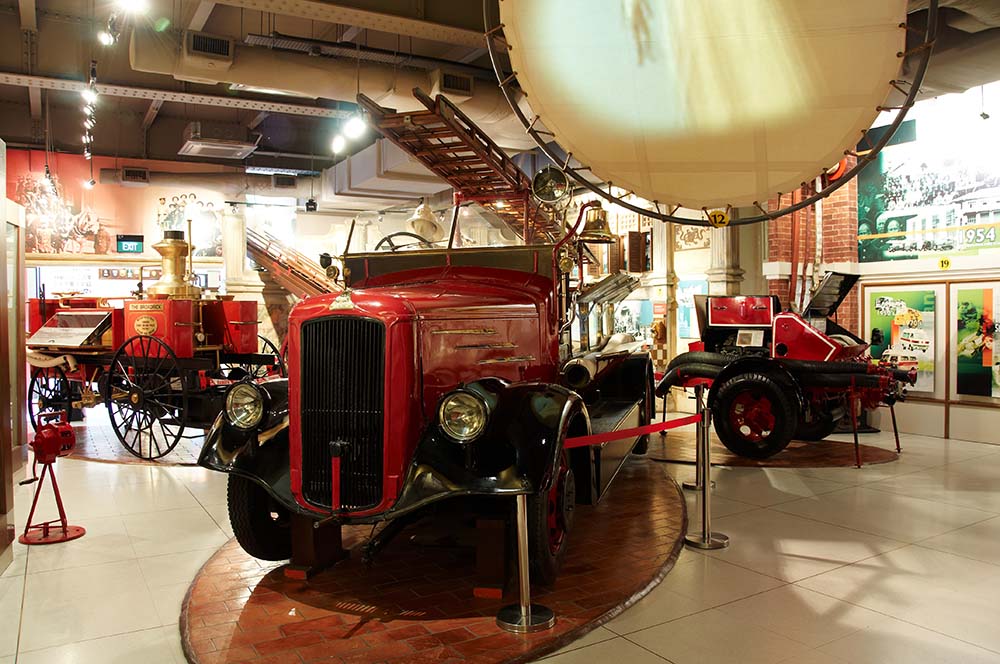
Civil Defence Heritage Gallery
Completely free for tourists
Step inside Singapore’s oldest fire station and discover the history of fire fighting and civil defence in Singapore
What is this: Located within the iconic red-and-white Central Fire Station in Singapore (still in operation!), the Civil Defence Heritage Gallery is a little museum that covers the development of civil defence in Singapore from the 1800s till now. There are 2 floors including collections of old fire trucks and paraphernalia, and interactive exhibits upstairs about what the work of the Singapore Civil Defence Force.
Why visit: The collections of old badges, uniforms and the vintage fire engine models on the ground floor are a highlight. Upstairs showcase the more modern side of firefighting with some interactive areas. It’s quite kid friendly and you might see school groups visiting as well.
Good to know: You can walk into the gallery, but you need to book in advance for a guided tour or if you are a group of more than 10pax. You also need an advanced booking to see the Emergency Preparedness Centre (I haven’t seen this, but it’s in the same location and also free).
Want more? If you can visit on a Saturday morning, you can also see the Central Fire Station Open House (it’s not usually open to public at other times), but it can get crowded and advanced booking is recommended. If you’re willing to go quite far out of the way, the Singapore Discovery Centre (paid) by the Ministry of Defense has even more extensive exhibits about the history and future of Singapore through the defense lens.
Marina Bay
Visit the modern waterfront of Singapore for futuristic skylines and iconic urban projects

Sustainable Singapore Gallery at Marina Barrage
Completely free for tourists | Must book guided tour
See how Singapore turns environmental constraints into sustainability solutions
What is this: The Sustainable City Gallery is located within the Marina Barrage and is an interactive gallery run by the Public Utilities Board that focuses on how Singapore tackles its environmental challenges, like water security, climate change and sustainability. It’s great for those interested in city planning and Singapore’s development with limited natural resources.
Why visit: I particularly liked the scale model of the Marina Barrage outside the gallery – on the tour, the scale model is activated and you see a live sequence of how the dam and filters work to create Singapore’s 15th freshwater reservoir.
Good to know: All visits here are guided tours which you can book online through their website beforehand, or try your luck at walking in on day. Note that tours start on the hour so arrive closer to that time if you are planning to walk in so you don’t have to wait too long.
Want more? Head up to the Barrage’s green roof for a breather after the tour. If you want a broader look at Singapore’s urban planning, head over to URA’s Singapore City Gallery (free) for more. Nearby, Gardens by the Bay (partially paid) does offer free tours about sustainability in the gardens as well.
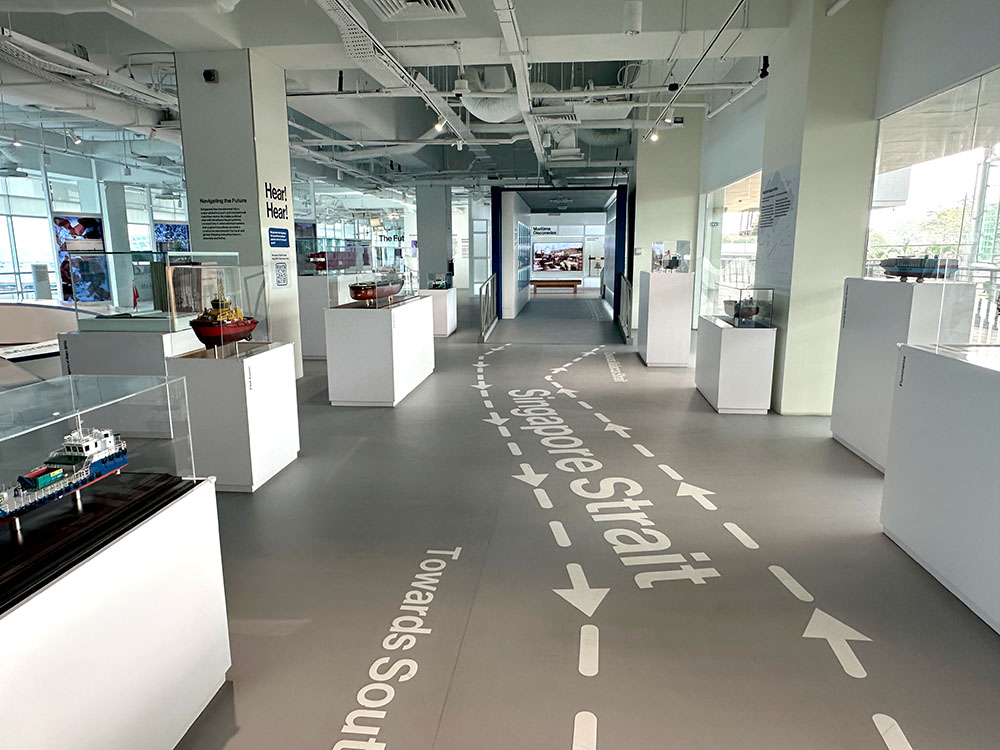
Singapore Maritime Gallery at Marina South Pier
Completely free for tourists
Nerd out about Singapore’s maritime history from 14th century trading port to one of the busiest ports in the world today
What is this: Located on the upper floor of the Marina South Pier where people take the ferries out to the Southern Islands, this exhibition focuses on Singapore’s long maritime history, with interactive displays from Singapore’s earliest appearances on nautical maps to artefacts from significant ships that have sailed in our waters. The exhibit opens up into a large room with a view of the ferries as well as more about cargo shipments and the workings of a modern port.
Why visit: I’m not particularly interested in maritime issues so I breezed through the place fairly quickly – this is a gallery I might drop by before or after my Southern Islands ferry exploration, but not specially make a trip here. But if you have a strong interest in shipping, boats and nautical history, it’s got a lot of information and exhibits to take in. There are some cool interactive games as well, like steering a boat around to put out fires in the port and a container sorting game and a whole kid’s corner which make it fun for families.
Good to know: Head one level up to the Living Gallery, which really is just a fancy name for an semi-sheltered rooftop lookout point where you can watch the ferries in the pier below. There are guided tours to the Maritime Gallery, but these require a fee for tourists (though free for Singaporeans!).
Want more? If you’re into Singapore’s urban planning, I think you’ll get a broader look over to URA’s Singapore City Gallery (free). Nearby at Marina Barrage you can also learn more about sustainability at the Singapore Sustainability Gallery (free).
Chinatown
The heritage Chinese neighbourhood is a colourful mishmash of temples, food and culture
Singapore City Gallery at URA Centre
Completely free for tourists
Learn about Singapore’s history through its land development policies over the decades in its most interesting government offices
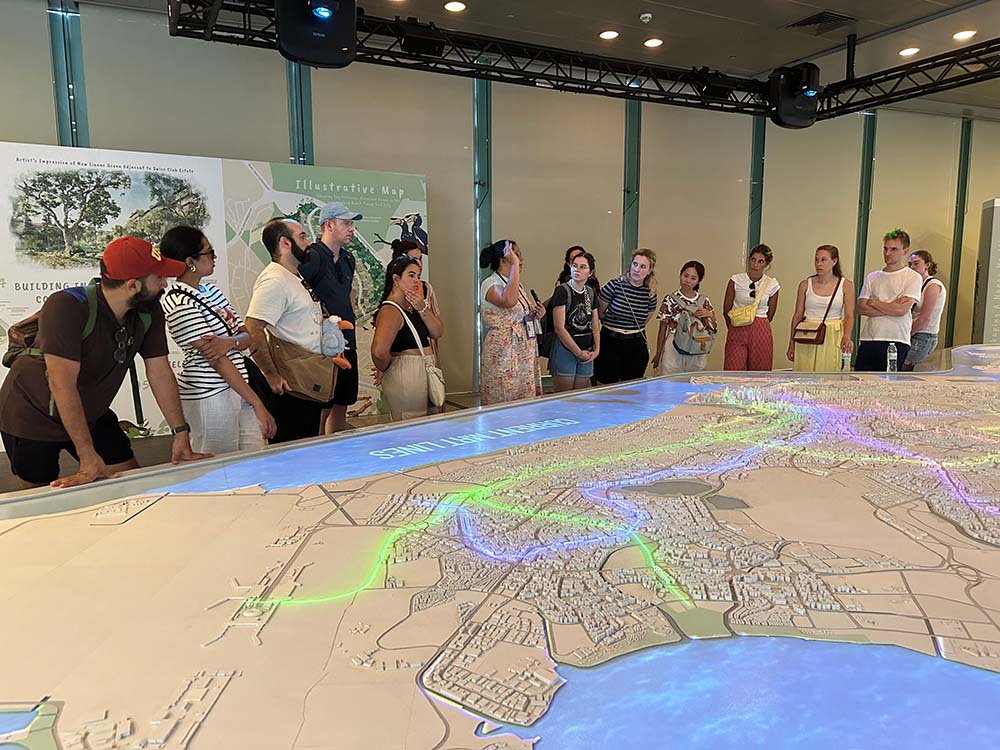
What is this: The Singapore City Gallery gives deeper insight into how Singapore developed and modernised over the years, and how the government plans for the future of this tiny, densely populated country. The visual and interactive exhibits cover everything from public housing to infrastructure and sustainability, making this a nice introduction on how Singapore works.
Why visit: The highlight are the huge scale models of Singapore – the one on level 1 comes with an integrated video projections every 20 minutes, while the level 2 model zooms in on the central area. It’s interesting even for locals like myself who get more context as to why Singapore does certain things that we take for granted.
Good to know: Another good option for hot and wet days. The famous Maxwell Hawker Centre is right next door so it’s great to pop in after lunch or a walk around Chinatown. The interactive displays and scale models are entertaining for families and curious kids.
Want more? If you’re into urban planning, head over to the Marina Barrage to see the Sustainable Singapore Gallery (free) which delves deeper into the city’s environmental efforts. If you want a broader history of Singapore, the National Museum of Singapore (paid) is a good place to start.
Singapore Chinese Cultural Centre
Completely free for tourists
Learn why certain Chinese customs, phrases and celebrations only exist in Singapore
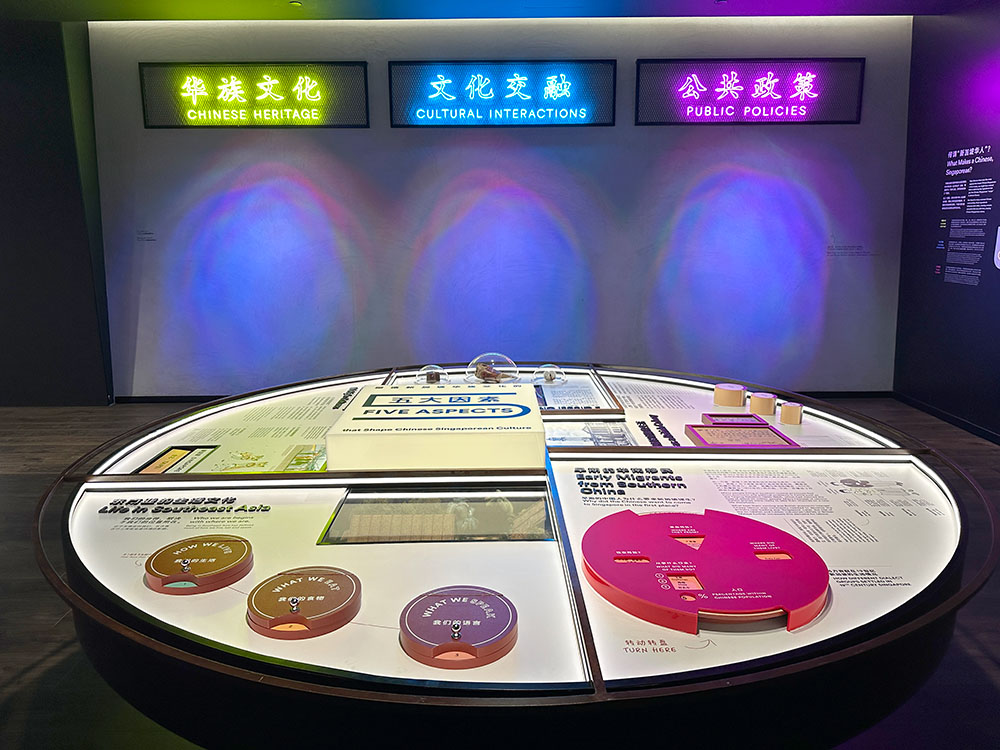
What is this: The interactive SINGAPO人 exhibition at the Singapore Chinese Cultural Centre explores how Singapore’s many multicultural influences have shaped the uniquely Singaporean Chinese identity. As a Singaporean Chinese myself, I learned quite a lot about my own heritage here!
Why visit: The exhibition gives context to how Chinese culture in Singapore is quite distinct from other Chinese cultures, as well as insight into the local way of life. The exhibits are interactive and fun – a great museum option for families and younger visitors.
Good to know: The exhibit is indoor and air-conditioned, so it’s a great option on Singapore’s hot or rainy days. Lots of MRT options nearby and walkable from downtown Chinatown as well. It should take about an hour to walk through this exhibition.
Want more? The Chinatown Heritage Centre (paid) in the heart of Chinatown is housed in heritage buildings and has dioramas showcasing daily life in Chinatown, or head to the National Museum of Singapore (paid) for a broader look at Singaporean culture.
Buddha Tooth Relic Temple
Completely free for tourists
See the temple’s sacred tooth treasure and discover one of Chinatown’s most lavish temple interiors
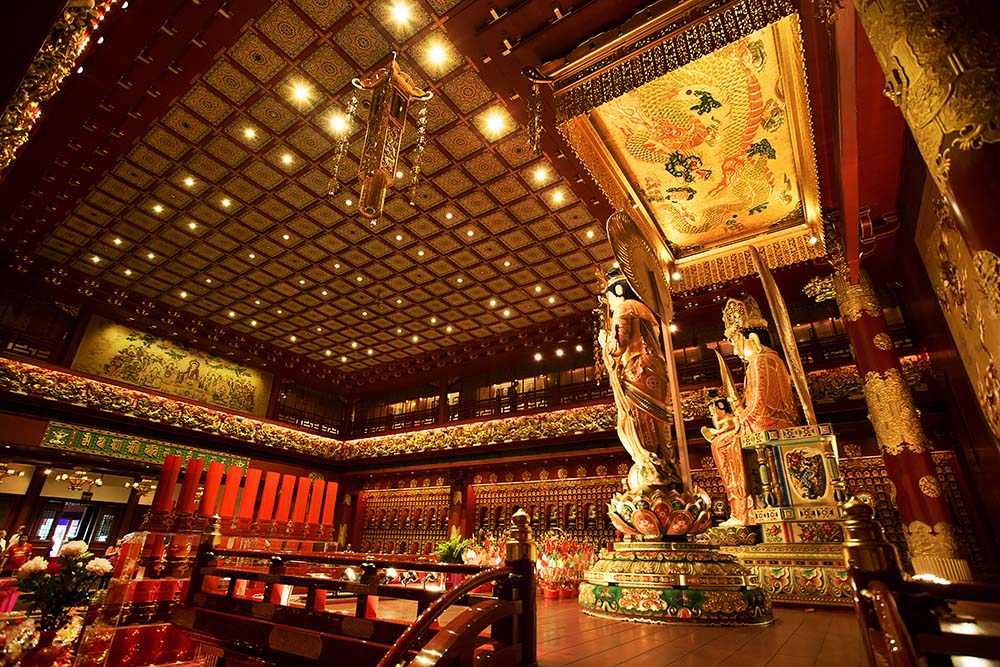
What is this: This modern Buddhist temple is the perfect place to see how local Buddhists worship while admiring the intricate decor and vast collection of Buddhism art and sculptures from all across Asia. Don’t miss the tooth relic as well as the serene rooftop garden with a giant prayer wheel.
Why visit: Even if you’re not particularly religious, this temple is worth stepping into purely for its detailed and lavish interior designs. It offers an introduction to one of the major religions in Singapore and a way to see how local traditions and practices, particularly around major festivals.
Good to know: The temple is right in the heart of Chinatown next to Chinatown Complex so very convenient and easy to add to a Chinatown itinerary. It’s air-conditioned and offers a respite from the humidity. There is a vegetarian cafeteria in the basement as well. There is a modesty dress code, but appropriate scarfs and wraps are provided at the door.
Want more? If you’re interested in more Chinese temples, the Thian Hock Keng Temple (free) over at Telok Ayer is worth a visit, though it’s not so much a museum but an actual place of worship. You could also pop into the Fuk Tak Chi Museum (free) though it’s very small and more of an unexpected entrance to the AMOY hotel behind.
Kampong Gelam
Singapore’s heritage Malay and Arab quarter has long been one of my favourite neighbourhoods with quaint shophouses, interesting buildings and the birthplace of street art
ArCH Square
Completely free for tourists
Get a rare look at unearthed archaeological finds in Singapore
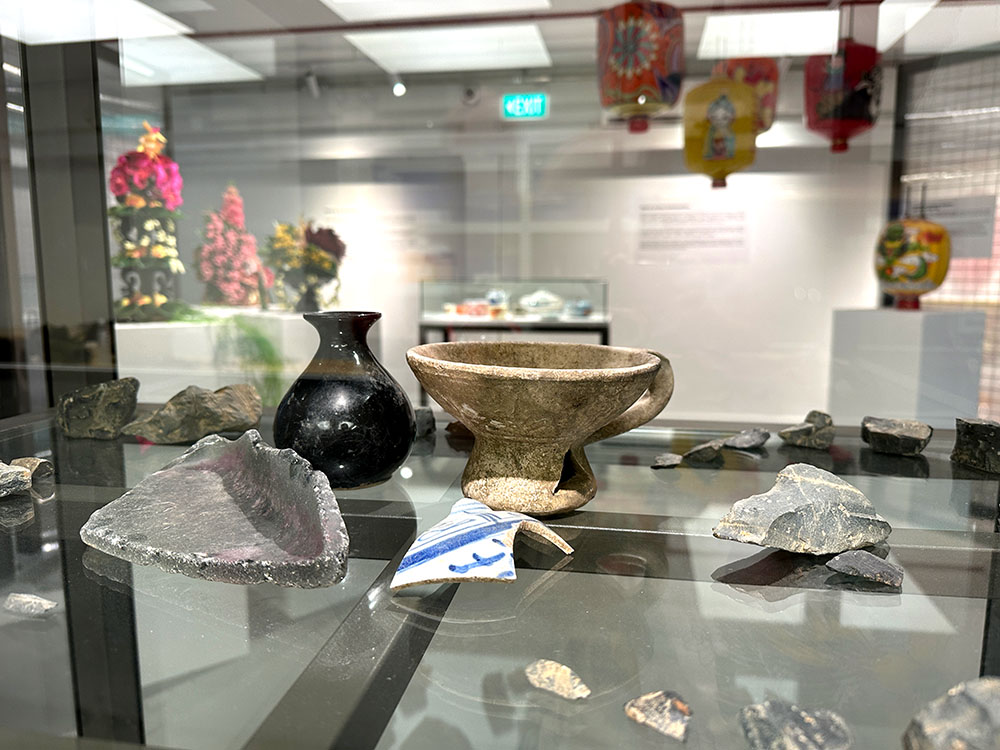
What is this: This little gallery located in Kampong Gelam is Singapore’s first centre dedicated to archaeology and intangible cultural heritage. ArCH Square showcases some of Singapore’s archaeological finds and also has activities and small exhibitions around intangible cultural practices.
Why visit: Archaeology isn’t something you see much of in Singapore so it’s nice if this is something you’re interested in. The intangible cultural heritage exhibits meanwhile offer something more accessible and engaging for those who are not so focused on history.
Good to know: It’s a relatively small space so you won’t need too much time to visit. I would include this if you’re already planning to visit the Kampong Gelam area and want to go beyond the usual tourist spots around Sultan Mosque and Haji Lane. The team who runs the space is small and friendly.
What more? Head over to Fort Canning Hill’s Artisan Garden (free) to see one of Singapore’s rare archeological dig sites in person, and pop by the Fort Canning Heritage Gallery (free) while you’re there. For more about the area and its Malay history, the Malay Heritage Centre (paid) is newly reopened and nearby.
Sentosa
Beyond this resort island’s theme parks and flashy attractions are tranquil green corners and remains of its military past
Fort Siloso
Completely free for tourists
Explore Singapore’s only preserved coastal fort and its WWII history
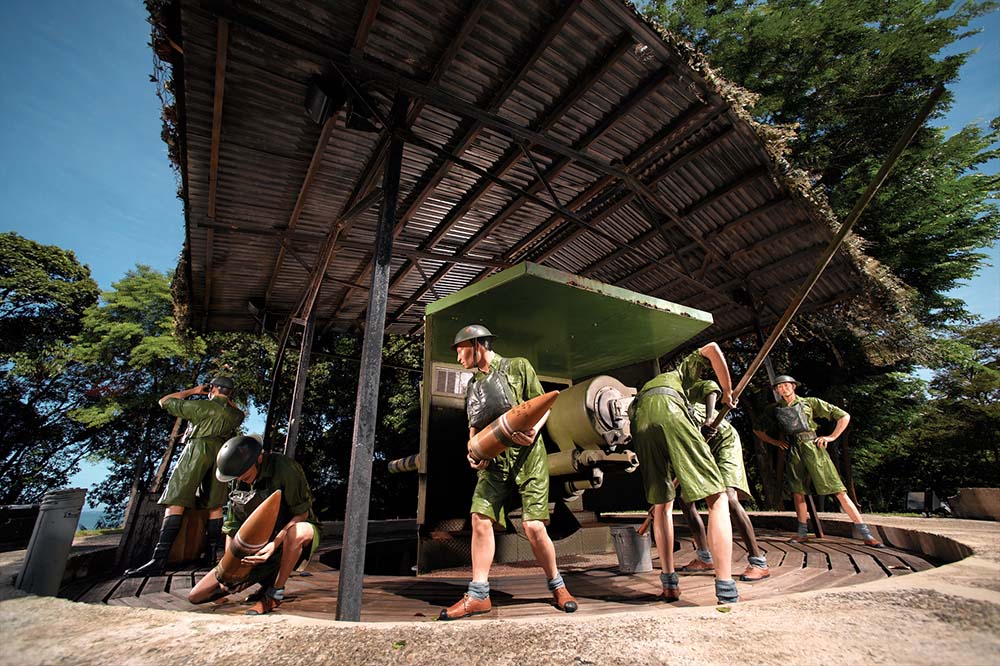
What is this: Fort Siloso is Singapore’s last remaining British fortress standing in a quiet corner of the resort island Sentosa. This gazetted national monument has dioramas and audio-visual recreations amidst restored bunkers and giant mounted guns as a reminder of Singapore’s WWII occupation days, including a recreation of the British surrender to the Japanese.
Why visit: I think it’s a great mix of history, kitsch dioramas and nature all in one spot, and you get to see the museum exhibits amidst the old barracks. I suggest taking the long way in from the entrance to see famous muralist Yip Yew Chong’s artworks along the way, and then exiting via the 11-storey tall Siloso Skywalk for views of Siloso Beach and southern Singapore.
Good to know: Not many attractions on Sentosa are free, but this is the best free thing to do other than Sentosa’s beaches.
Want more? If you’re interested in WWII history in Singapore, check out Former Ford Factory (paid) which is where the actual surrender chamber is located. The free Fort Canning Heritage Gallery (free) and The Battlebox (paid) tour through the former underground command centre might also be of interest.
Other Locations
Go beyond the typical neighbourhoods that tourists visit in Singapore for some local insight
Haw Par Villa
Partially free – main park is free, Hell Museum is paid
Haw Par Villa (free) is temporarily closed though the Hell’s Museum (paid) remains accessible. Check out their website for more updates.
A surreal sculpture park showcasing dioramas of Chinese mythology, folklore and a museum on the afterlife
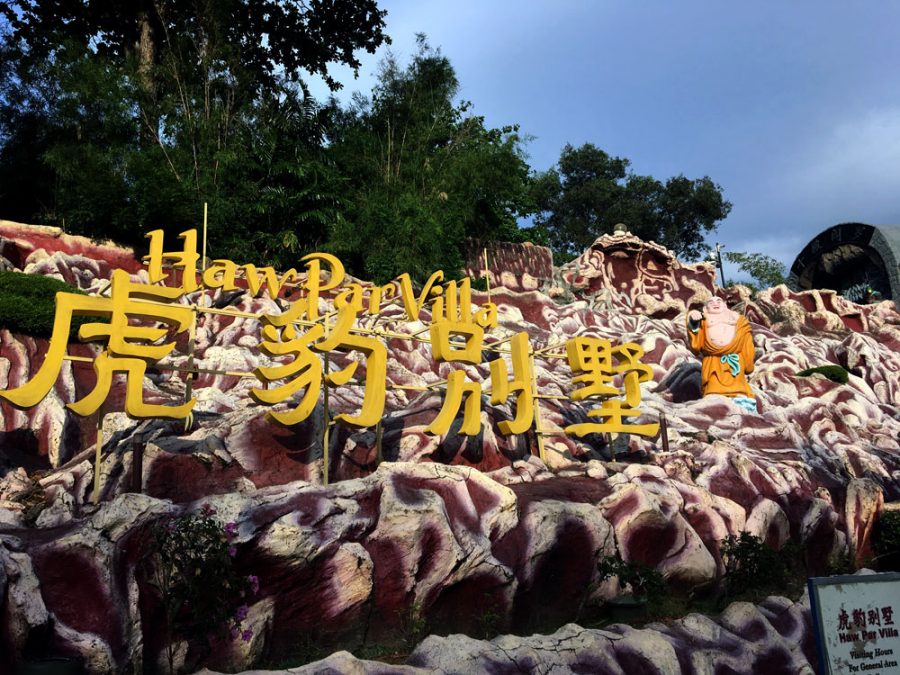
What is this: Haw Par Villa is a quirky park with eclectic sculptures and weird dioramas showcasing Chinese stories and ethics, founded by the Haw Par Brothers better known as the Tiger Balm founders. The entire park used to be free, but now its most famous section (The 10 Courts of Hell) is part of the larger Hell’s Museum which has an entrance fee.
Why Visit: Nowhere in Singapore will you see half-human half-crab sculptures quite like these – you can take some really weird photographs here. Haw Par Villa is nostalgic for older Singaporeans (me included) who visited the park back when it was a budding theme park and hotspot, but for visitors it showcases a very unique side of Singapore that’s like no other cultural attraction.
Good to know: The park is mostly outdoors with not too much shelter so expect lots of walking and that it might be quite warm. It’s quite accessible via the Haw Par Villa MRT Station on the Circle Line right in front of the entrance.
Want more? If you’re willing to pay for it, Hell’s Museum actually takes a look at death practices around the world, and specifically showcases some of the more common ones seen in Singapore, which is quite a fascinating topic. The weird 10 Court of Hell tunnel showcasing suffering in Hell is also pretty bizarre and hilarious at the same time. For a broader look on Chinese culture in Singapore, swing by the Singapore Chinese Cultural Centre.