Haw Par Villa: Singapore’s weirdest park about Chinese culture
Last updated September 13th, 2025
People often say that Singapore is sterile – modern and efficient and sadly, boring. But one of my favourite weird places to recommend tourist friends looking for an offbeat option in Singapore is to check out Haw Par Villa for a rather unusual look at Chinese culture and ethics in a sculpture park.
Haw Par Villa is a Chinese culture theme park built in 1937 that was slated to be a major tourist attraction back in the day, though these days it is more of a nostalgic curiosity and home to some of the kitschiest, weirdest sculptures I’ve seen in any cultural attraction or park.
I love the bizarreness and oddities you can uncover just walking around this small sculpture park in this southwestern corner of Singapore, so if you’re bored of the fancy, hyper-modern polished attractions Singapore is known for, a trip to Haw Par Villa will introduce you to a weird side of the country. Check out my quick tl;dr summary of the exhibition in the box below and read my detailed thoughts and trip planning advice to plan your own trip.
Looking for other free museums, galleries and cultural spots in Singapore? Check out my Singapore guide for more.
Want someone to guide you around Singapore and plan your trip for you? I’m a licensed Singaporean tourist guide who conducts private walking tours and can customise an itinerary for you. See my guiding rates and customer reviews – drop me a note to learn more.
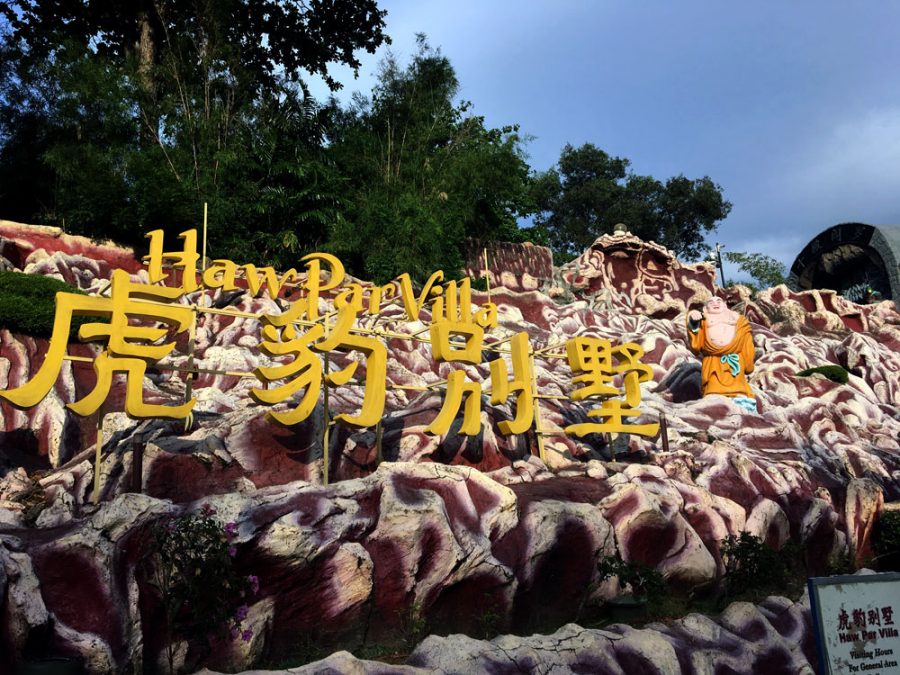
Haw Par Villa – in a nutshell
What is this: Haw Par Villa is an outdoor park known for its eclectic variety of dioramas and sculptures that promote Chinese culture and ethics. Most of the park is free to explore.
Why it’s worth visiting:
- The sculptures that feature half animal, half man figures feel a little like an artist hallucination but are so weirdly quirky
- There is no other place in Singapore that features art or sculptures as strange as this and at such scale
Who should visit:
Where is this located: Haw Par Villa 虎豹別墅 – 262 Pasir Panjang Road, Singapore 118628 [Google maps] Nearest MRT: Haw Par Villa (CC25) on the Circle Line, take Exit A.
When to visit: Haw Par Villa is open 9am-8pm daily (last entry 7.30pm).
How to visit: Check out the Haw Par Villa website for more information.
History of Haw Par Villa
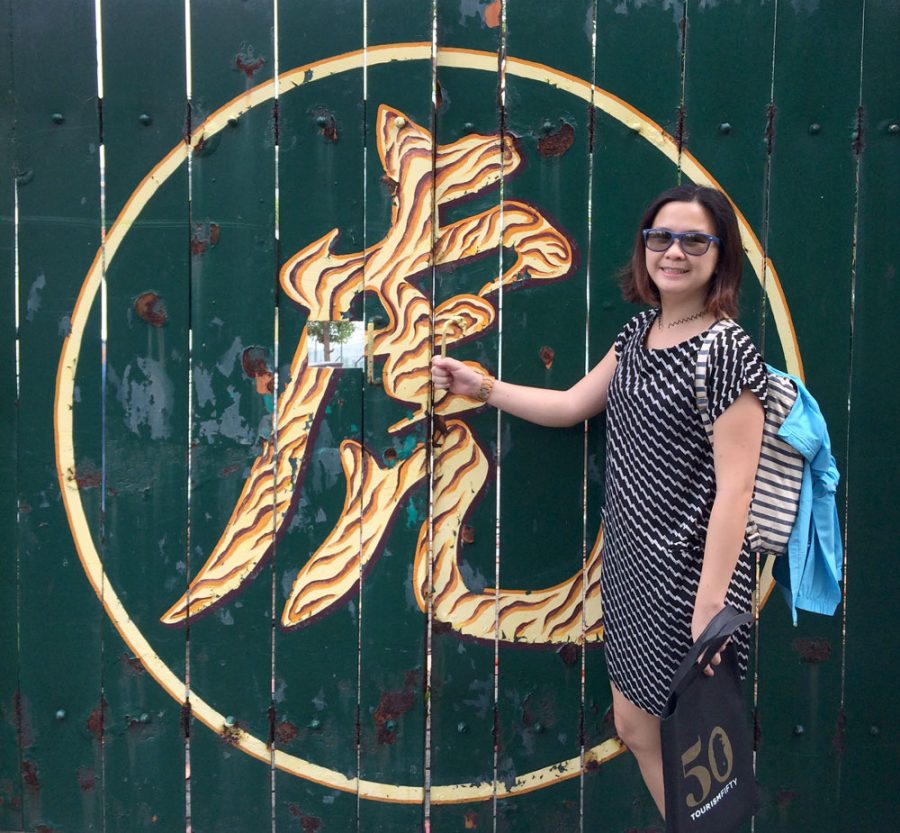
Haw Par Villa 虎豹別墅 is also known as the Tiger Balm Gardens – it was built in the 1930s by two brothers Aw Boon Haw and Aw Boon Par who are much more famous for the creation of Tiger Balm, the miraculous muscle rub many Asians grew up with.
Haw 虎 translates to Tiger, and Par 豹 translates to Leopard – if you haven’t already realised, the name Haw Par Villa draws from the 2 brothers names Boon Haw and Boon Par which loosely translates as Cultured Tiger and Cultured Leopard
History buffs can read a more detailed history in Singapore’s e-library, but the short version is that these two brothers became really successful and rich from hawking Tiger Balm, and older brother Boon Haw built Haw Par Villa as a gift for his younger brother Boon Par.
While the estate was considered private property, the brothers opened up the gardens to the public, in part to educate them about important Chinese cultural values and ethics, but also used it as an advertisement for the Tiger Balm.

How to explore Haw Par Villa
Haw Par Villa isn’t a very big park – you can easily explore it in 1-2 hours depending on how fascinated you are by the weird statues all around and how many pictures you try to take. Prepare for a little stair and slope climbing as the park is built on a hill side, but nothing too crazy. And of course, Singapore’s legendary humid weather means you need to be prepared to sweat it out a little as it is an outdoor park.
Haw Par Villa used to be entirely free, but these days there is a section that has become a paid attraction, though a lot of it is still free to see.
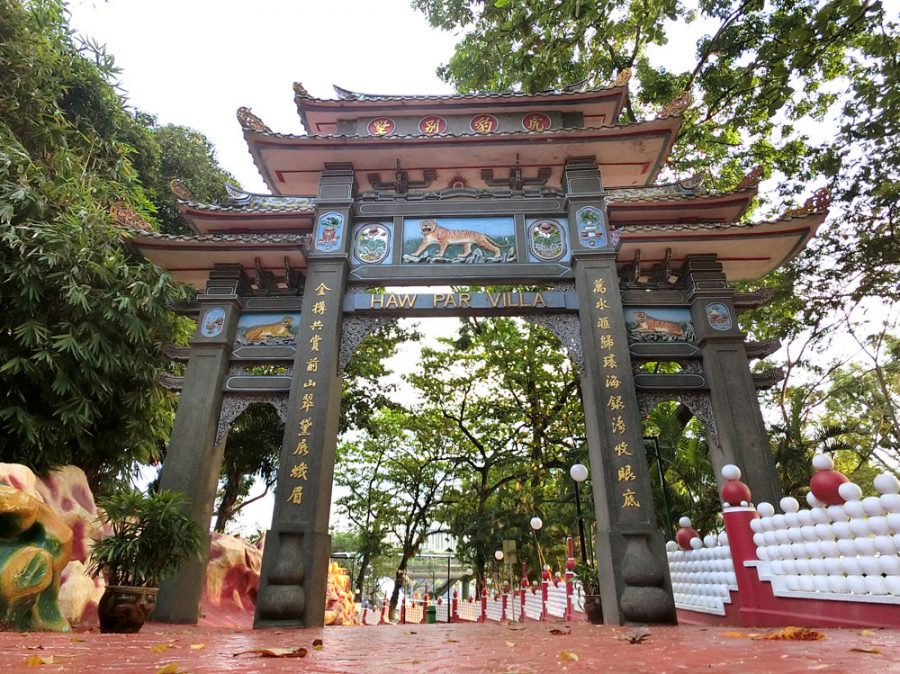
Dioramas of Chinese ethics and tales
You’ll find life size statues and elaborate dioramas throughout Haw Par Villa, depicting scenes from Buddhism, Taoism, Chinese history and mythology. Back in the day, not many of the Chinese immigrants who came to Singapore could read and write, so the best way to educate and impart the important values from these stories was to depict them in a visual form like sculptures and dioramas were used.

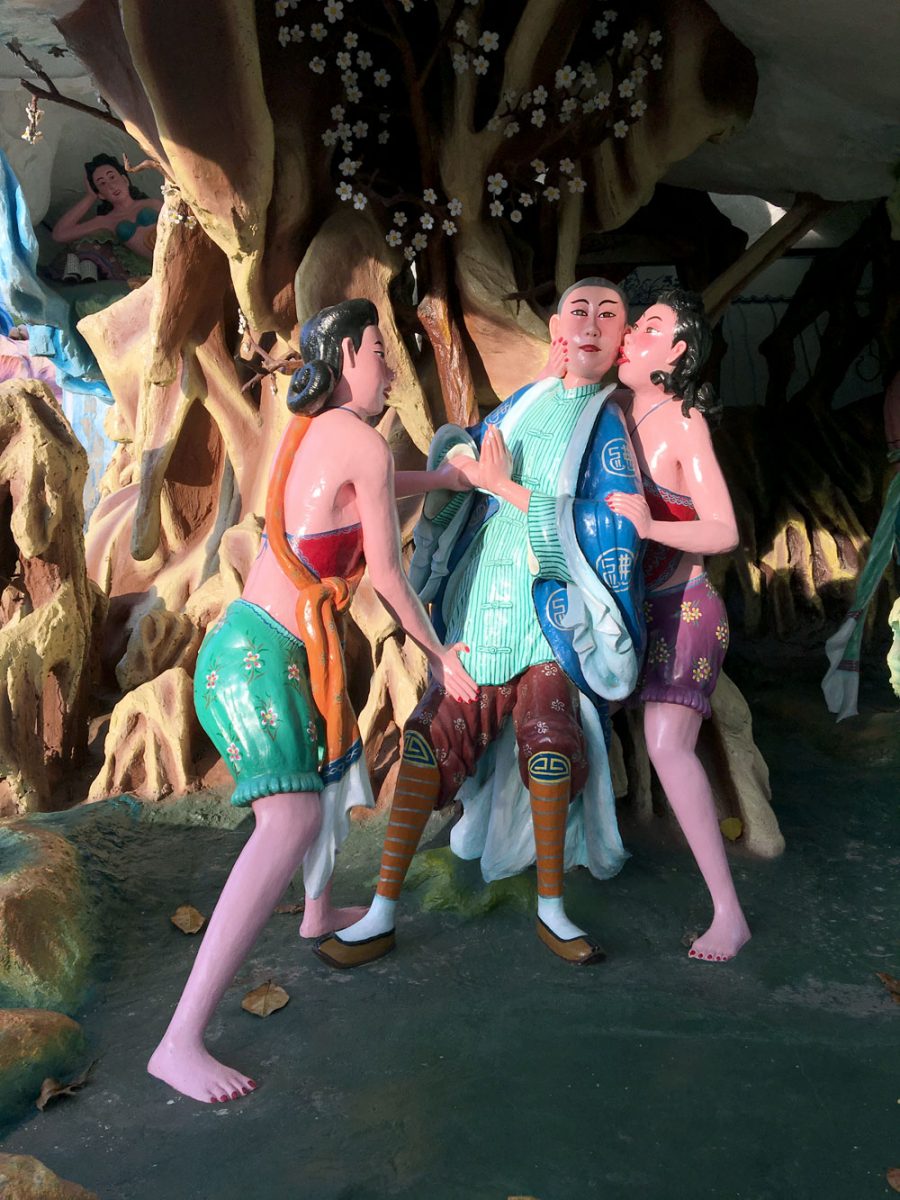
The stories depicted in the dioramas are a mishmash from across Chinese culture, featuring famous tales like Journey to the West and the 8 Immortals Crossing the Sea, to more moralistic short fables that promote filial piety, honesty and loyalty. Some of the dioramas are very elaborate, consisting of hundreds of mini statues; Others are larger than life and strangely fantastical.
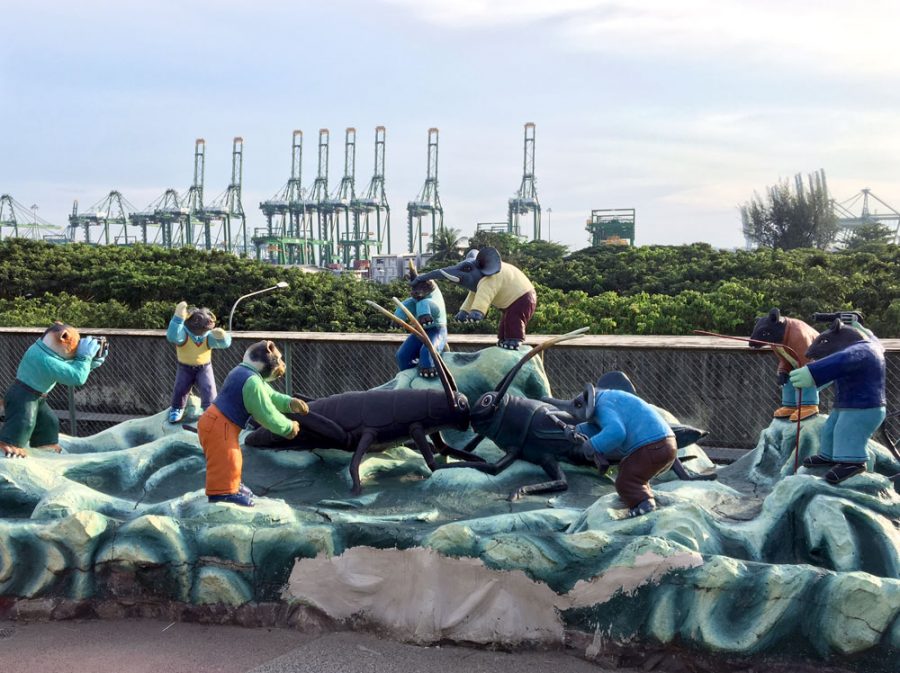
You have to wonder what visitors must have thought in those early days because some of the statues are just plain weird. I enjoy just taking a closer look at the the statues to see if I can find any really trippy ones (spoiler: there are PLENTY) – the weirdest ones to me are the half-human half-animal depictions as well as the humanised animal ones.
Some of the dioramas have write ups, others are unlabelled so you can use your imagination to make up some stories for yourself.
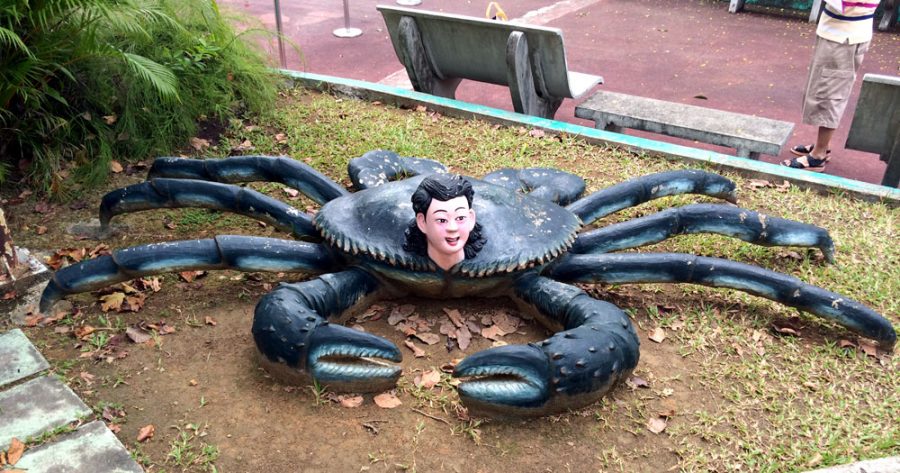


International animals and figures
There are some Chinese-style pagodas and memorials scattered around the park but some of the statues that you can see in the park are distinctly non-Chinese. There are giant gorilla statues, an oddly purple koala and kangaroo, sumo wrestlers and even a mini Statue of Liberty.

It turns out that in the 1950s after the wars and both brothers had passed on, their nephew Aw Cheng Chye decided that he wanted to add to the garden. Unlike his uncles, his additions were of a more international flavour and involved sculptures of cultures from around the world. Also in the 1980s, the tourism board had a vision to redevelop the park into an ‘Oriental Disneyland’ of sorts, which… you can see that didn’t quite work out.

But what it ultimately lead to is a lot of these statues which are just… plain bizarre. Personally, I think you definitely couldn’t be sober to come up with some of these statues.

Hell’s Museum (Paid)
The full Haw Par Villa park used to be free to explore, but now they’ve sectioned off a particular section as a paid attraction called Hell’s Museum that revolves around death and the afterlife, and in particular focuses on death practices of the Chinese and Singaporeans.
I’m sharing what you can see here so you can decide if you want to check it out – Tickets cost S$20 and you can buy online or at the door.
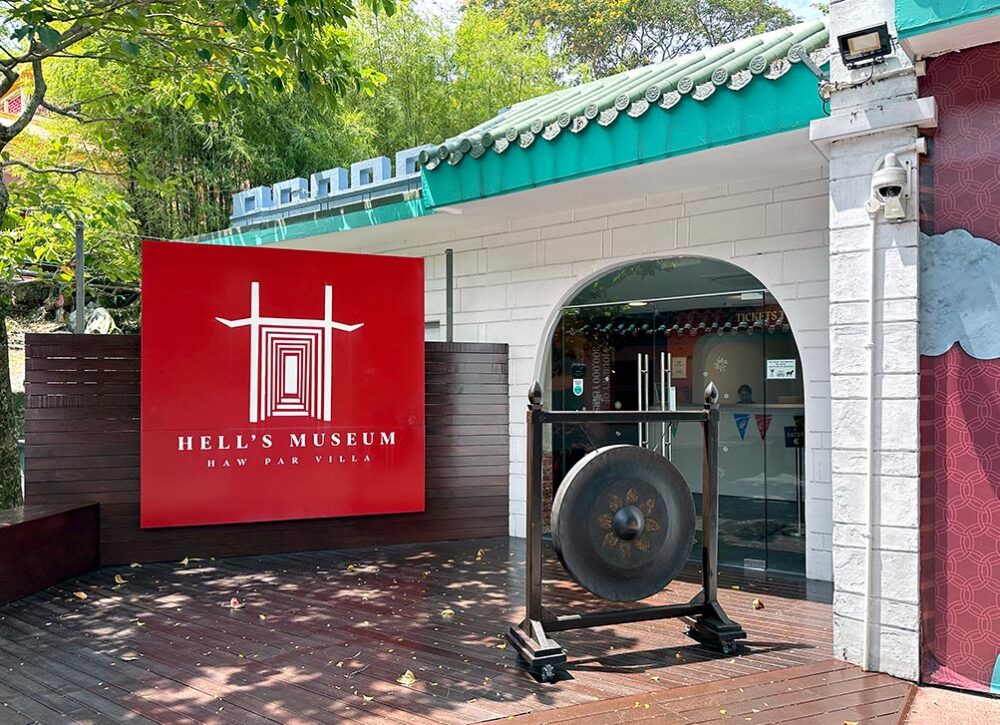
You can walk through the exhibits on your own, but since you’re already paying for the ticket, I recommend taking the free guided tour that takes you through the highlights of the exhibits and then going back to spots along the way if you are interested to learn more.
The exhibition is divided into several stations. Station 1 is a short video which details the idea of the afterlife as depicted across the world’s most popular and oldest religions. They segregate the ideas into two: Cyclical (believes in reincarnation after death) and Linear (believes you only live once and are judged at the end).
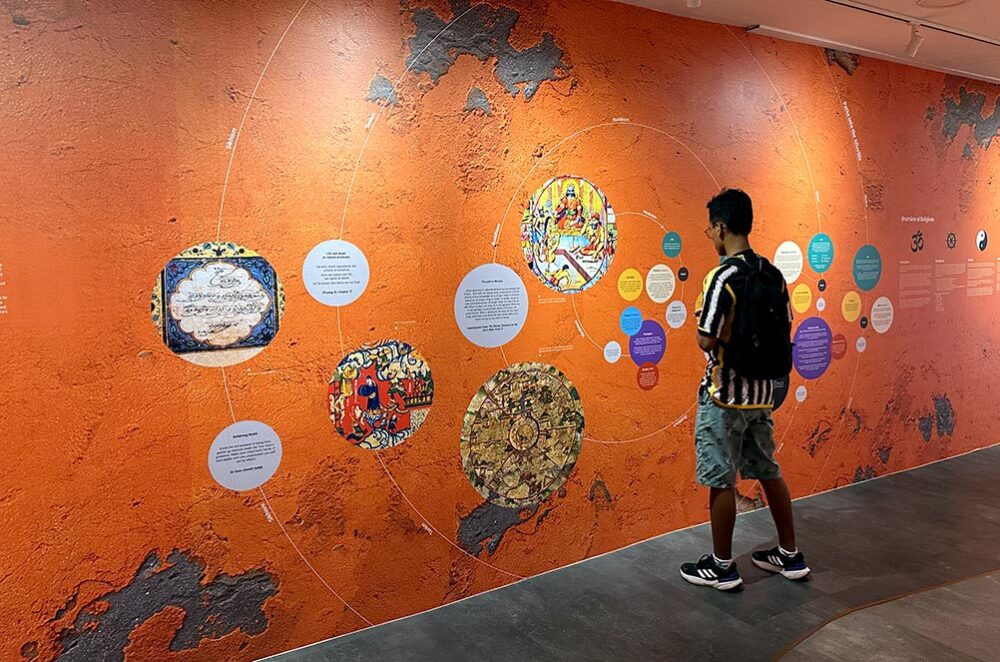
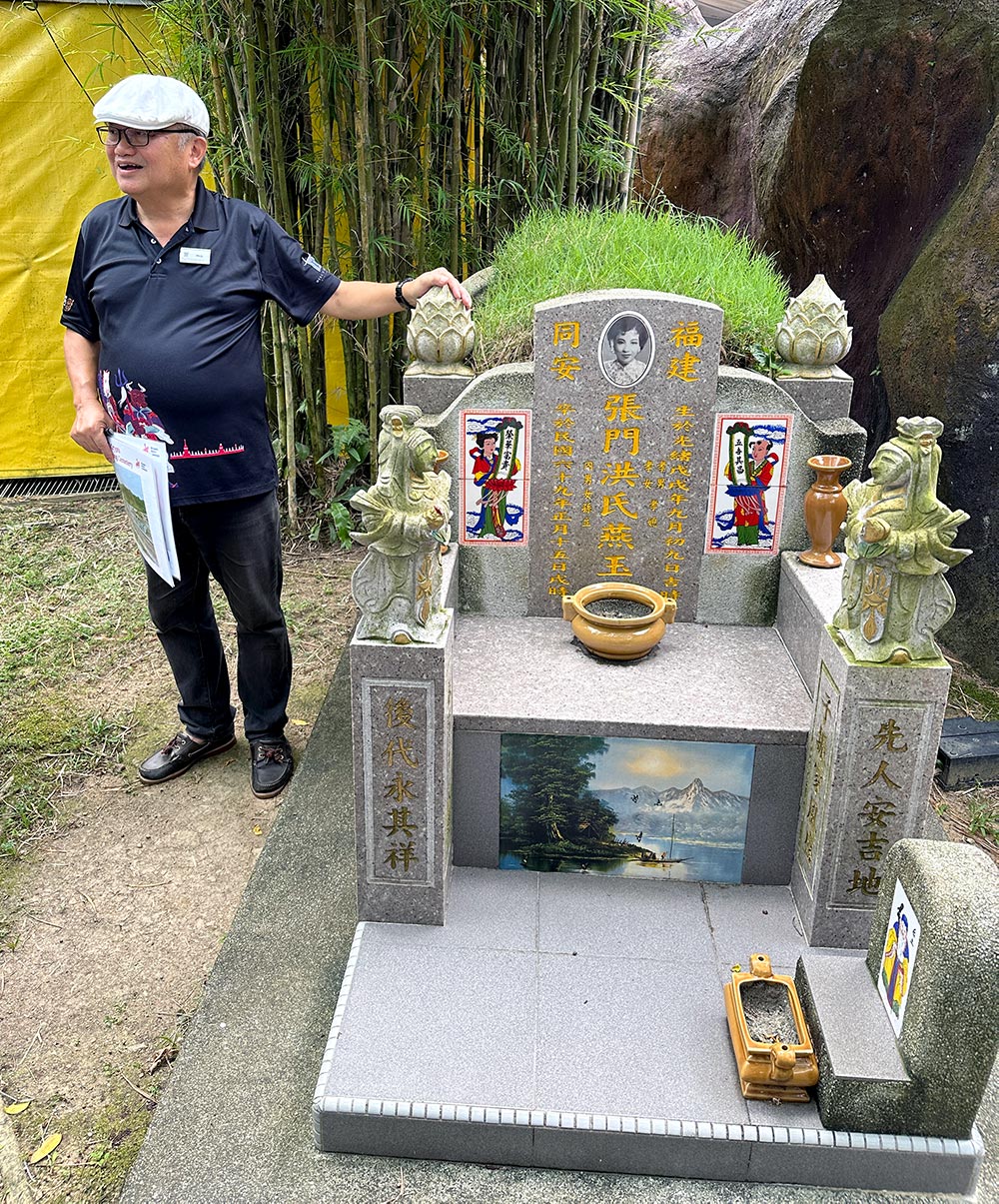
The next few stations expand upon the ideas in the video, and also depict the way death, ancestor worship, and funerary rites are conducted in Singapore. You can see recreations of ancestral altars, old graves and even a typical void deck funeral.
This is interesting for tourists because you’ll rarely get a chance to see this as a visitor to Singapore in the tourist areas, but even for locals it gives a bit more context to the everyday practices we take for granted.
Ten Courts of Hell
The last section takes you through the infamous Ten Courts of Hell attraction – older Singaporeans (or those my age lol) might remember going through this tunnel as a boat ride or a walkthrough in more recent years.
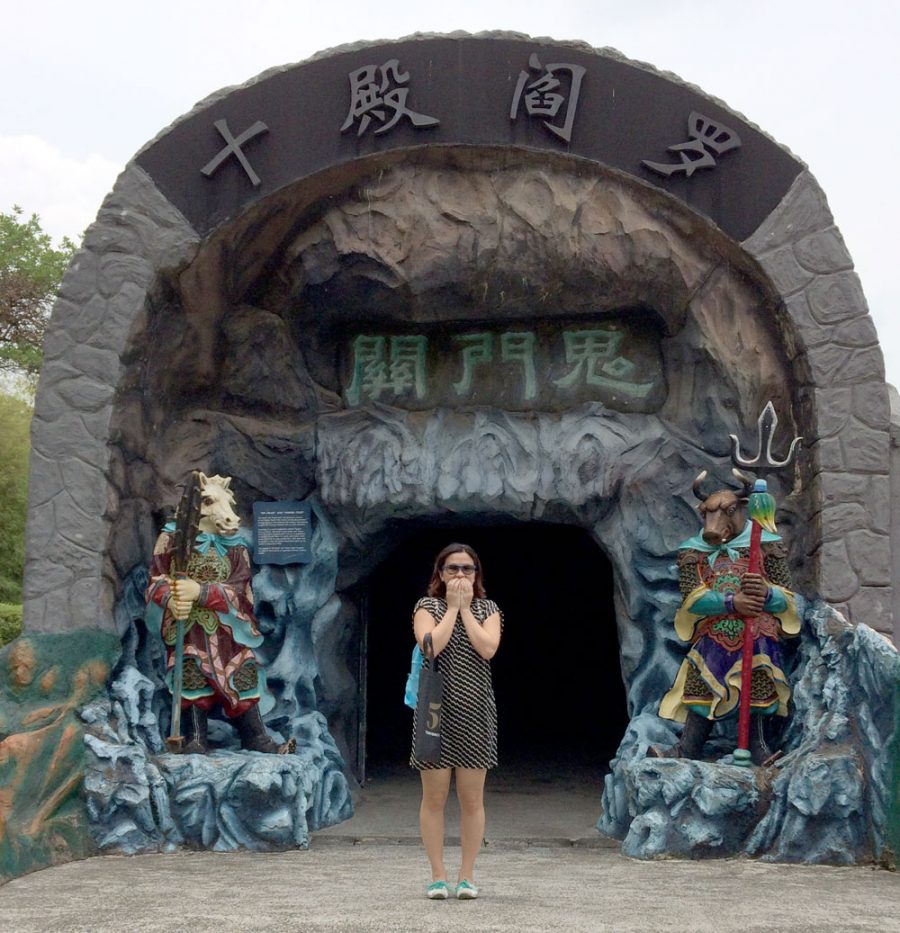
The Ten Courts of Hell is rooted in the belief that you reap what you sow, that all your sins in life are remembered in death, and the worse your sins, the more epically gory your torture will be. Whether or not you believe in it, just know that this was a pretty effective way for adults to scare naive children into good behaviour.

The journey starts from the time of death and judgement. Good people take the gold or silver bridges back to reincarnation or nirvana, while the sinners are pushed into the 10 levels of punishment and suffering. The final section is where it is decided what you will be reborn as which could be human or animal.
What we did as kids (and I still do now) was look at the sins and punishments for each court and laugh about whether we will end up there.


This tunnel used to be filled with water and the entire journey was a slow boat ride in little rickety boats down this dark tunnel lined with scenes from hell on both sides. These days you have to walk, which actually gives you more chance to linger and gawk at these gory scenes up close.
There is a small outdoor section at the end of the park with a few more dioramas as well.
Getting to Haw Par Villa
The best way to get to Haw Par Villa is by taking the MRT Circle Line (yellow line) to Haw Par Villa station (CC25). Exit A takes you right outside the main entrance of Haw Par Villa.
You could also take public bus and stop along Pasir Panjang Road. Buses include 10, 30, 30e, 51, 143, 188, 200
Singapore drivers: the carpark in front of Haw Par Villa now costs $8 per entry, and you have to pay by cash to the man at the gate. You could also park at ORTO across the road if you don’t intend to spend too long at Haw Par Villa.
What’s nearby
Recommendation for tourists
Haw Par Villa is located along West Coast Highway, opposite the port area at Pasir Panjang Terminal so there isn’t much to explore in the immediate vicinity, but you could make a day of it by visiting some other places of interest in southwestern Singapore.
Nearby galleries and museums
Another free museum nearby that you can check out is the NUS Museum at the National University of Singapore, less than 10 minutes away by driving. They have over 8,000 artefacts in their collection – the permanent exhibitions showcases a prominent pioneering sculptor in Singapore Ng Eng Teng, as well as the Chinese ink works from the Lee Kong Chian collection of Chinese art.
If you’re into art, there are a bunch of art galleries located at the Gillman Barracks for a little gallery hopping. These former military barracks are near the Labrador Nature Reserve.
More parks and nature nearby
If you want to explore more of Singapore’s outdoors, check out the Southern Ridges, a 10km walk through the hills that takes you from Labrador Nature Reserve to Mount Faber, and you can see the Henderson Waves bridge along the way.
Alternatively you can head to the Rail Corridor – there are access points nearby around the Queenstown and Alexandra area. It’s a 24km walk that connects you to the quarries and hills in the west.
Looking for other free museums and galleries to visit in Singapore? Check out my detailed guide (coming soon) or see my Singapore guide for more.