Furano Road Trip: A 3-Day Summer Itinerary in Hokkaido
I’d only ever been to Hokkaido in winter for the snow and ski slopes, so when the opportunity came to check it out in summer, I was super curious to see what this typical winter destination would look like in the sun and warmer weather. Japan in summer is pretty darn sweltering but Hokkaido is apparently one of the better options as it’s further north and generally cooler, so I was looking forward to finally getting to see Japan in summer.
Here’s the 3-day self-drive itinerary for my Furano road trip. A lot of it was recommended by my accommodation sponsors and I think it’s a pretty sound itinerary, but I made some tweaks and recommendations based on my personal experience to help you figure out your own route.
Full disclosure: the Furano leg of my trip was sponsored as I was on a writing assignment, but I spent some time down in Lake Toya and Sapporo on my own as well. All opinions on places we visited are my own.
Check out the Furano for first-timers article that I wrote on assignment for The Straits Time Life.
- Renting a car in Hokkaido
- Furano road trip: Planning tips
- Day 1: Biei 美瑛 & Nakafurano 中富良野
- Shirogane Blue Pond (Aoiike): True blue views
- Shirahige Waterfall: Bridge views
- Tsuruki Goma: Soba for Lunch
- Biei Christmas Tree: Worth a stop?
- Kamifurano Panorama Road Ehana: Worth a stop?
- Farm Tomita: Lavender and flower fields galore
- Tomita Melon House: Eat all things melon
- Furano Tanijin: Lamb jingisukan for dinner
- Ningle Terrace: Night lights and curio shopping
- Day 2: Furano 富良野 + Rokugo 麓郷
- Day 3: Furano + Downtown
- Other activities
Renting a car in Hokkaido
I love exploring Japan by car – I have a more detailed post with tips about self-drive trips in Japan, and you can check out my Niigata and Yakushima posts for some of my more recent Japan driving holidays.
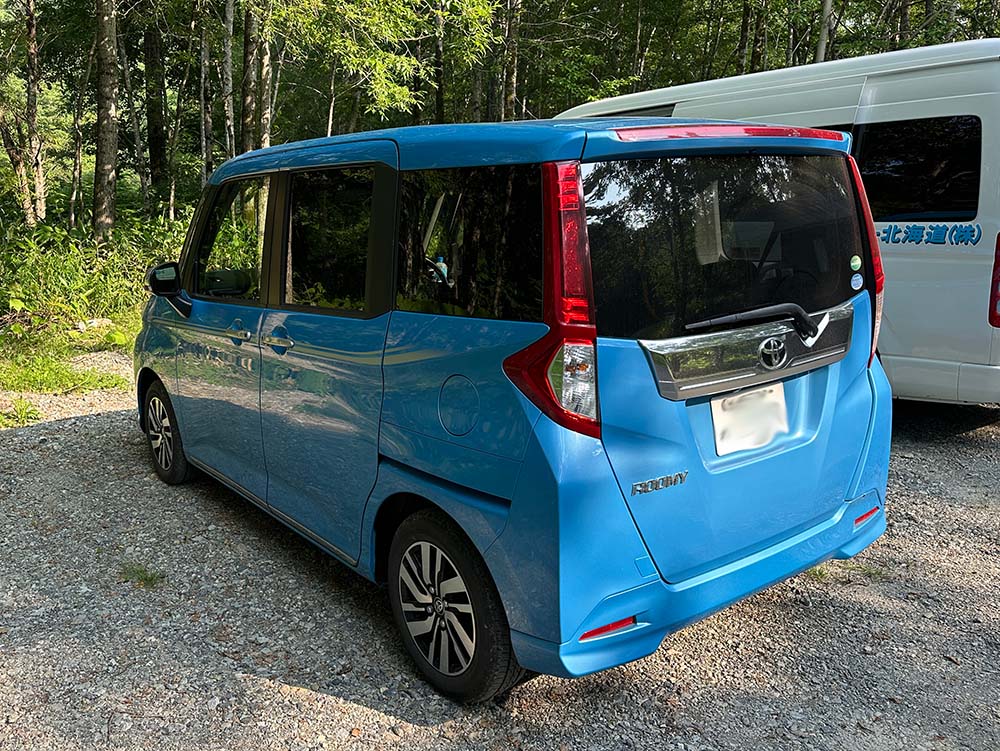
This post is sponsored by TOCOO!, one of Japan’ largest car reservation sites for international travellers that’s been around since 2004. Why limit yourself to one rental company when you can check them out and compare them all in place? TOCOO! works with over 150+ Japanese car rental companies, which is definitely useful if you’re planning to travel during peak season and there is limited availability, or you have quite specific requirements for your rental.
I used to just stick to one car rental site and I’d manually check out another 1 or 2 websites just to get a feel of prices, but having multiple rental companies consolidated in one place with the option to filter like with TOCOO! makes life so much easier, so I’m definitely going to use this instead the next time I’m headed to Japan!
Driving in Japan is great for Singaporeans as it’s pretty similar to what we have back home, but if you’re still a bit nervous about driving overseas, booking with TOCOO! lets you drive around Japan with peace of mind. All bookings include TOCOO! coverage for non-operation charge and towing fees so you don’t have to worry about coughing up a large sum of money just to get your car towed in the event of a breakdown. Support is available in
If you’re booking a car with TOCOO!, use my discount code TCJSSG to get 1,000 JPY discount off your booking!

Furano road trip: Planning tips
What is Furano’s climate in summer?
Overall we had sunny weather in Furano, so definitely make sure to have sunglasses, a hat and sun protection! We spent 4 days in Furano and on average temperatures ranged around the low to mid 20s, though there were some afternoons where we were definitely in the high 20s.
The biggest difference (especially for Singaporeans) is that it isn’t as humid overall, and the drier weather meant it felt a lot less sweltering. Definitely not as bad as my previous Japan summer experience where we were experiencing high 30s in Osaka… that was real HOT.
I visited Furano in early July, so for the flower lovers, that’s the start of lavender season. For foodies, seasonal produce is key to the types of flavours and food you’ll find in the markets. Some of the specialties that were widely sold in summer include melon, tokibi (corn) and asparagus.
Where is Furano?
Furano is located about 2 hrs drive northeast of Sapporo City in Hokkaido. If you’re driving straight from New Chitose Airport, your fastest route would be to find your way to the E38, and then head up north on the 237. There will be tolls but you’ll save a decent amount of time.
Note that if you’re planning to drive on toll roads, it’s best to have an ETC card, so you can use the automatic gantries and you get discounts off the tolls as well. For some companies you need to pre-book the ETC card early as they have limited amounts at the store, but TOCOO! guarantees an ETC card when booking, just remember to add the option in your reservation.
TOCOO! Has 2 different types of costs to consider depending on how much driving you want to do, so do a little bit of planning to see what makes sense for you. You can just rent the ETC card (daily rental fee + whatever tolls you incur), or get a TOCOO! Expressway Passes (flat rate, use as much as you want) if you plan to go beyond Furano and see more of Hokkaido (there is a Hokkaido region pass).
Random reminder: if you’re on Google maps, make sure to remember to remove the ‘avoid tolls’ toggle. I was wondering why at the beginning of my route we kept being guided down these small country roads and realised my toggle was on (smacks head). I made full use of that ETC card after that realisation!
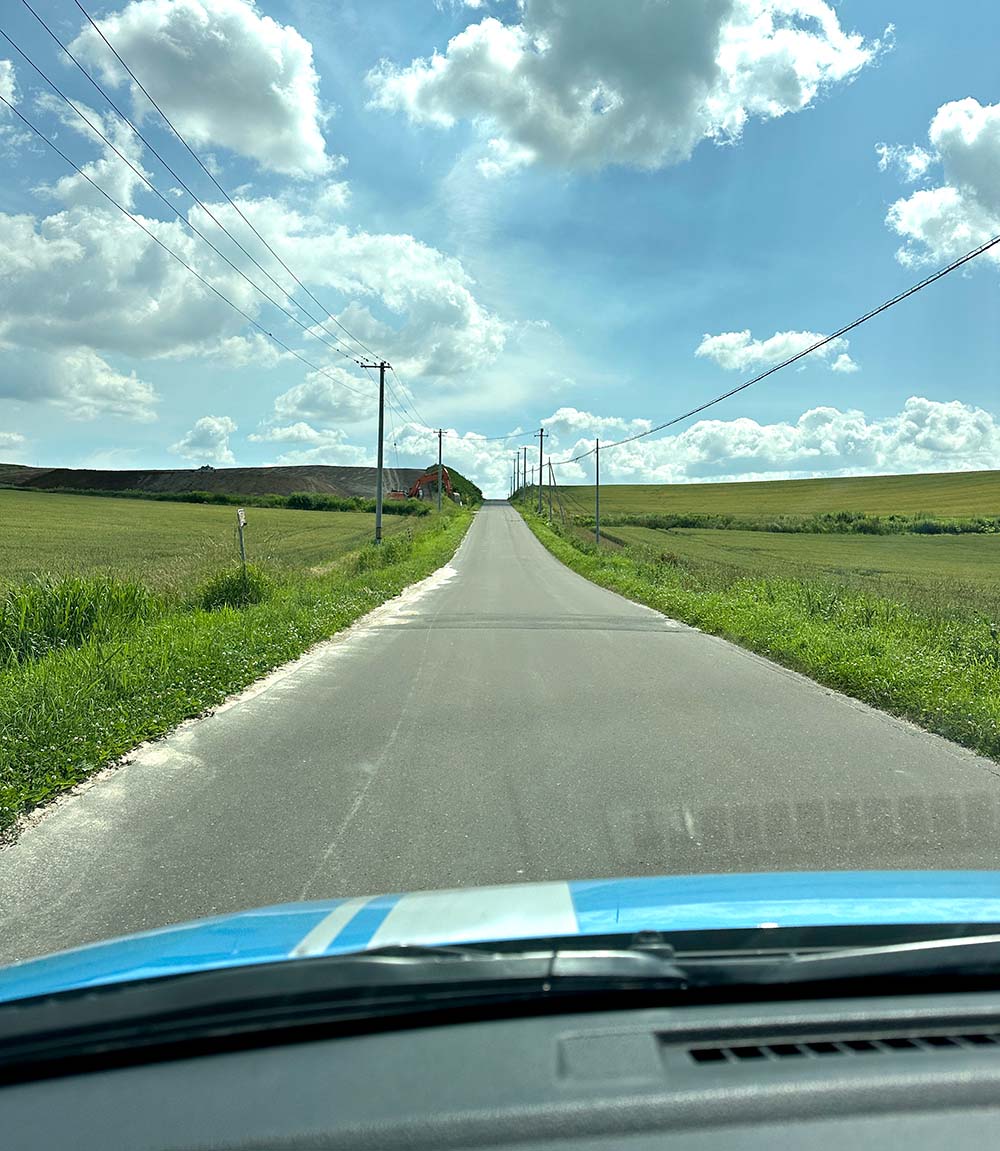
Driving in and around Furano
Traffic in Furano was generally quite pleasant and easy to drive. It’s a fairly small town, and it’s even more uncrowded once you head out of the city area.
Some places that were surprisingly crowded for drivers – Furano Marche was really crowded at lunch time and finding parking was a bit of a nightmare. We ended up parking a few blocks away and walking over.
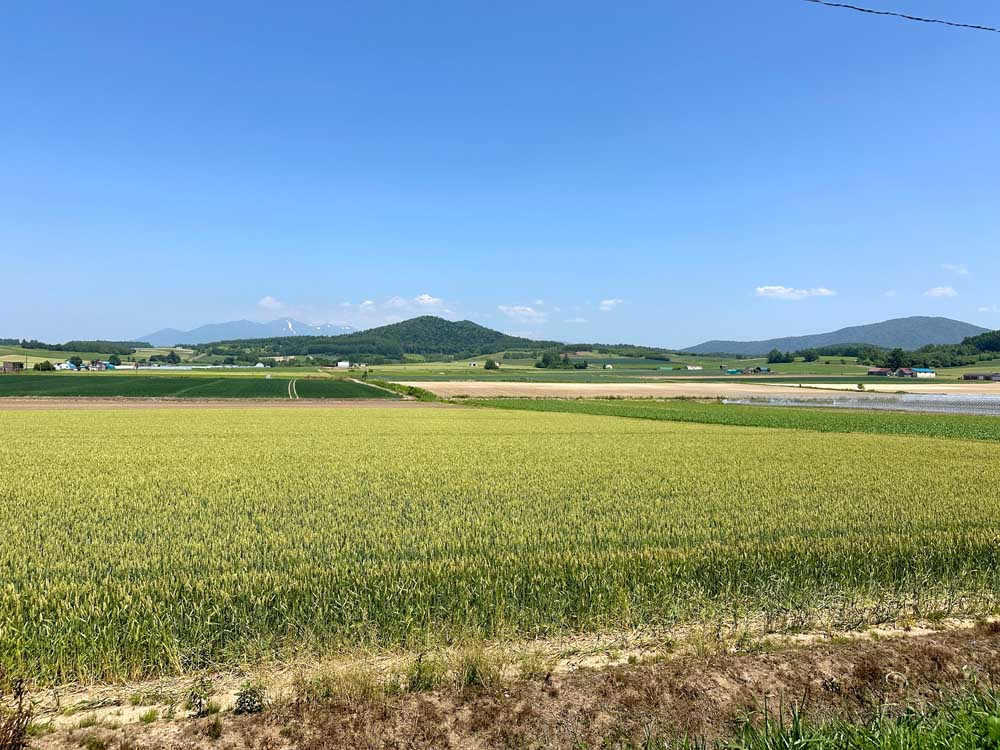
Where to stay in Furano
The great thing about driving trips is that you have a lot more options when it comes to accommodation. You can pick more remote locations or offbeat smaller towns to stay in.
For sheer convenience though, Furano city is a great option. I was put up at Fenix Furano which is right in front of the Kitanomine Gondola, and while there was not much in the immediate walking vicinity, the downtown area, supermarkets, kombinis and other restaurants were a 5-15 min drive away.
We popped by Hokuren Shop Forest every evening in Furano – this large supermarket 5mins by car from the hotel has a sprawling carpark and is the perfect place to pick up snacks and groceries. Sharing its parking lot is a large DCM which is like a hardware store and Daiso all in one, as well as a McDonald’s with a drive through.
While my stay was sponsored, here are some other places to stay in Furano that I would consider:
- Fenix Furano – located right opposite the Kitanomine gondola station [more on booking.com]
- 雪玉Snowball Hostel – quite close to Fenix Furano but a slightly more budget option with shared dormitories as well [more on booking.com]
- Best Day Ever – these little chalets look so cute! [more on booking.com]
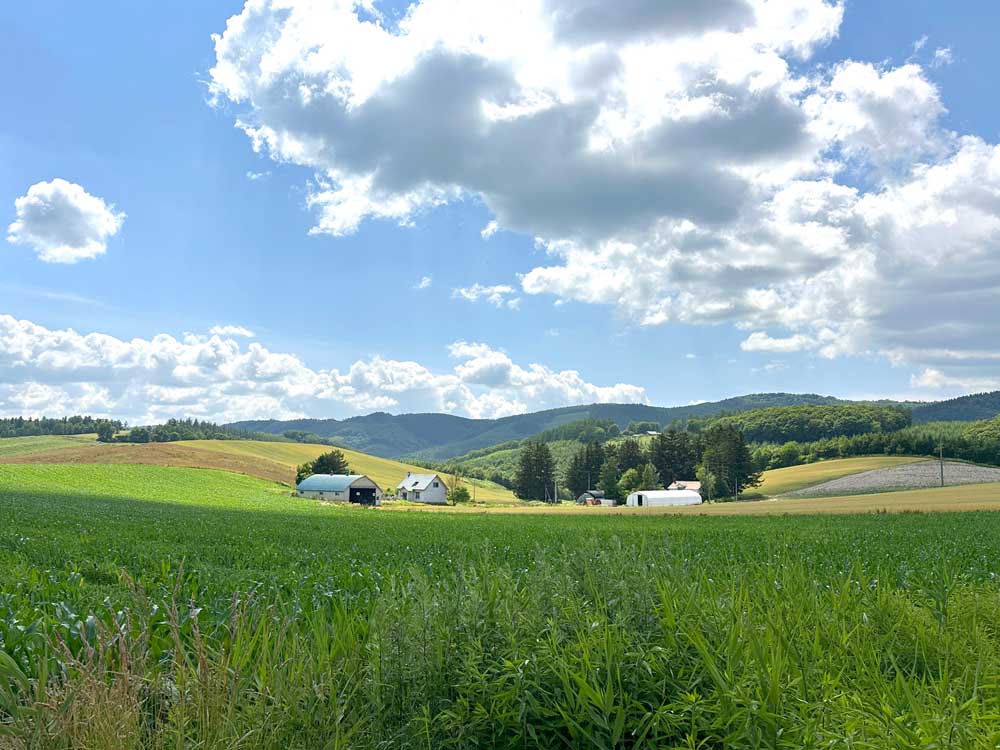
Day 1: Biei 美瑛 & Nakafurano 中富良野
About an hour north of downtown Furano is the town of Biei, entry point to some of the main sights found around Hokkaido and Furano.
Shirogane Blue Pond (Aoiike): True blue views
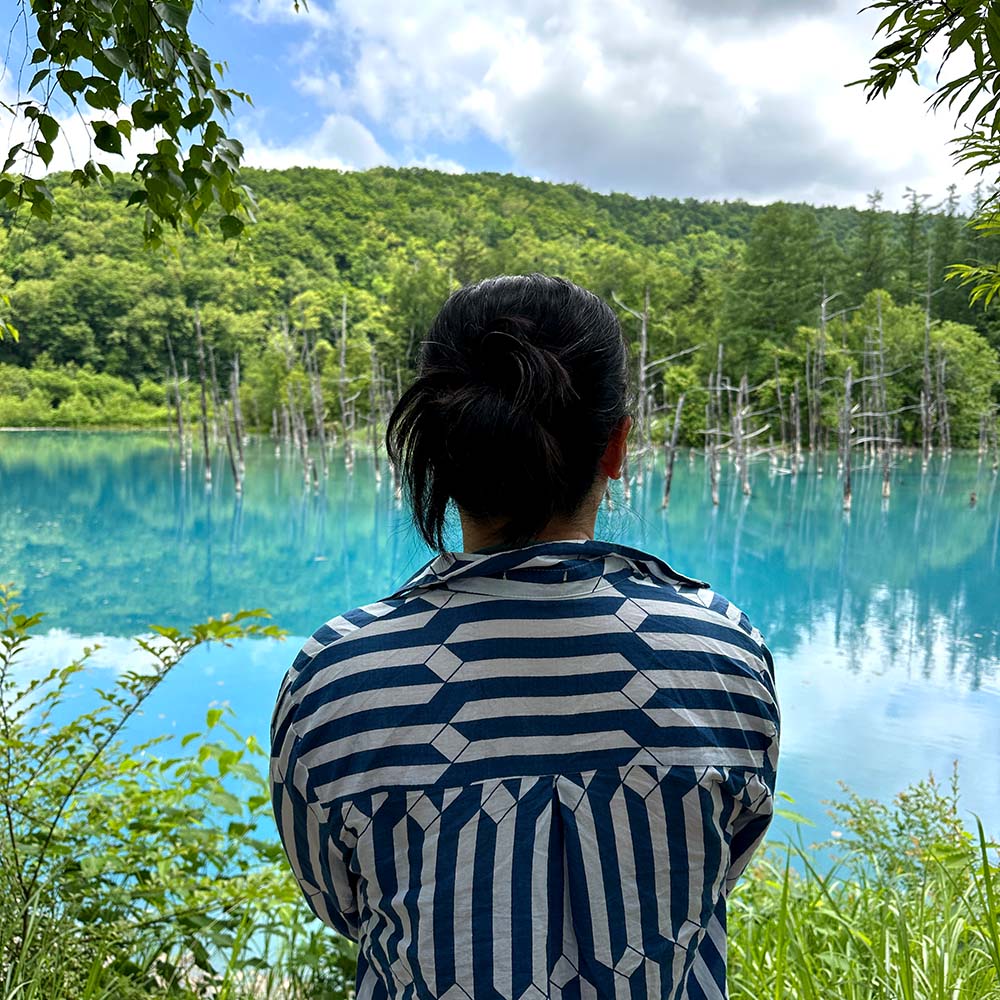
One of the key highlights of a Furano and Hokkaido trip is a visit to the Shirogane Blue Pond. It’s rich unworldly blue hue is the result of minerals in the Biei River water. The pond was never meant to be a tourist attraction – it was originally created to help prevent erosion when the nearby Mount Tokachi erupted.
What made this pond become a landmark was a series of winter photographs by local photographer Kent Shiraishi of this pool iced up and flecked in snow – check out the original photos and interview. If these images look familiar, that’s because you might have seen them as MacOS X wallpapers back in 2012! The weirdest thing is that I have a set of bedsheets with this image printed on them and never made the connection until I was doing my research for this article…
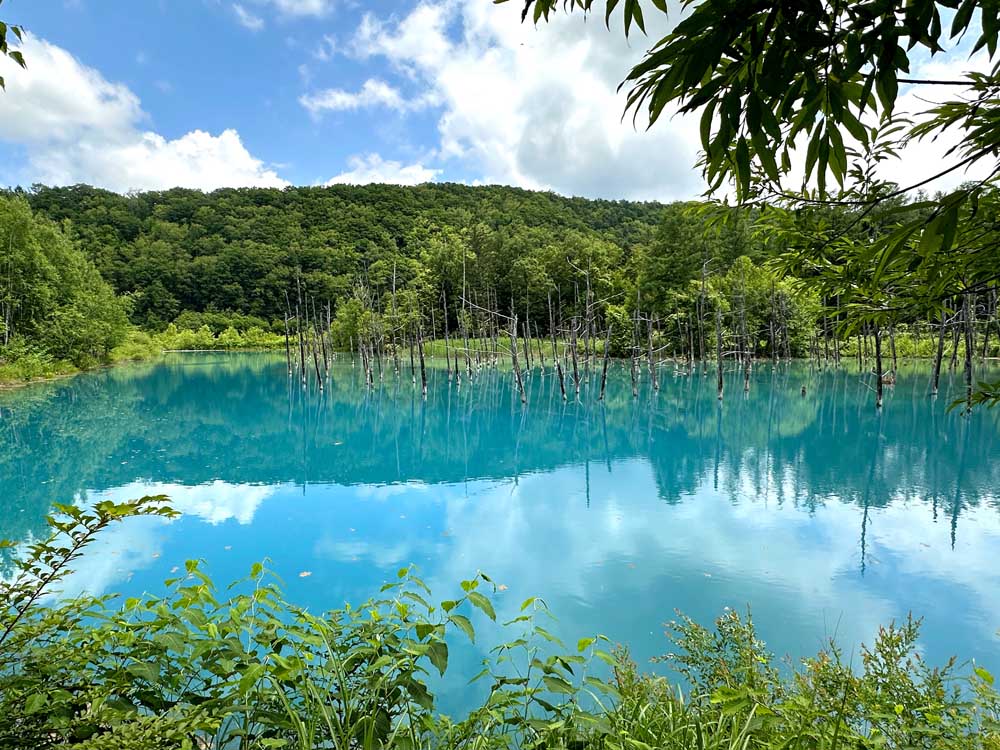
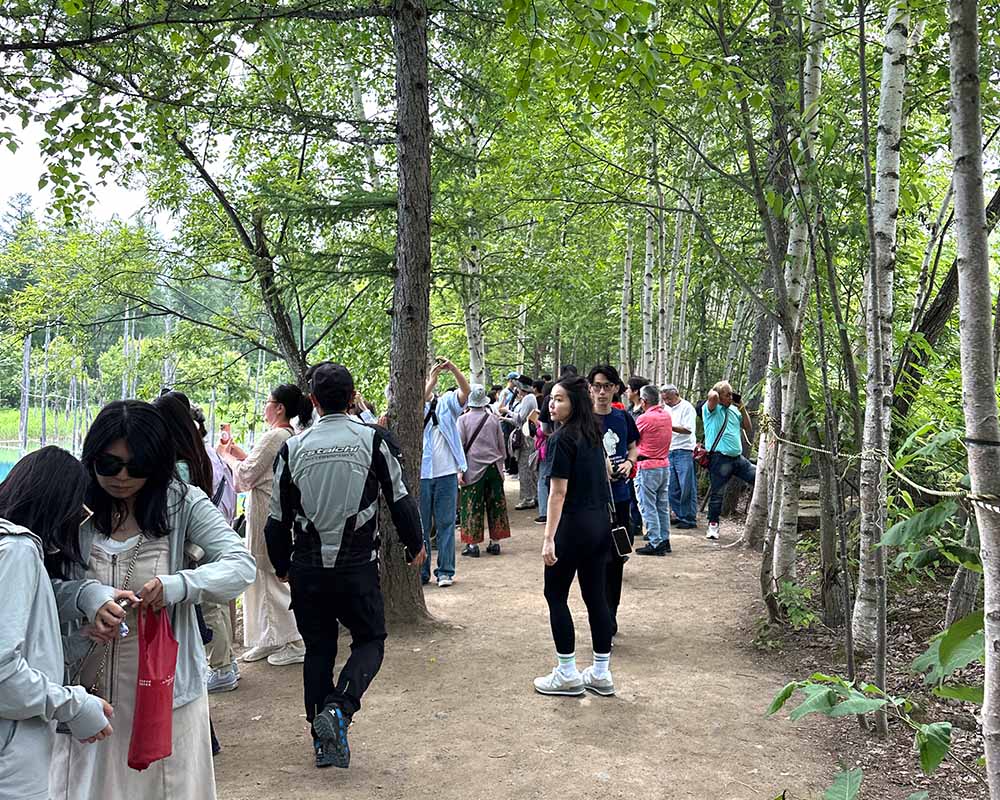
When we got to the pond, the place was teeming with tourists. You can’t really tell from the photos because, but it was crowded! The pond is less than 100m away from the carpark, and there’s a paved path on one side where everybody is crowded trying to get their best shot without anyone else in the frame. You can still take decent pictures but you do need some patience.
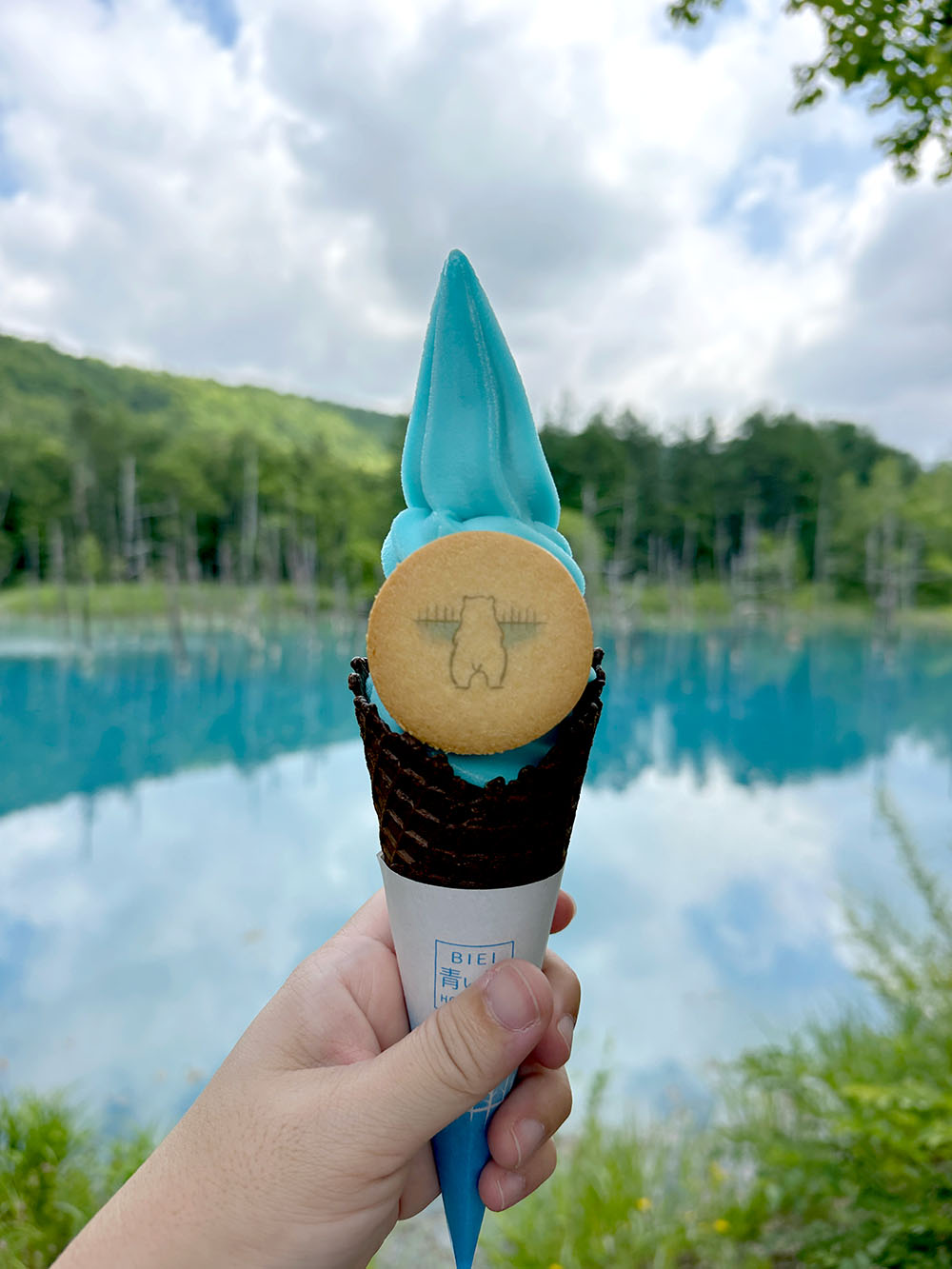
In summer, the Shirogane Blue Pond is at its most beautiful when the sun is out – both the turquoise waters and the surrounding green foliage are at their most vibrant then. The bare white boughs of the dead larch and silver birch trees sticking out of the water give it an interesting vibe. I think I’d like to see this again in winter, and whether it really looks like Kent Shiraishi’s magical photographs.
There’s nothing much else to do here other than take your shots at the pond. You can walk a little bit further past the pond where there is a little hillock but it doesn’t have much of a view. Also, there’s a kiosk that sells blue-themed snacks near the carpark, but otherwise there’s nothing in the immediate surroundings.
Tip: Timing is key to being able to see this spot without the crowds. I suggest going as early as possible – we reached at about 10am and it was already pretty crowded. Public buses start arriving from 7am+ onwards, but I think getting there around 8-9am would be enough to get the jump ahead of most people eating hotel breakfast. The other note would be to try and get there before the big tour buses get there, that way you don’t get all the tourists swarming you at once.
Shirogane Blue Pond / Aoiike 白金青い池 [Google maps] [Website] Parking is available right next to the blue pond but it’s not cheap at 1,000 JPY.
Shirahige Waterfall: Bridge views
If you’re going to see the Blue Pond, then it makes sense to take a short drive less than 10mins further upstream of the Biei River to Shirogane Onsen town. Here you’ll find a handful of onsens (for some hot soaking if you are so inclined) and a visitor centre, as well as the Shirogane bridge where most people go to check out the famous waterfalls in this area.
The Shirahige Waterfalls also have that same bluish tint as the blue pond, but it got its name Shirahige or ‘White Beard’ because the cascades apparently bear resemblance to an old man’s beard. Maybe the falls weren’t super dense that day, but they were still pretty. You can only see the falls from above though, as well as a nice river view on the other side of the bridge.
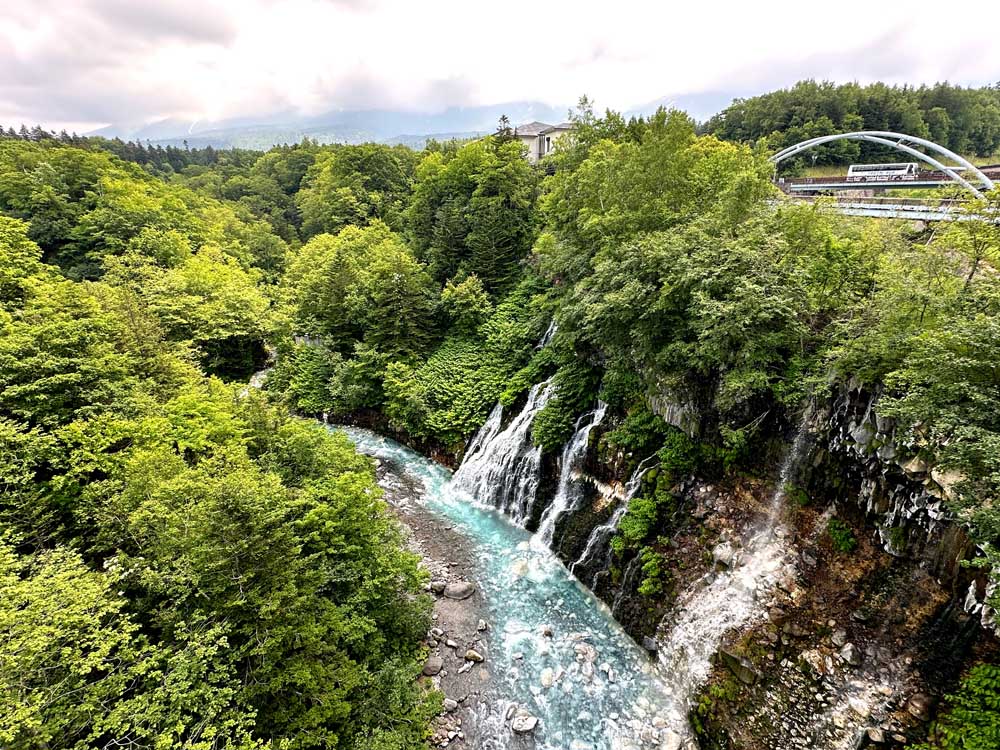
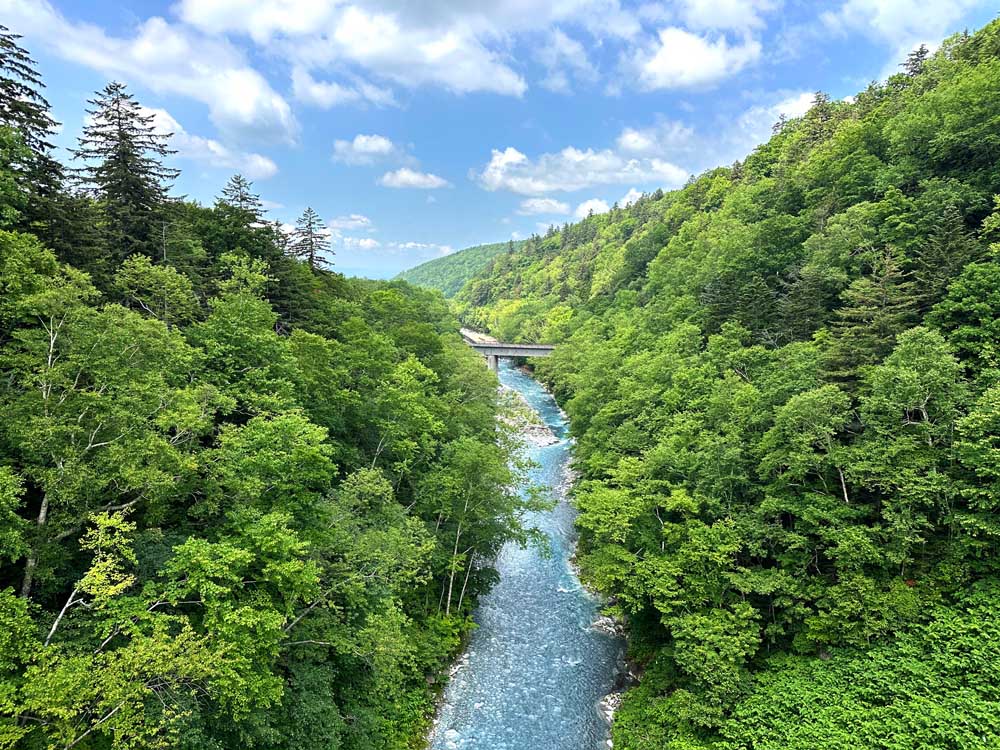
The bridge leads up several hundred stairs on the side of the cliff to the Tokachidake Volcano Sedimentation Centre, which seems like a mini gallery with exhibits about the Tokachi Volcano. See location on Google Maps – it is accessible by road if you rather not climb those stairs though it requires a bit of detour.
We weren’t in the mood for a hike so we skipped that. There were 1 or 2 food stalls with benches near the bridge where some people got some food so you could picnic if the weather is nice, but again there’s not that much around here other than onsen hotels.
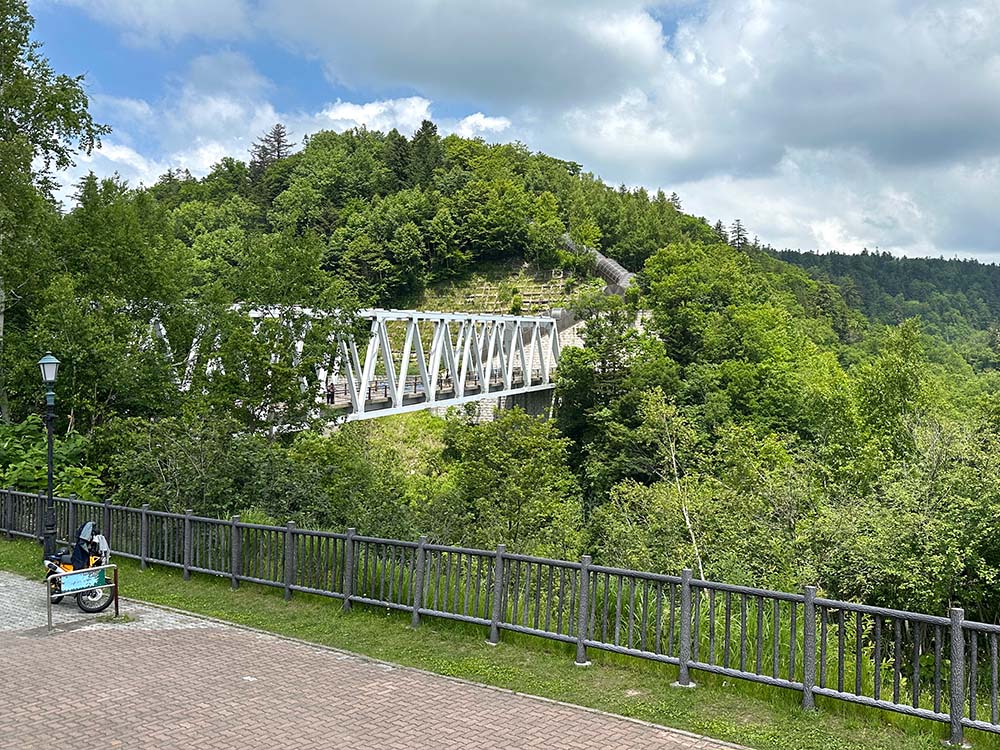
Shirahige Waterfall 白ひげの滝 [Google maps] [Website] We found parking near the visitor centre, but you can also find empty spots near the bridge, most of the parking seems to be free.
Tsuruki Goma: Soba for Lunch
Since there wasn’t much option for lunch around the pond and waterfall, we headed into Biei town, about 25mins drive away. We were recommended to check out Tsuruki Goma
I ordered the hot soba with tempura prawns while my friend P ordered the Biei pork cutlet teisyoku (kinda like a hot stew with the pork cutlets soaked in an eggy sauce) which came with rice and and a smaller bowl of cold soba. I usually prefer hot noodle soup but maybe because it was summer and warm, but that cold soba was pretty darn good. I kinda wish I ordered that instead!
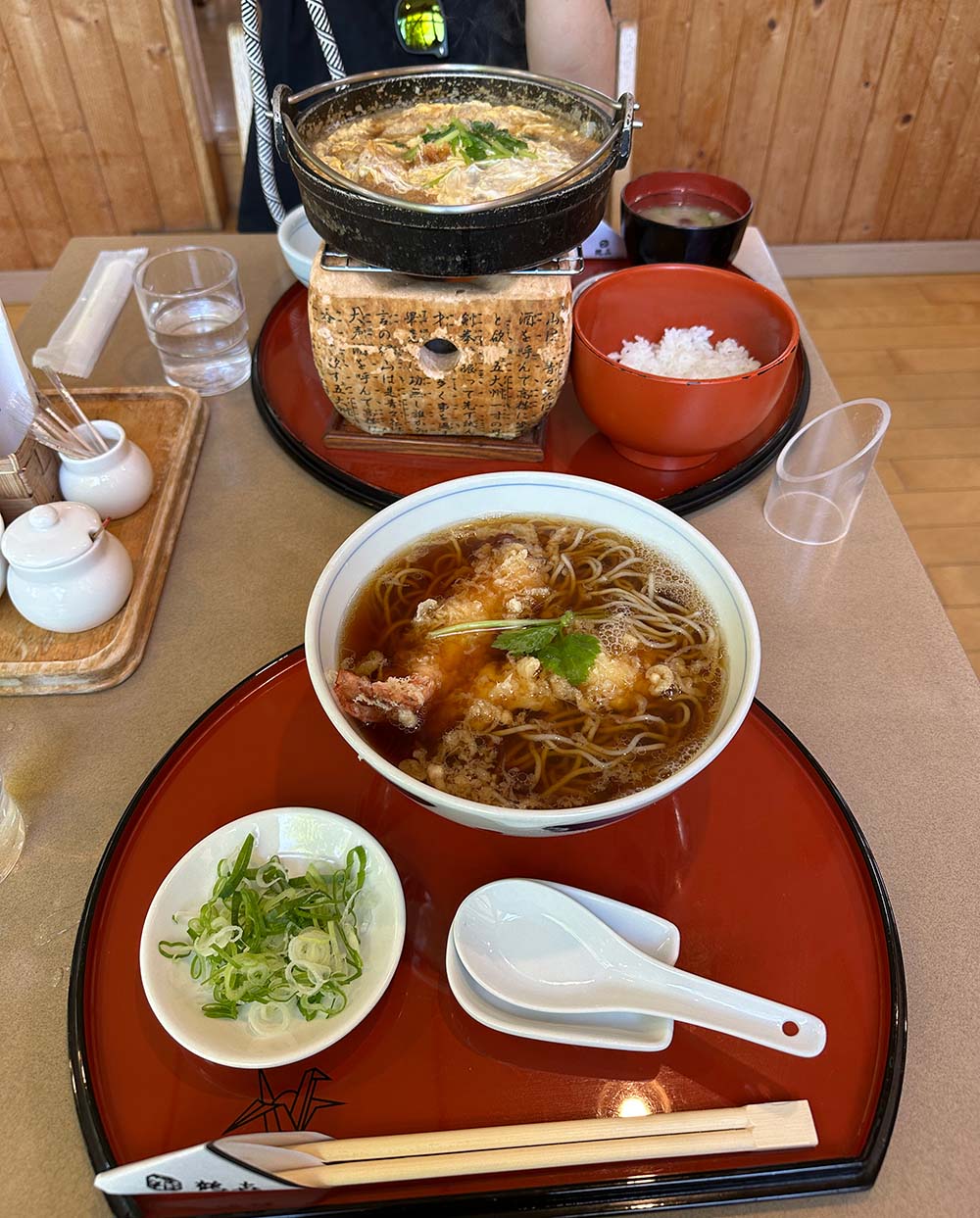
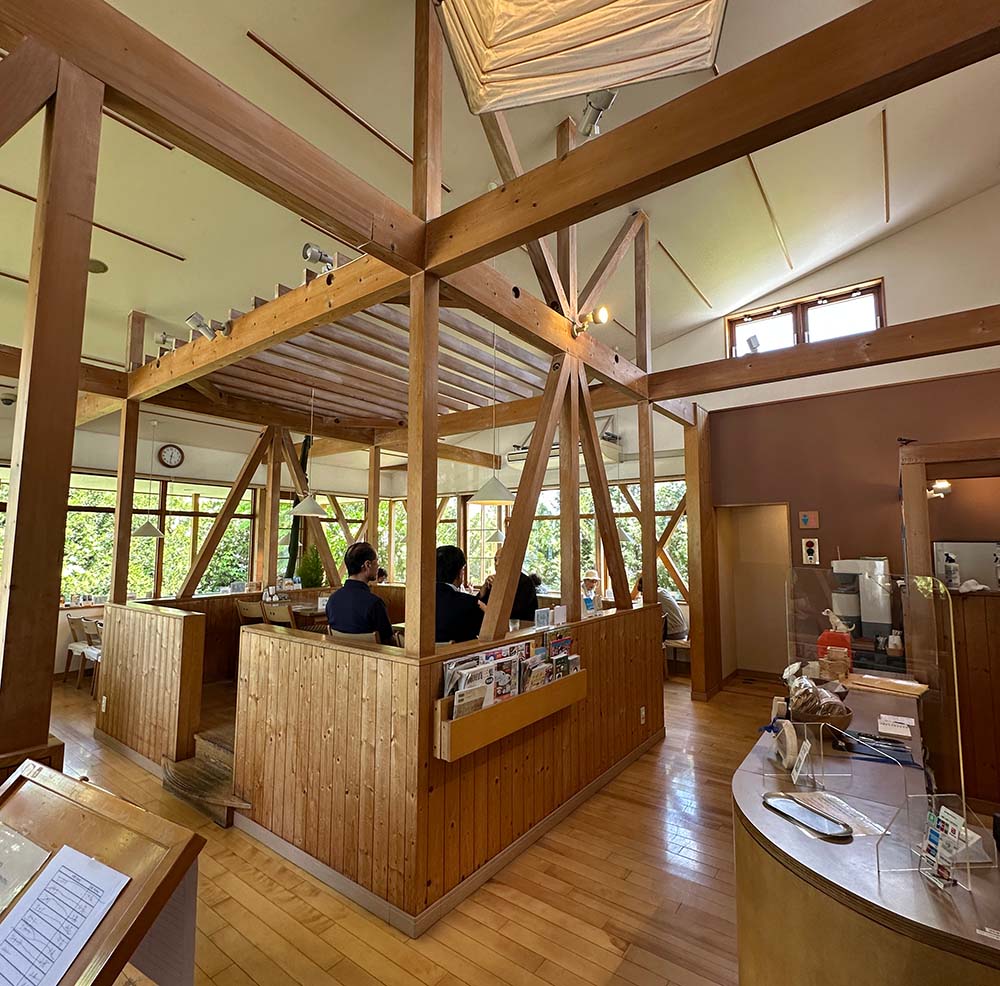
Tsuruki Goma ごまそば鶴㐂 [Google maps] [Website] No reservations, so you may have to wait.
Since we were all the way up here, we decided to check out some points along the way that seemed interesting as we headed back down south towards Furano.
Biei Christmas Tree: Worth a stop?
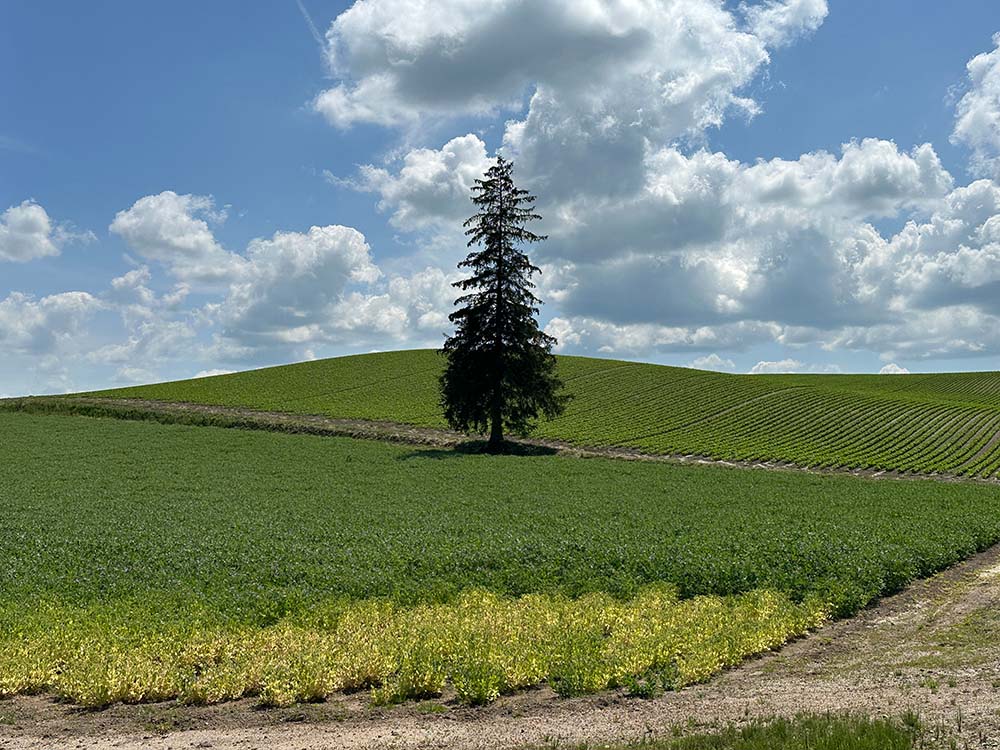
We took a small detour to see this lone conical shaped tree in the middle of a field. There was maybe one other car that was there. The fields are privately owned and all sorts of signs about cameras are posted so you shouldn’t trespass. It honestly isn’t very remarkable, but if you look at the winter photos on Google, it does look quite postcard pretty and there are a TON of people taking photos of this lone tree in the middle of a snow covered field. It’s cool but not worth braving those crowds, especially because there’ no dedicated parking space and the roads here are single lane per side.
Kamifurano Panorama Road Ehana: Worth a stop?
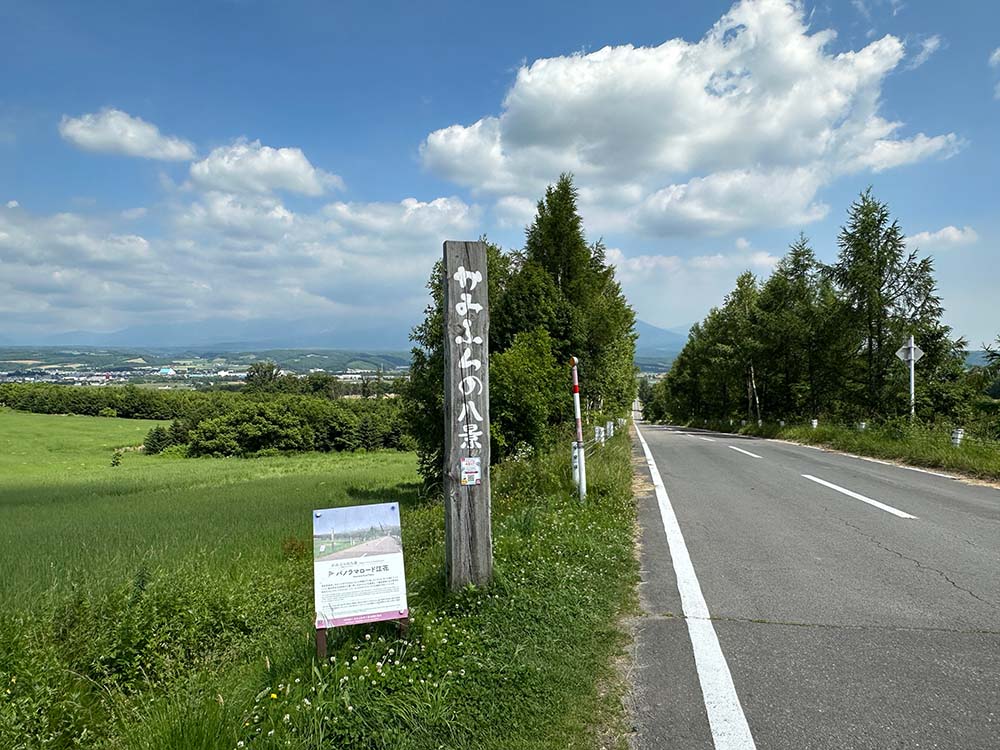
Further south in Kamifurano, we made another small detour amid the smaller roads to see this Panorama Road Ehana which is marked as one of Kamifurano’s 8 Scenic Spots. This elevated and very long straight road apparently offers lovely mountain vistas… eh it’s alright. I wouldn’t go out of my way for this, and it’s hard to photograph properly.
Farm Tomita: Lavender and flower fields galore
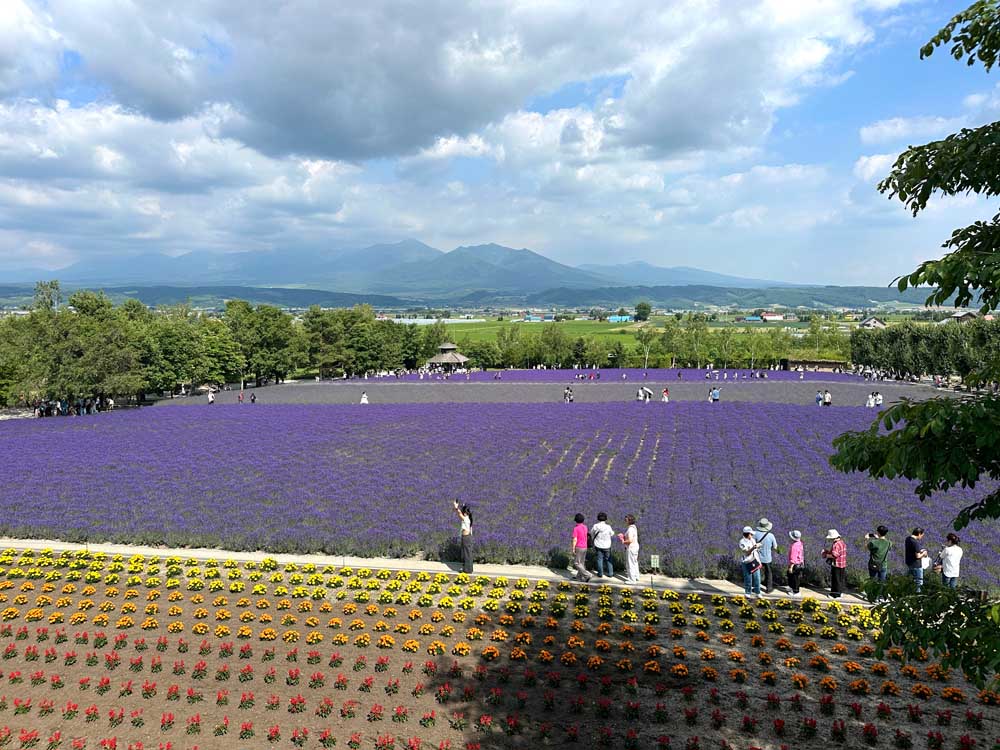
One of the oldest farms in Furano dating back to 1958, one of the best places to see lavender flowers in season is Farm Tomita. Located northwards in Nakafurano, Farm Tomita has various flower fields that rotate in bloom throughout the year, but of course lavender is what they made famous when their lavender fields were featured in a Japan National Railways calendar.
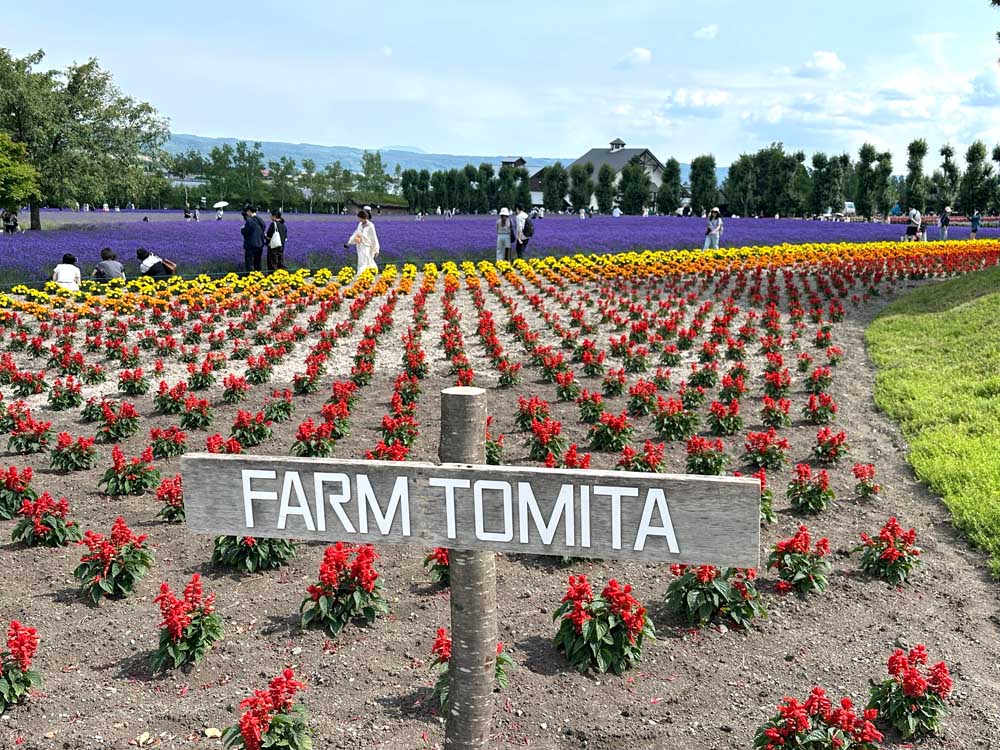
What you do here is basically walk around its many themed flower fields, snap your best shots, and check out the little stalls scattered around the compound. There are shops that sell all things lavender, from beauty products, perfumes and food. I was surprised to note that there were at least 5-6 different varieties of lavender (tried the various perfumes but they all smelled the same to me lol).
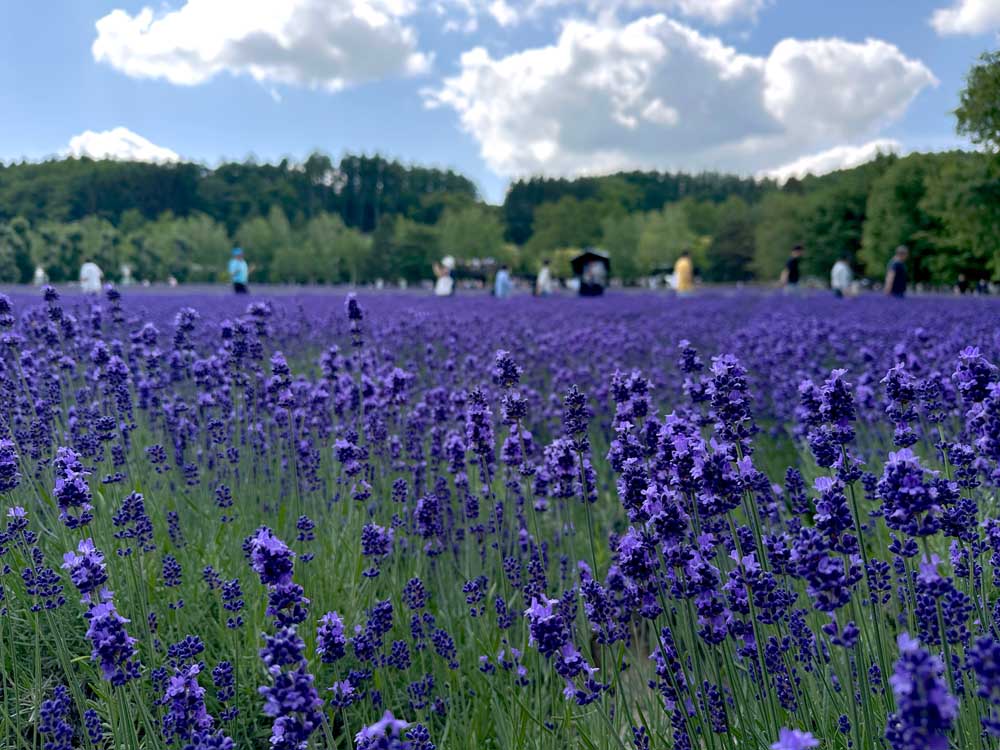
Of course I had to get myself some lavender soft serve ice cream, the best way to cool down in the summer heat. There are some pretty odd lavender-flavoured foods like lavender coffee, lavender butter with potato, lavender chiffon cake… be prepared to do a bit of queuing! You could also find some more typical Hokkaido foods, along with melon flavours (more about that below).
When we visited Hokkaido in early July, it was the start of lavender season and several of the fields were quite lush, but not all the fields were open, and some other farms also hadn’t fully opened at that point, so I think there might be more flower options a little later in the month. I also enjoyed some of the other non-lavender flower fields on site.
Farm Tomita ファーム富田 [Website] [Google maps] There was free parking on site though it was a tad crowded, and I think there were some paid lots as well nearby. Free entry to the park!
Tomita Melon House: Eat all things melon
Right across the road from the entrance to Farm Tomita is another Hokkaido specialty, the Hokkaido cantaloupe melon. You might know it better as Yubari, which is one of its more famous varieties, sweet succulent orange flesh surrounded by a green textured shell.
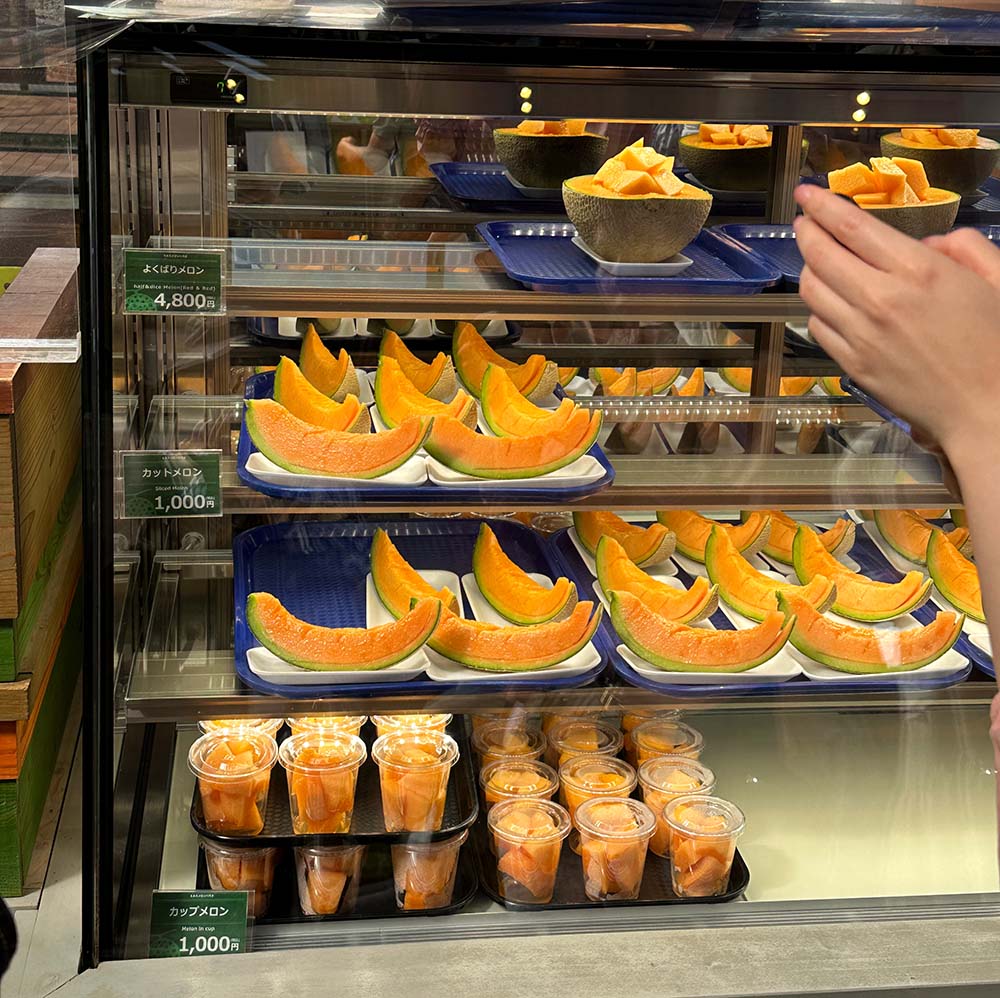
I’ll be quite honest – melon isn’t my favourite fruit, but these Hokkaido melons were pretty sweet and yummy and were selling at a pretty penny all over Furano. Tomita Melon House is like a small collection of cafes and eateries where you can get all things melon. We popped in after Farm Tomita so I was way too full to indulge in anymore sweets at that point, but I gotta say the melon soft serve, or just those half shells of melon where you scoop out the flesh to eat directly – looked pretty delectable.
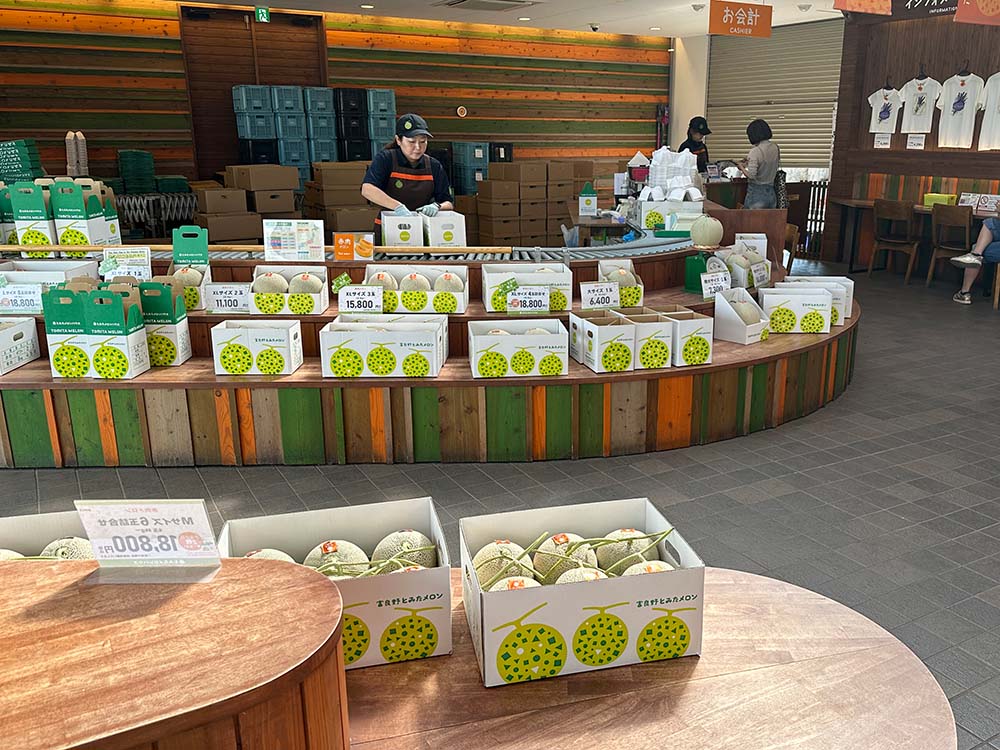
Tomita Melon House とみたメロンハウス [Website] [Google maps] Do this in tandem with Farm Tomita! They are separate entities but conveniently located next to each other.
Furano Tanijin: Lamb jingisukan for dinner
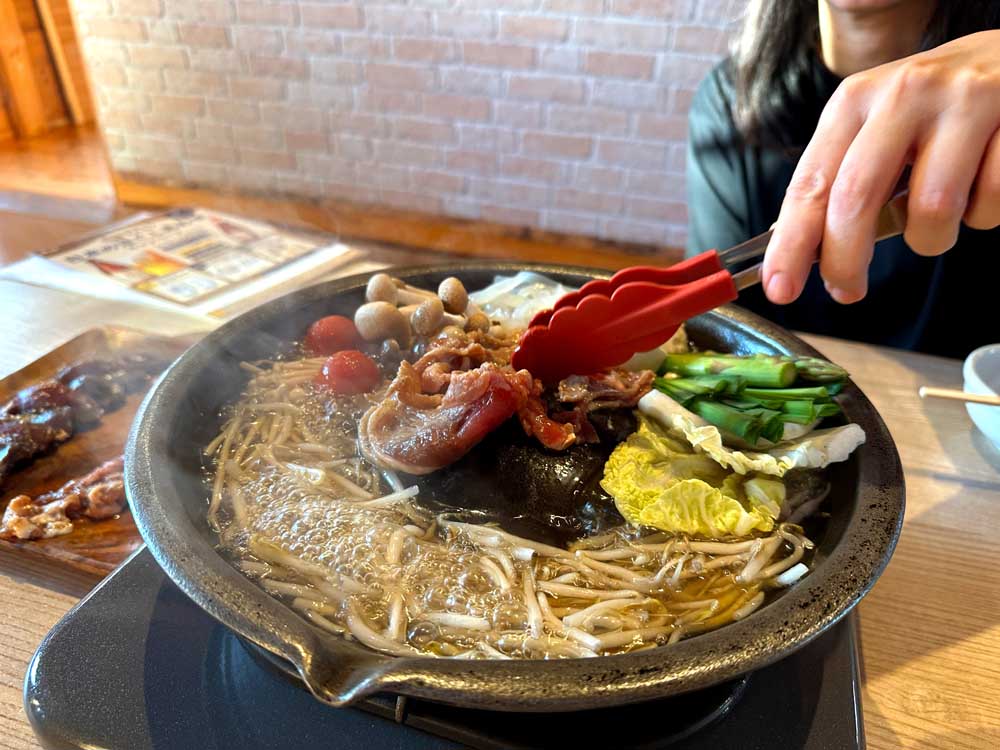
For dinner, we indulged in a Hokkaido speciality known as jingisukan or Genghis Khan, which is basically a grilled lamb hotpot. I thought it looked a lot like Thai mookata, where there is a curved bowl in the center to grill your meat, and let the fats flow into the broth for more flavour.
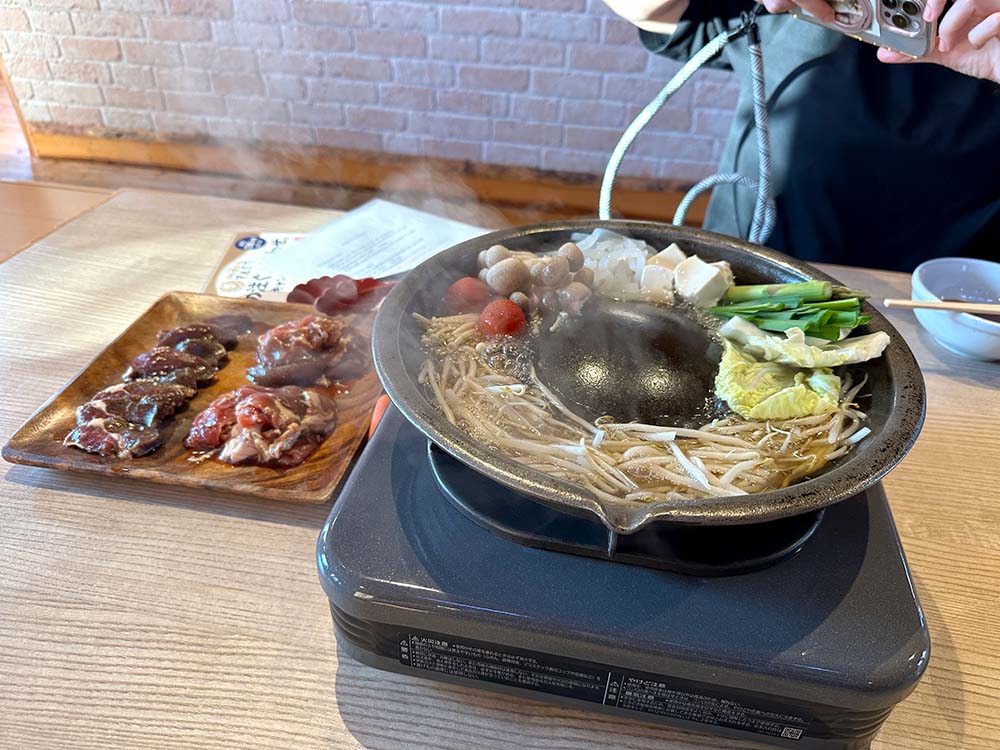
Furano Tanijin is a specialty jingisukan joint and so popular that our booking had to be at 5pm. Be prepared to smell entirely of grilled food when you step out after! Most of the meat dishes on the menu are lamb though they had a limited amount of beef available. We had our vegetables, tofu and mushrooms boiling in the broth while grilling our lamb on the curved plate in the middle.
This restaurant is particularly strict about alcohol consumption – since we drove there, only one of us was allowed to order alcoholic drinks at all, so I sat this one out.
Furano Tanijin ジンギスカン盆賊衆(ボンゾク) [Website] [Google maps]
Ningle Terrace: Night lights and curio shopping
After a long day of eating, we needed a bit of a walk so we went to check out Ningle Terrace after dinner. Ningle Terrace is a little collection of Japanese craftsmen housed in 15 very cute little log cabins joined by a long wooden boardwalk. The souvenirs you will find here are not the cheapest, but they are very unique and not the sort that can be easily found in other shops around Furano.
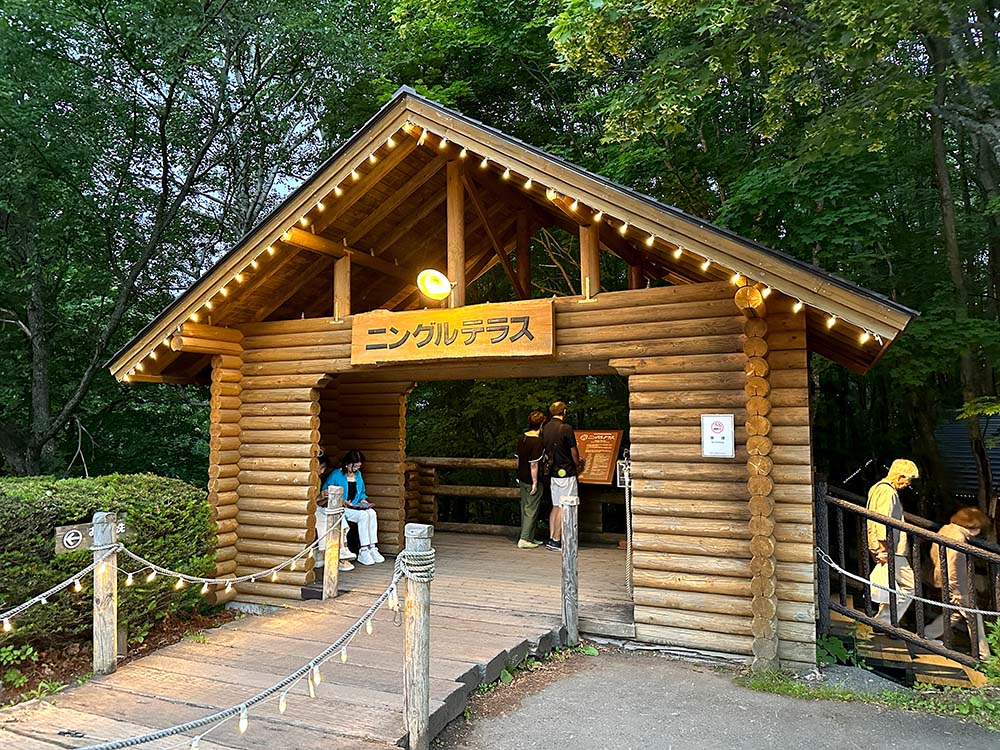
Ningle Terrace is open in the day but this is a spot that you need to visit at night because it’s particularly charming when the fairy lights come on. In summer there are insect screens on the doorways, but I’ve seen pictures of these snowcapped cabins in winter and it looks super cute.
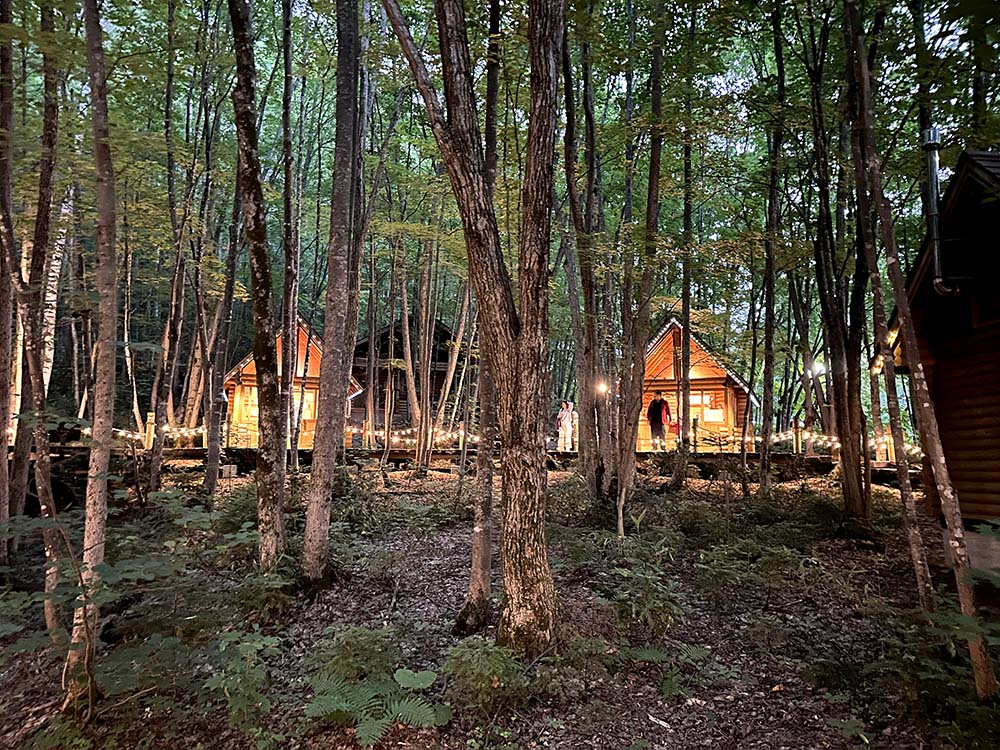
It’s a nice spot for a little wander – there were some jewelry shops, a rather interesting hand-carved candle shop amongst others, but I didn’t find anything to my liking but I enjoyed the post-dinner browse. Fun fact: Ningle is the name for a dwarf or sprite of sorts that the indigenous Ainu people in Hokkaido believe reside in their forests… the forest at night does feel a little unearthly so who knows?
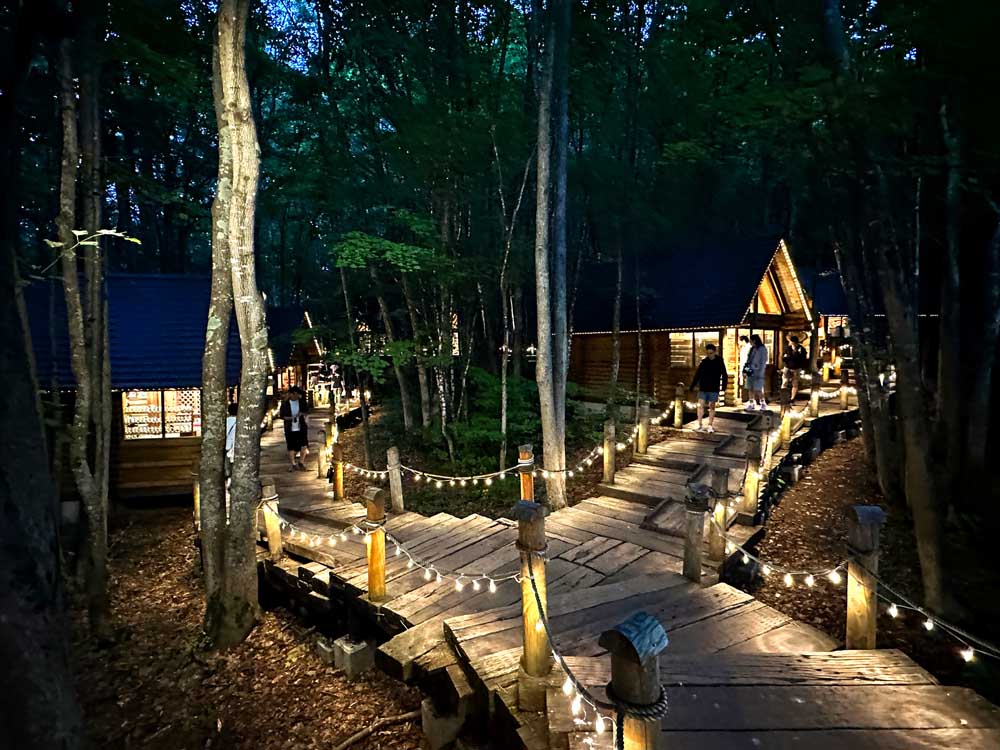
Ningle Terrace ニングルテラス [Website] [Google maps] Located in front of the Shin Furano Prince Hotel near the Furano Ski Lift.
Day 2: Furano 富良野 + Rokugo 麓郷
Exploring the sights a little closer to downtown Furano by visiting Rokugo Village about half an hour drive away from downtown Furano.
Furano Jam Garden (Kyohsai Farm): Sweet treats galore
Warning: any trip to Hokkaido will involve a fair amount of eating because they have such good food all across the region, and a lot of attractions revolve around this great food. We took a 30-min drive eastwards from downtown Furano to Kyohsai Farm for its most famous attraction, the Furano Jam Garden.
Auntie Jam’s Gift Shop: Jam making, tasting and buying
Most people come to Furano Jam Garden to check out Auntie Jam’s Gift Shop, where you can buy over 35 varieties of their specialty jam and jam-related products. There is SO MUCH TO CHOOSE FROM. They feature a lot of traditional flavours like strawberry and grape, but they also highlight a lot of the local Hokkaido specialty produce and harvests from farms in and around the area, so it makes for a good souvenir as well.
Some of the jams I thought were interesting – I’d never heard of haskap before but it’s a type of blueberry native to Hokkaido which is also one of its largest producers. Rhubarb is not my go-to but this is not bad if you don’t want something too sweet. I always go for what’s in season, so of course I had to pick up some melon as well!
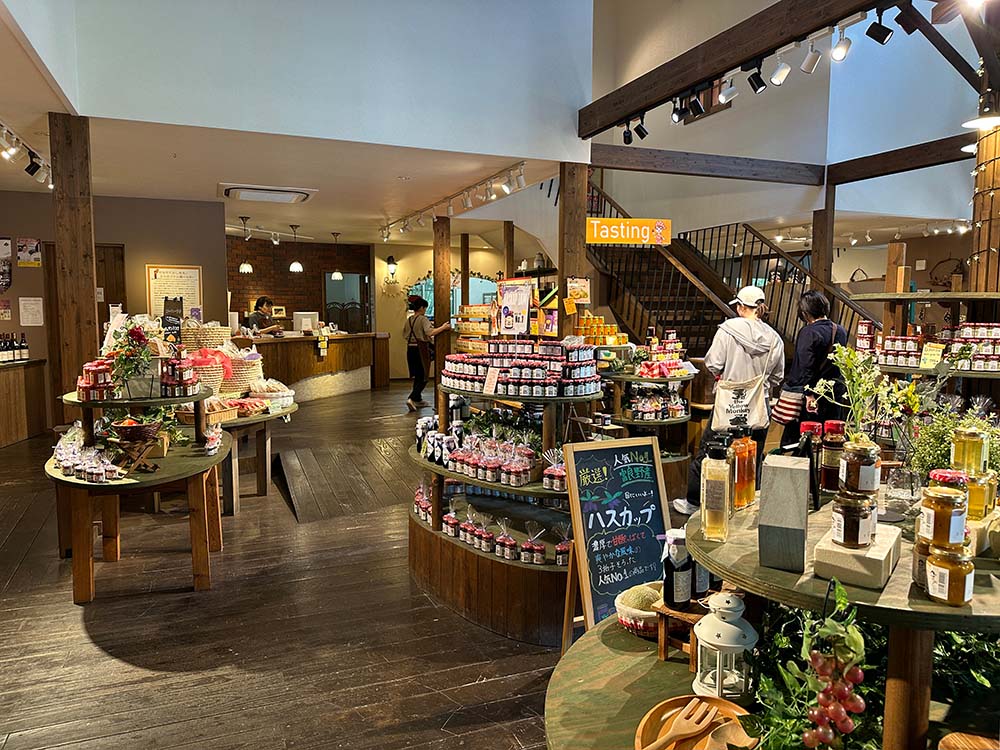
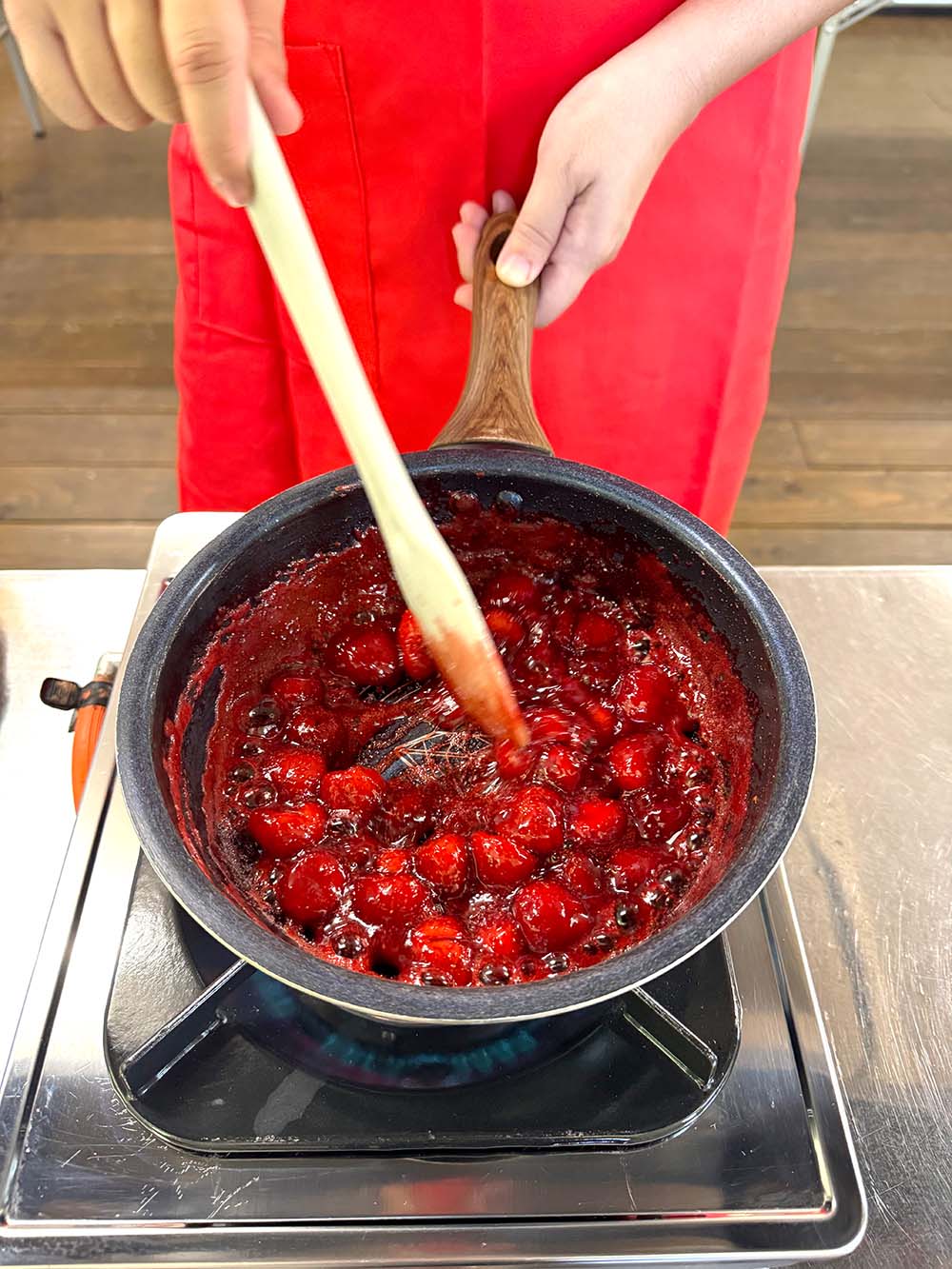
If you want a more hands-on experience of the jam, you can also join their jam making workshops that are held twice a day on the upper level of the shop. Furano Jam Garden also prides themselves on making jam with no added dilution, preservatives or artificial sweeteners. Strawberry jam was out of stock in the shop, but they had strawberries for the workshop so lucky me I guess!
Jam making is honestly not that difficult, but it is a pretty laborious process. All my ingredients were laid out for me and it was basically just adding all that into a pan and then slowly boiling and stirring it down into a goopy paste over 20-30 minutes. You even get to label your own bottle at the end. It was fun for awhile but I think I’ll stick to just buying the jam in future :P
If you are a fan of the Japanese character Anpanman will love the facility next door which has a shop chockfull of Anpanman memorabilia and a 2nd floor gallery of Anpanman art. I skipped that as it’s not really my jam (heh). Anpanman nor its creator Takashi Yanase don’t have a particular relationship with Hokkaido as far as I know, but in the anime Anpanman is created by Uncle Jam, so I’m guessing that’s why Auntie Jam’s gift shop is next door!
Rokugo Viewing Platform: Lofty lavender views
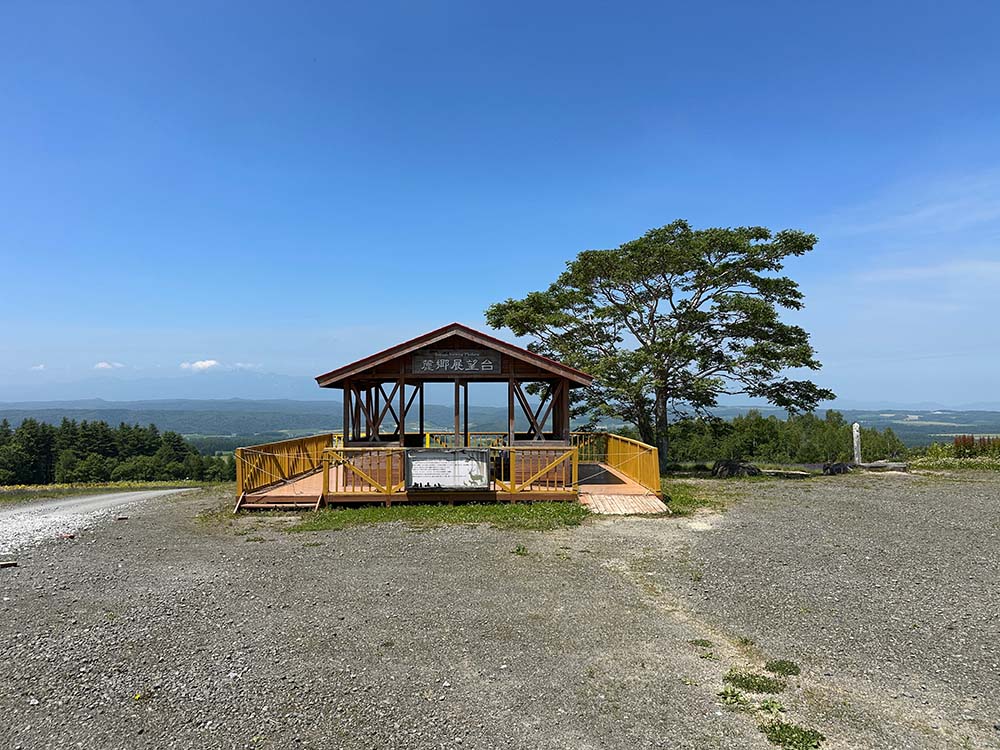
Beyond the buildings where the Auntie Jam’s Shop and the neighbouring Anpanman shop were is a tiny lane that leads to a viewing platform. They’ve planted some flower fields out here along a slope which offers a lovely view of the surrounding landscape.
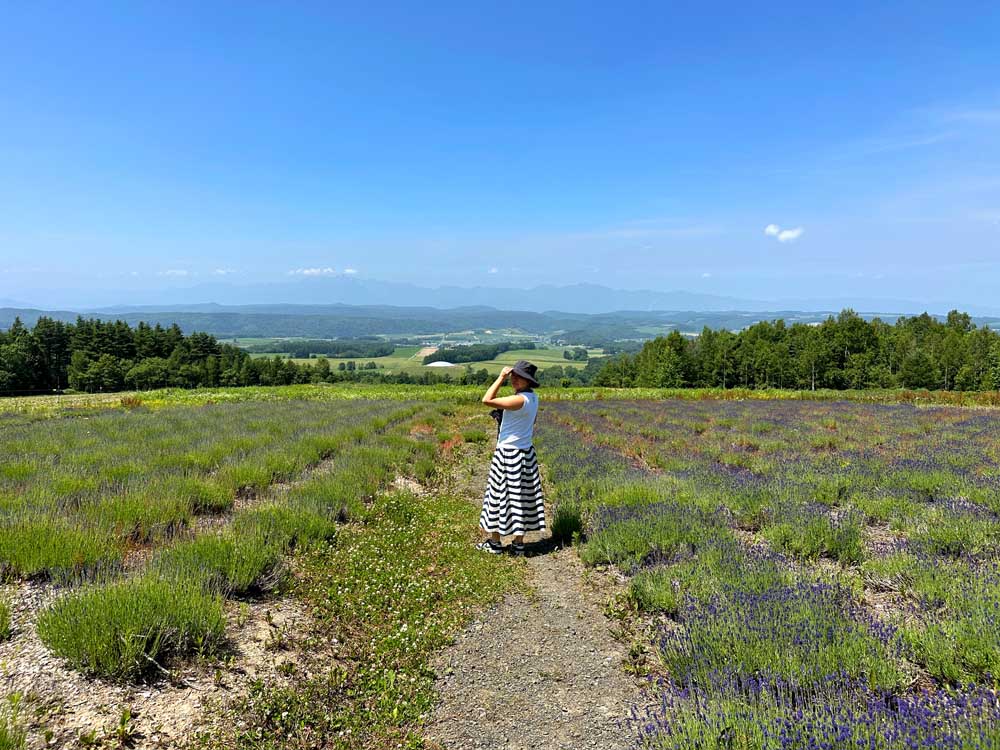
The platform itself was closed when we visited, but the lavender in the fields had already started blooming so there was the beginnings of a nice purple carpet, but I think it would have been really beautiful in the following few weeks as we were there at the start of the lavender blooming season. There are other flowers here too – according to the website, the flowers are best viewed from June to October, but you can get some great views here even in the off-season.
Furano Jam Garden ふらのジャム園 [Website] [Google maps] This is part of the Kyohsai Farm. Visiting the Rokugo Viewing Platform and Auntie’s Jam Shop is free, but the jam making classes cost 2,000 JPY/pax and are held at 10am and 2pm daily (sign up online or on site).
Hokkaido Soup Curry at Furanoya
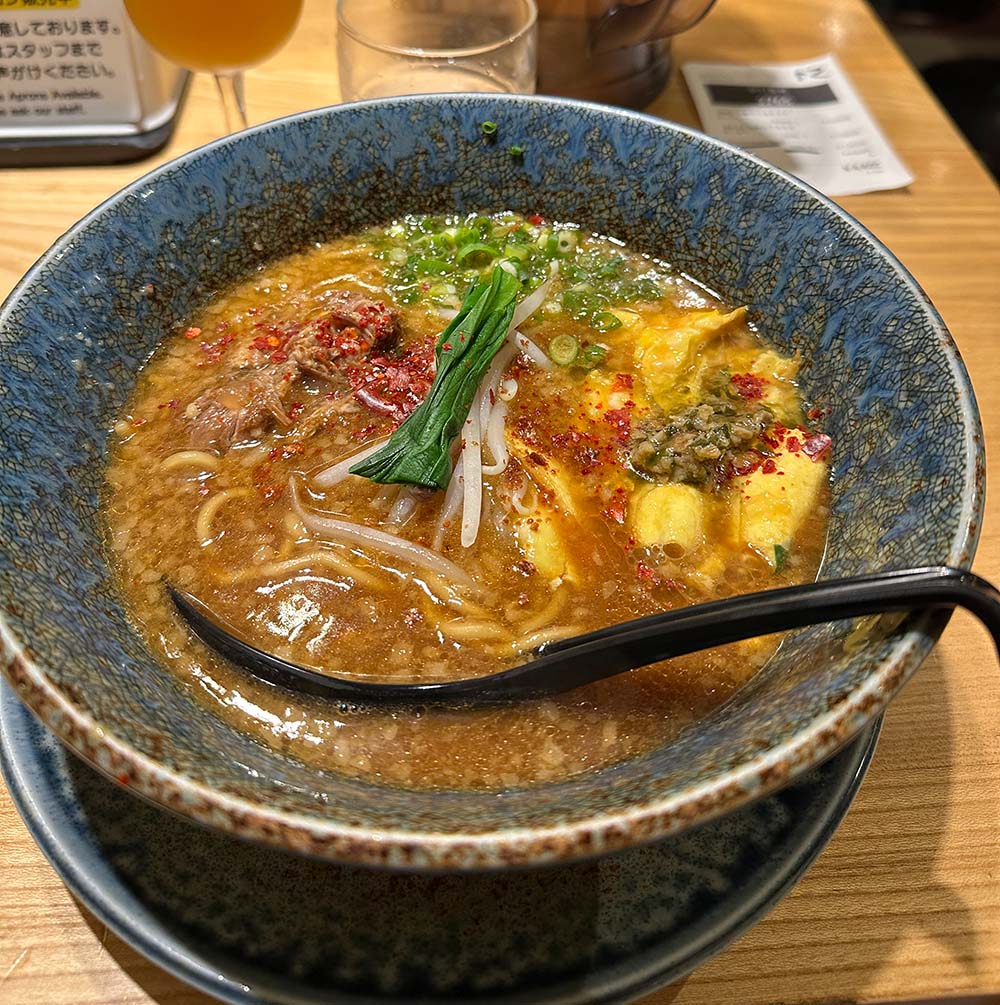
If you aren’t already planning to eat yourself silly at all the food stops on this day, you could pop back to downtown Furano en route to the next stop to this very famous restaurant that we unfortunately never got a chance to try. Hokkaido is famous for its soup curry. Unlike typical curry dishes that tend to be quite thick, this is more broth-like, like a thin stew. This place Furanoya was highly recommended and we were gonna eat there for dinner but at 530pm the queue was already quite insane, so we ended up skipping this! (This photo is from the soup curry that we ate in Sapporo City)
Furano Cheese Factory: Cheese + Gelato + Pizza
More eating explorations of Furano, this time a little closer to the Furano downtown area. Hokkaido is famous for its excellent dairy, so naturally some things you have to indulge in here are its cheeses! The Furano Cheese Factory is where you can buy and try some of these locally made cheeses. They’re famous for their wine-infused cheddar, onion gouda, and the rather unusually black or sepia squid-ink camembert!
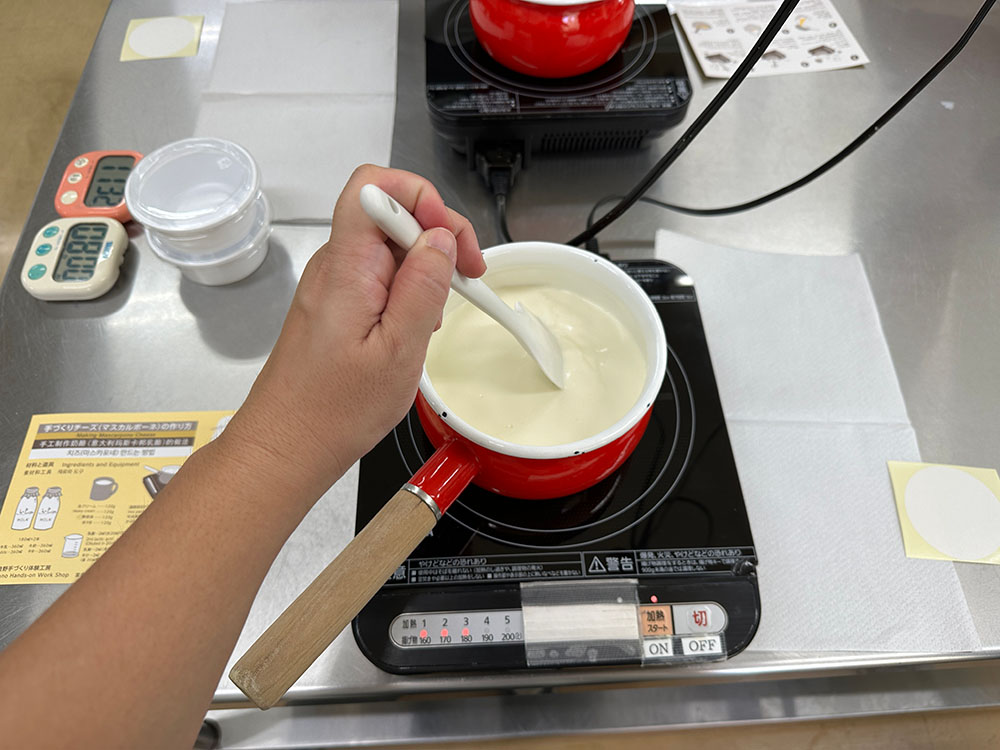
Again there are workshops to make butter, cheese or ice cream if you like a more hands-on experience. We signed up for the cheese making workshop and wound up creating some mascarpone cheese. You get to put on a cute apron, add all the provided ingredients and do a lot of stirring and voila, cheese! It definitely needs a bit of salt when you eat it.
After the cheese shop and factory, we popped out to see the rest of the ground. It’s located in a nice forest-type area with large green lawns, but it can be a very crowded location because of its proximity to downtown Furano. We wanted to pop into the in-house pizza restaurant for lunch but there was a 1.5 hour queue!
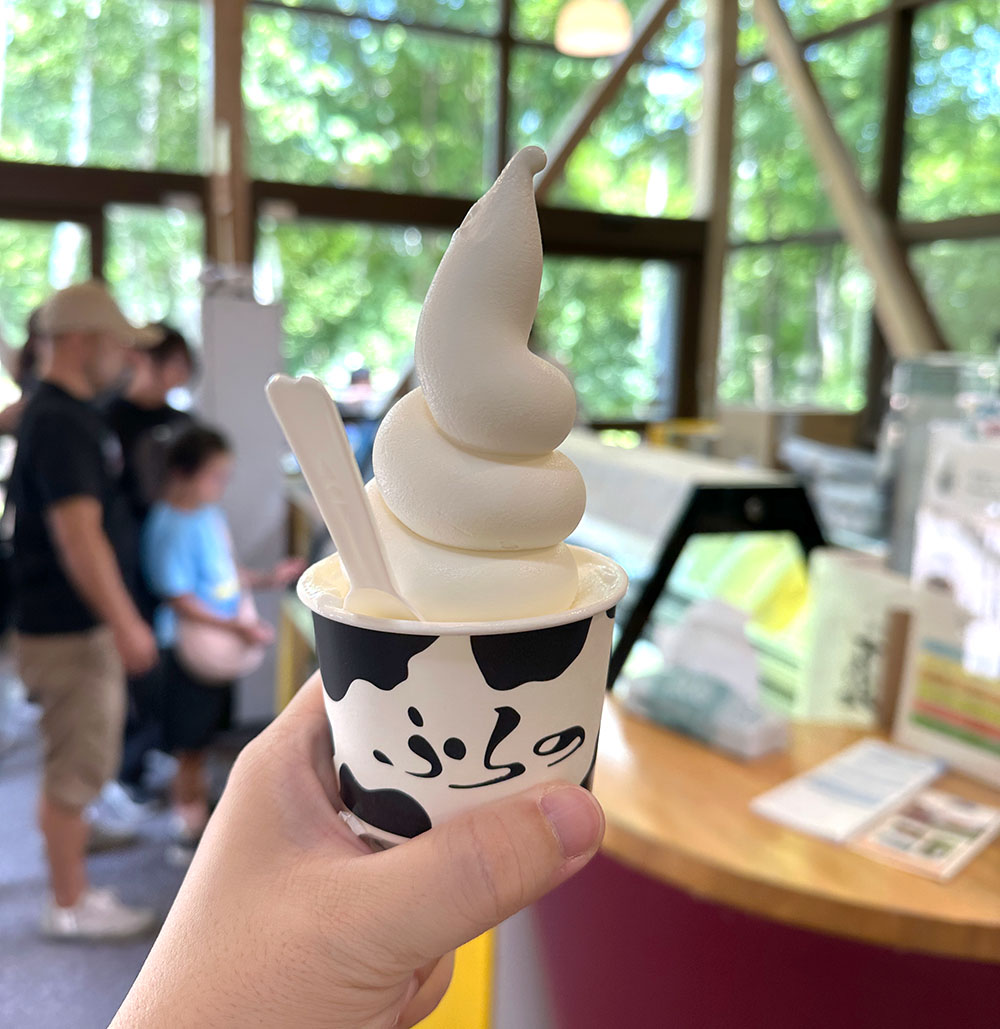
So we satisfied ourselves with some gelato instead, all made from fresh Furano milk. Milk naturally is its most popular flavour, but they have seasonal flavours based on the fresh fruit and produce at that time. When we visited, they had flavours like melon, corn and even asparagus…
Furano Cheese Factory 富良野チーズ工房 [Website] [Google maps] Visiting is free, but prepare to queue especially at the restaurant during peak hour. The workshops for making cheese/ice cream/butter cost 1,200-1,300 JPY/pax and are held daily (sign up online or on site).
Sennari Shabu Shabu: Hotpot for Dinner
Sennari Shabu was actually where we had our very first meal in Furano when we arrived, and how can you go wrong with Shabu Shabu? This hotpot restaurant has a very straightforward menu – just pick your choice of meat – beef, lamb or pork, and that is served with a whole array of vegetables, pickles, ramen, glass noodles and some of the yummiest rice balls I’ve ever had (perfectly seasoned!).
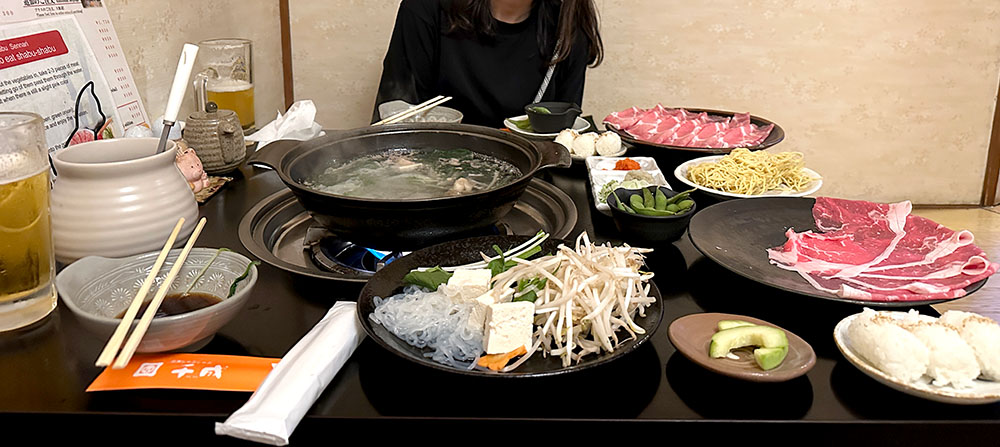
This was such a satisfying meal. I tried some of their home made sakura ice cream which was pretty subtle but a nice end to this meal. We had a booking but there were people coming in and out all evening, so this is definitely a popular spot.
Sennari Shabu Shabu しゃぶしゃぶ処 千成 [Reservation Link] [Google maps]
Day 3: Furano + Downtown
Continue to eat your way through Furano with more food spots to check out in and around Furano. You’ll notice the itineraries get a little less hectic as the days pass, so you can afford to space things out a bit in case you need the rest in between eating and sightseeing.
Furano Delice
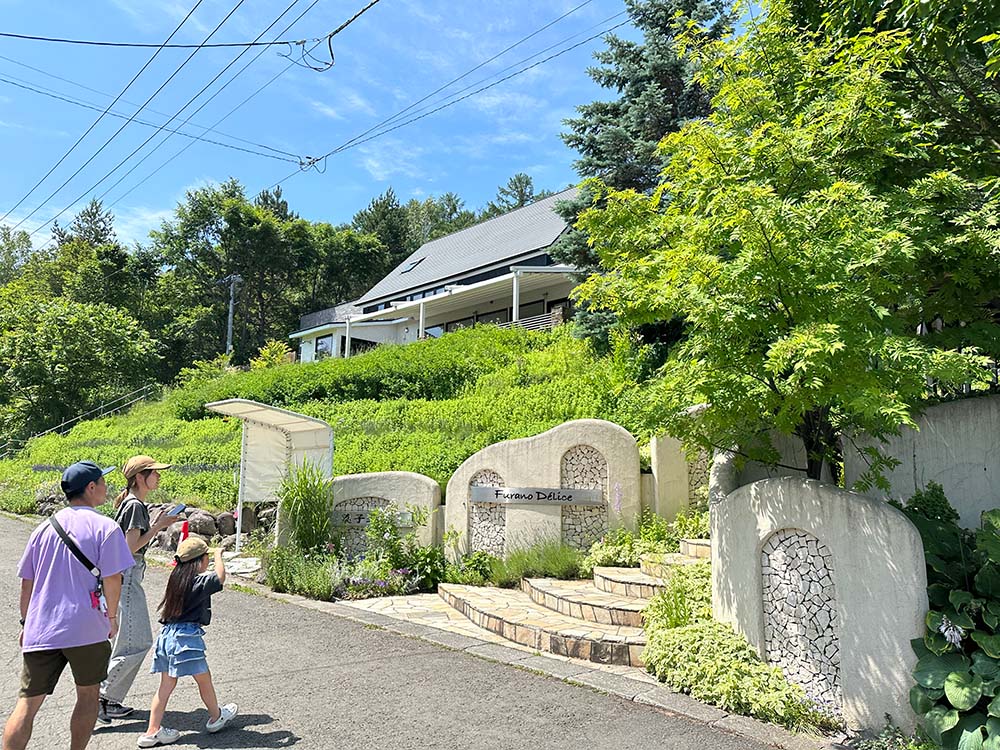
More sweet treats in Furano, this time in the form of desserts. Furano Delice is a little dessert house that’s in a cottage perched on a hill, so if you’re early and get good seats on the verandah, you have some pretty nice views outside. However because it was summer, people were mostly trying to sit indoors.
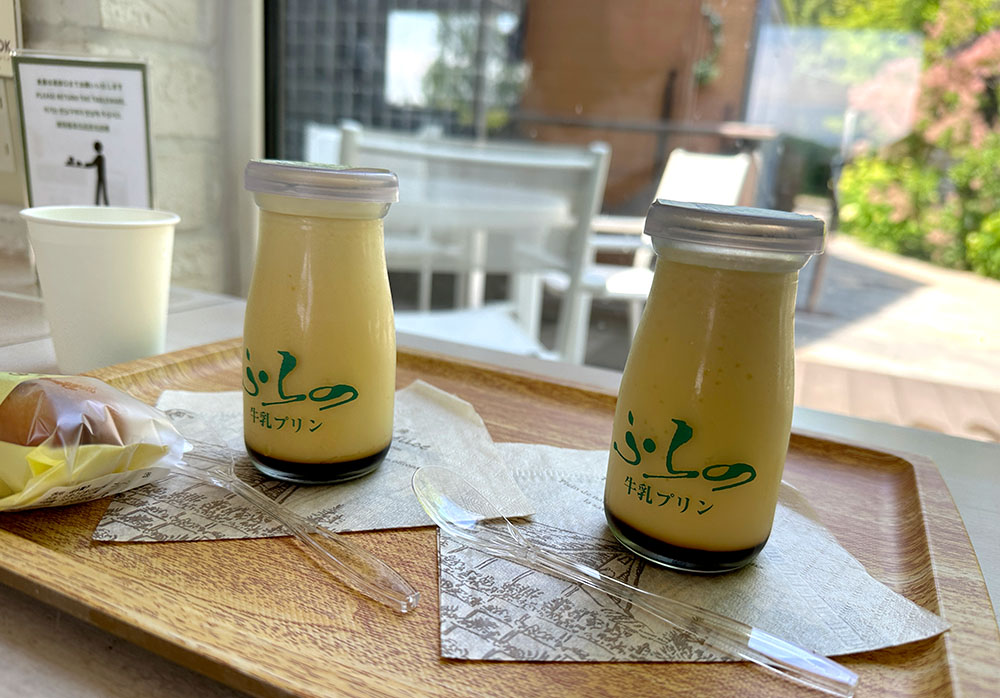
Their western-style cakes, pastries and desserts are based on the famous Furano milk and Hokkaido cheese, so naturally their house special is a cute little milk pudding in a little glass jar. Dig in with your tiny spoon to mix in some of the caramel goodness hiding at the bottom. I tried the original version (they have several flavours available) and it was yummyness in a jar. This dessert is so popular, they actually have a vending machine near the entrance in case it gets too crowded. The cheesecake fromage also looked super delectable.
It’s a nice place to sit in and chill out after a busy few days of sightseeing, and also opens relatively earlier at 10am so you could have a dessert brunch here to kick off your day.
Furano Delice 菓子工房フラノデリス [Website] [Google maps] This is pretty much down the road from our hotel at Fenix Furano or the Kitanomine Gondola
Furano Winery: Taste Local Wines
Furano Winery is located just north of the downtown Furano area and has quite a long history, a Furano’s very first winery established in 1972. The winery actually covers the surrounding vineyards where they grow their own grapes, but the part that visitors mostly go to is the museum and tasting section about halfway up the hill. If you follow the road to the top, you’ll get to the Wine House which is now a restaurant for some wining and dining.
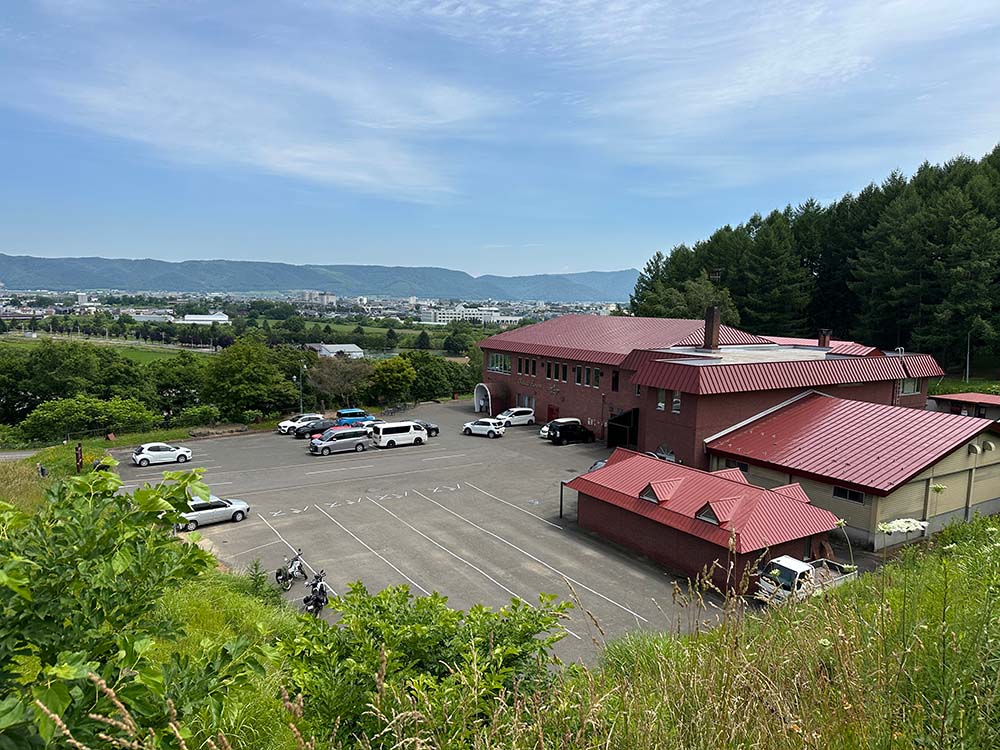
But in the Chateau Furano, the basement is the historical bit where you can see some exhibits and rows of wine barrels, and learn about the history of wine making in Furano. It’s not a very big section, but there is some English and you can see some of the equipment and their very old and dusty collection of wine bottles over the years as well.
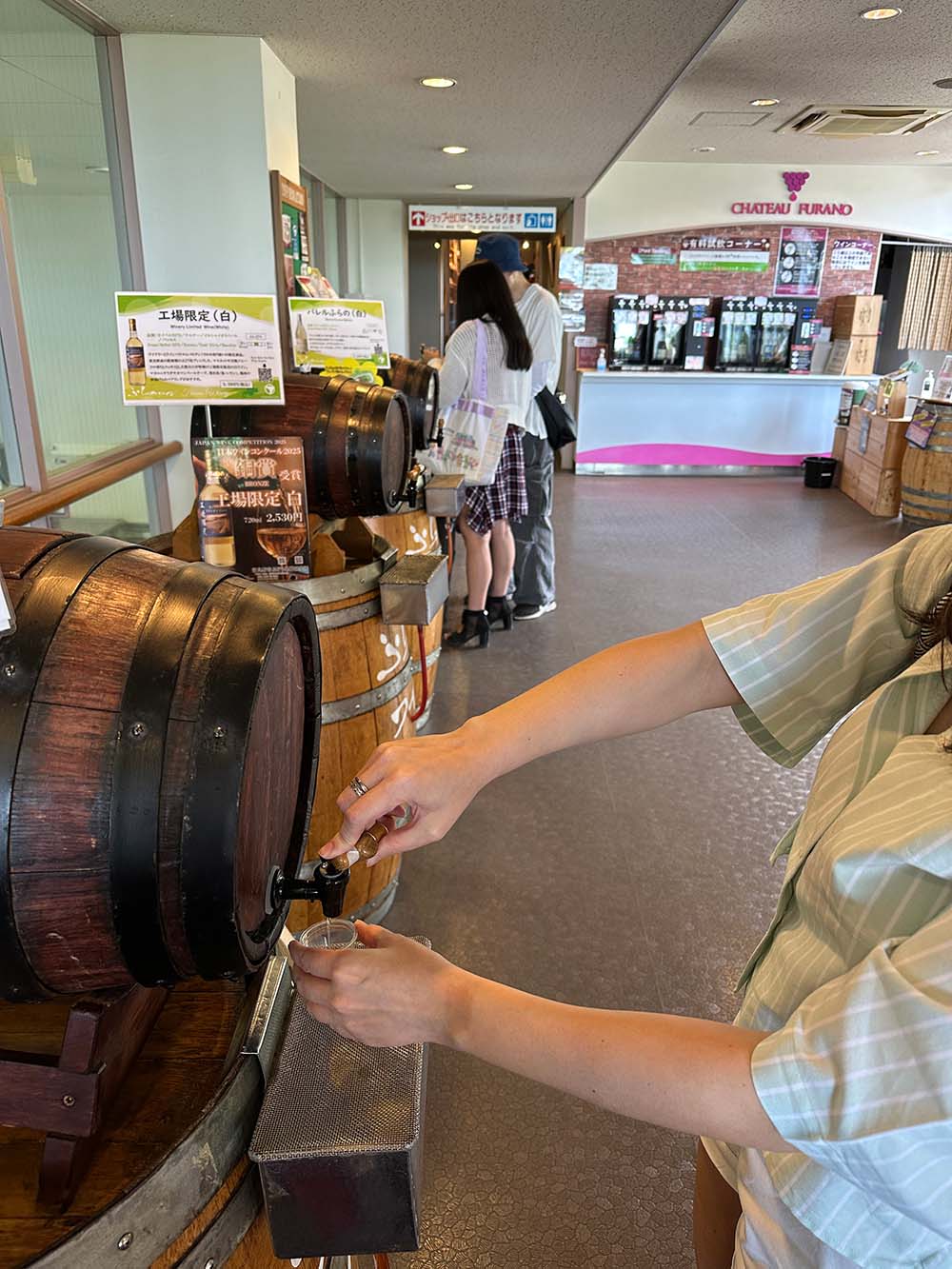
Head up to the second level where there are free and paid tastings for speciality wines available, as well as a wine shop where you can pick up wine to take home with you. I was driving so no drinks for me, but I did buy two bottles of white wine to bring a little bit of the winery back home with me.
We were lucky that summer as they had a small blooming lavender field nearby with lovely mountain views all around!
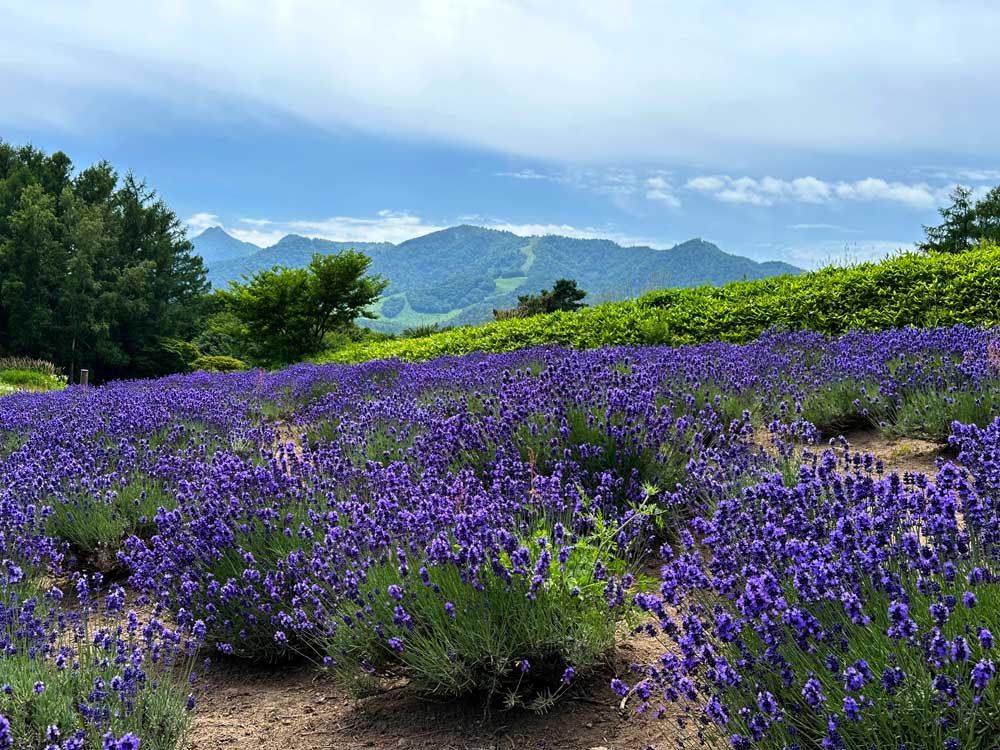
Furano Winery 富良野ワイン工場 (Furano Wine Kōjō) [Website] [Google maps]
Furano Marche: All-in-one Souvenir Shopping
My recommendation for the last place to visit is Furano Marche. This is like an open-air mall of sorts with a collection of shops and eateries right in the centre of downtown Furano. Charming if the weather is great because there’s outdoor seating and lots of room for kids to run around, but when we visited it was apparently 29ºC at one point so it was HOT. Luckily the shops are mostly air-conditioned.
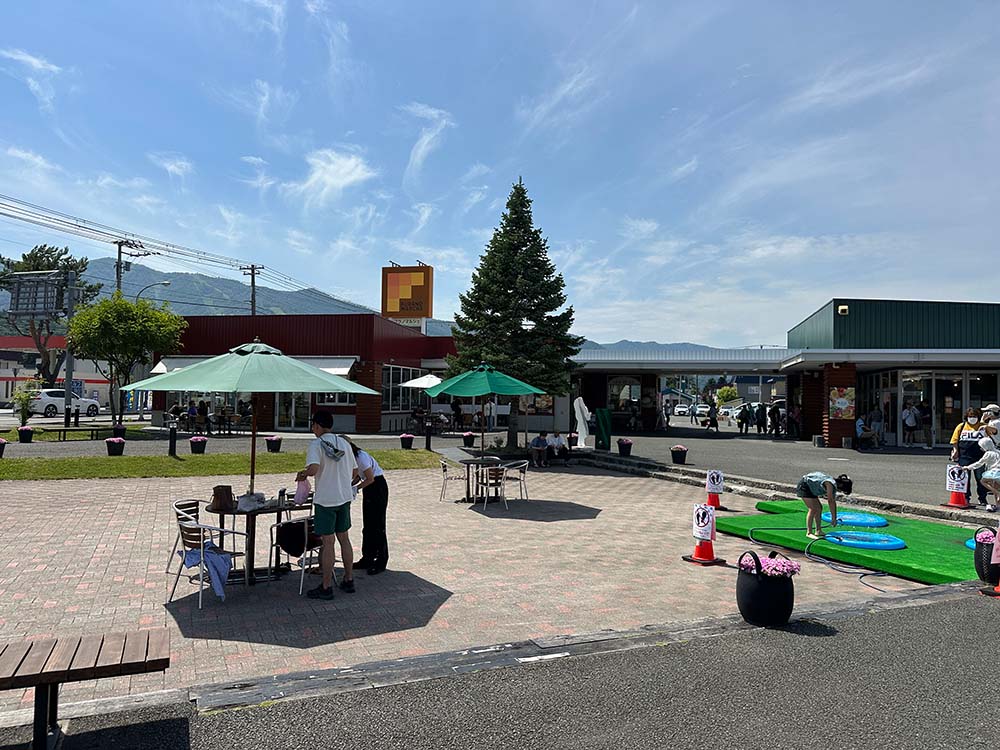
Why visit this place last? Because having several smaller local design shops and eating outlets here, it also has a massive souvenir marketplace of sorts which stocks what feels like ALL the major Furano attractions’ souvenirs right here, so in case you regretted not buying anything the previous 2 days, there’s a chance you can still pick up something here before you go.
We found products from most of the places we visited like the Farm Tomita Lavender products, Furano winery wines, jams from Furano Jam garden, as well as others that we didn’t manage to visit. So perhaps if you’re undecided on your itinerary, you could actually make this your first stop and maybe some of the items might sway you to visit. I found some cute Hokkaido paper crafts here that I hadn’t seen here as well.
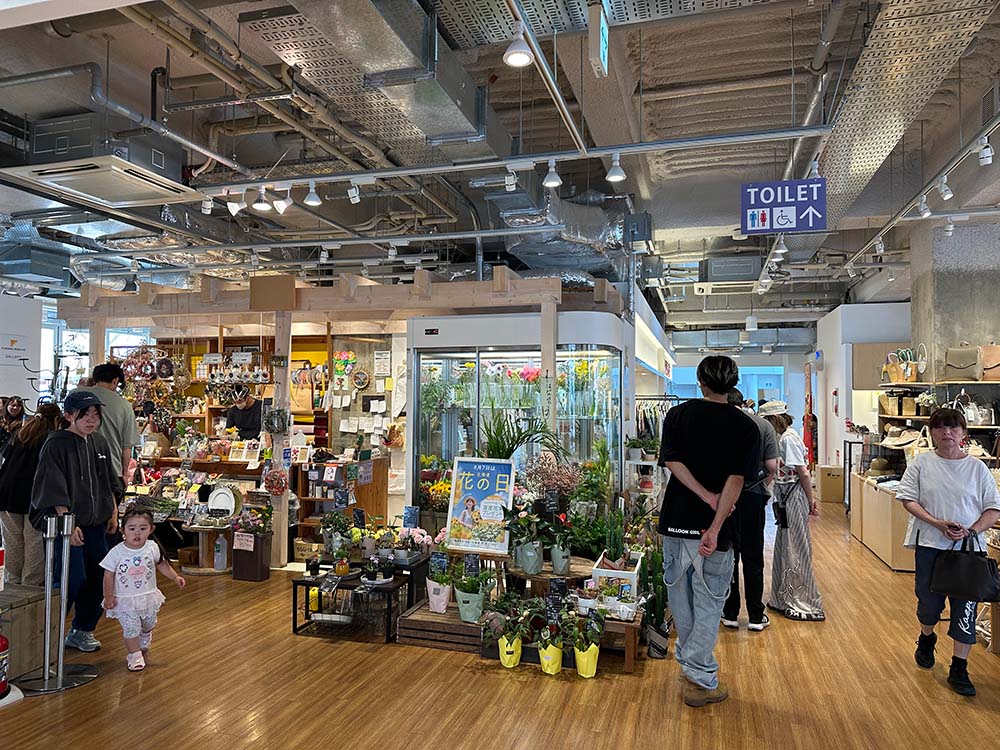
There is also a big supermarket here where you can pick up even more Furano and Hokkaido food products. Since we didn’t get to eat the soup curry here, I bought a box or two back for my family to try. There were plenty of melons and fruits here on sale as well, with shipping options even!
Be warned that while they have 2 carparks here, it can get crowded on the weekends especially! We ended up parking further away and walking just so we didn’t have to join the queues.
Furano Marche フラノマルシェ [Website] [Google maps] There is parking on site but expect there to be a bit of a queue on weekends especially
Robata: Dinner at a traditional Izakaya
One last meal in Furano, if you still have the space for it! Robata is interesting because this wasn’t on our list of places to go and we chanced upon it as an alternative from the long queue at the soup curry spot Furanoya. But it turns out, this Izakaya is very small and charming, and we were quite lucky to get seats just walking in randomly because it filled up quick! You can turned away if they don’t have room…
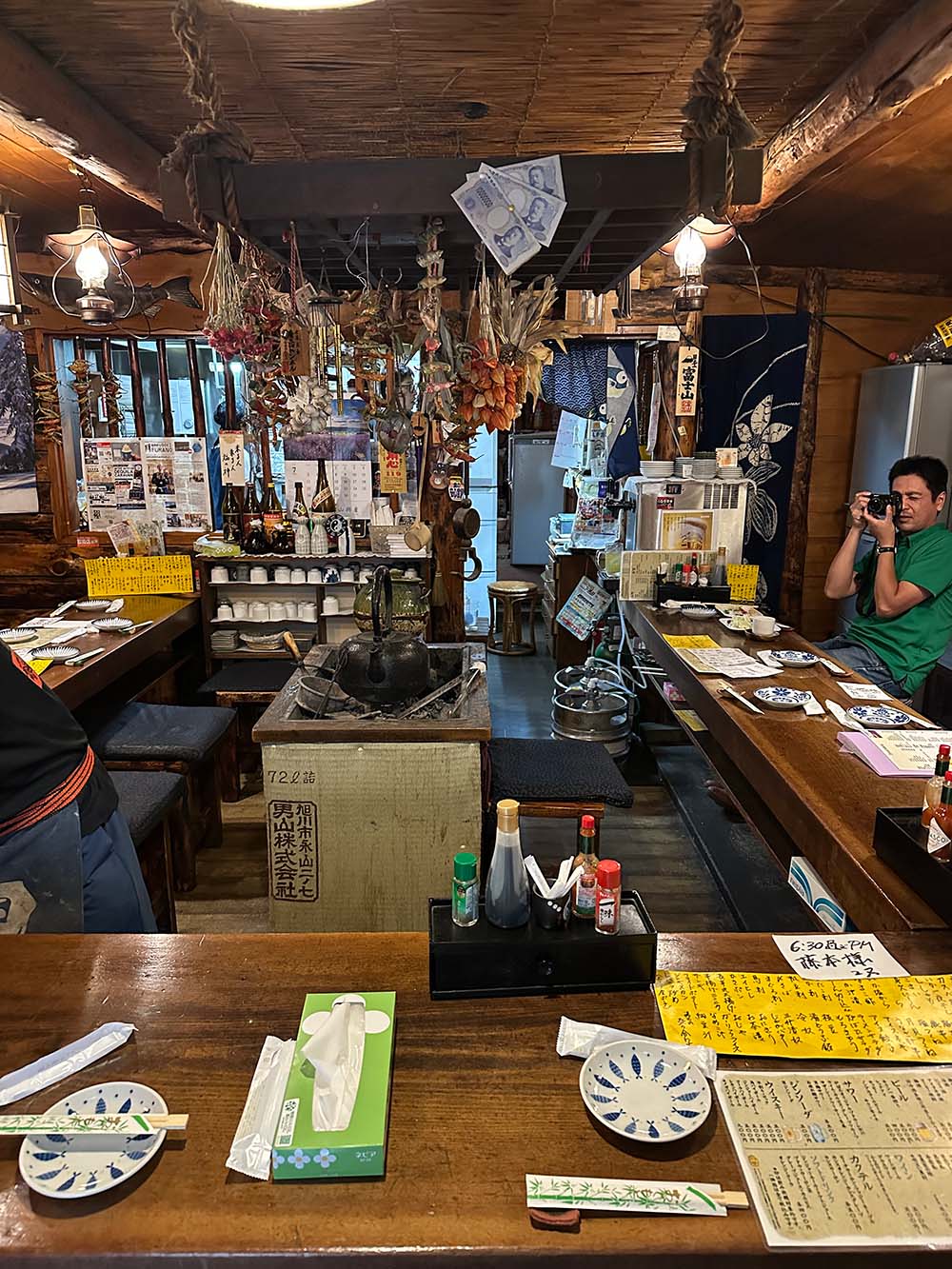
Robata has a nice homey feel to it, and the owner who took our order was a nice old man who was very friendly and gave us some good recommendations. We had some meat skewers and fried chicken which were yummy. I was fascinated by all the dried foods hanging from the ceiling, as well as the old school kettle in the centre of the room – I thought it was tea, but it turned out to be hot sake! None for us though since we drove over.
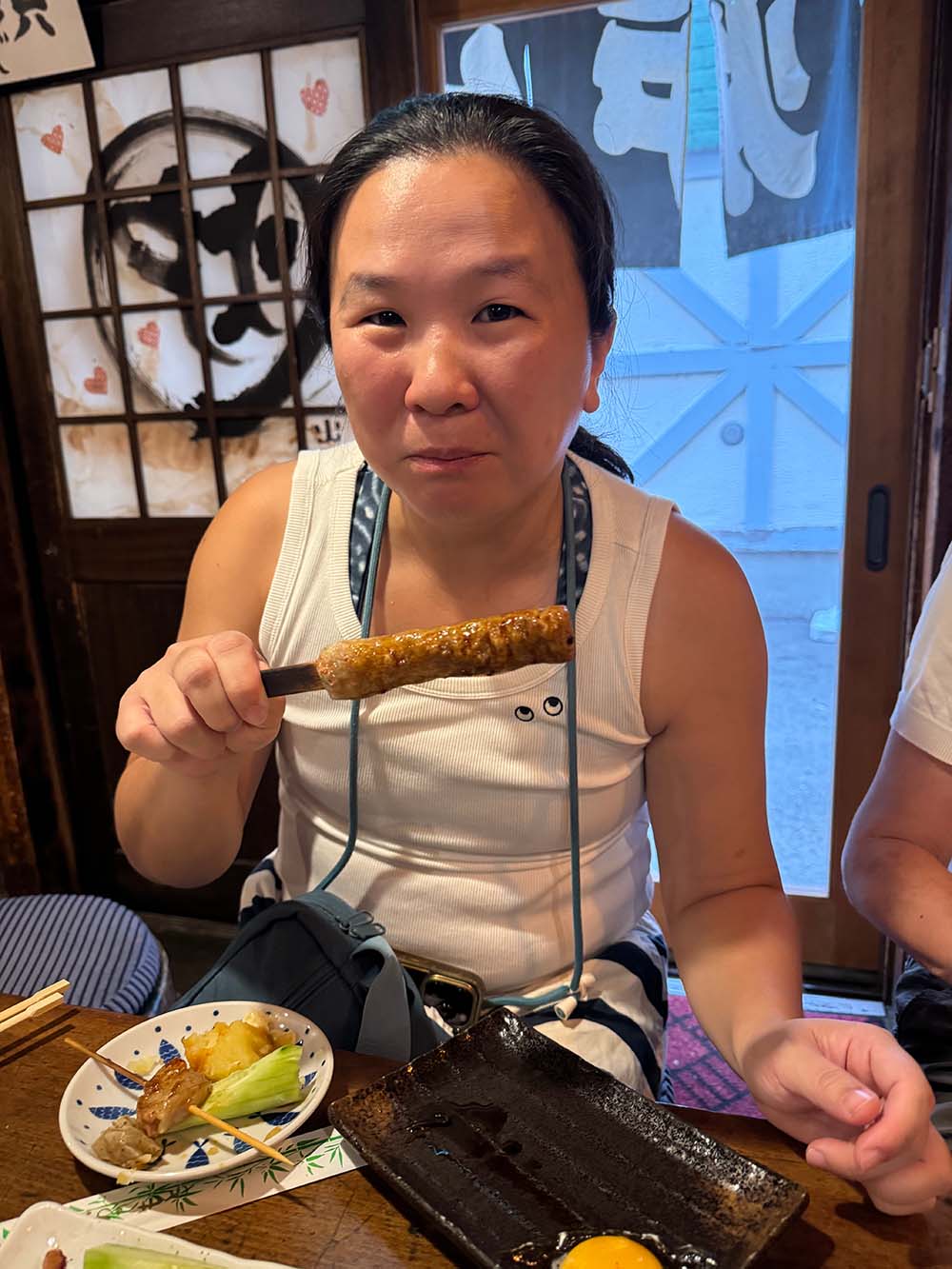
It’s traditional in both look and operation, after the meal, the owner pops back into the backroom and does his sums with a pen and paper and I’m pretty sure he pulled out an abacus at some point, so not great if you are looking for a proper receipt, but such lovely vibes and history just sitting down here for a meal.
Robata 炉ばた [Reservation Link] [Google maps] I recommend making a reservation online because this place is very small.
Other activities
These aren’t the only things you can do in Furano – I did check out some other activities but I personally don’t think these are must-sees, but it ultimately depends on what you feel like doing. I’m listing them here so you can decide whether to include them in your own itinerary.
Sorachi River: Tent Sauna and/or River Rafting
One of the more unusual summer activities you can do in Furano is to enjoy a tent sauna along the Sorachi River. I enjoyed this but I thought it was a bit out of the way – the drive down south to Minamifurano takes almost an hour through winding mountain roads. It’s also a pretty niche thing: I personally prefer an onsen over a sauna. I think cost wise this also makes sense for a small family group of 3-4pax rather than just 2pax.
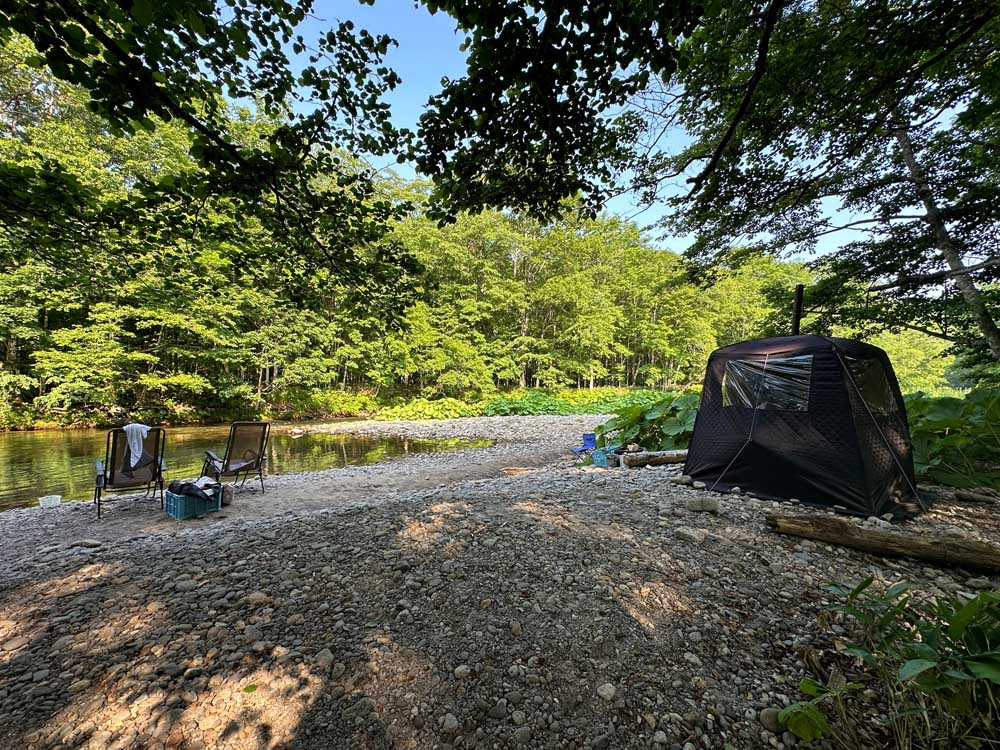
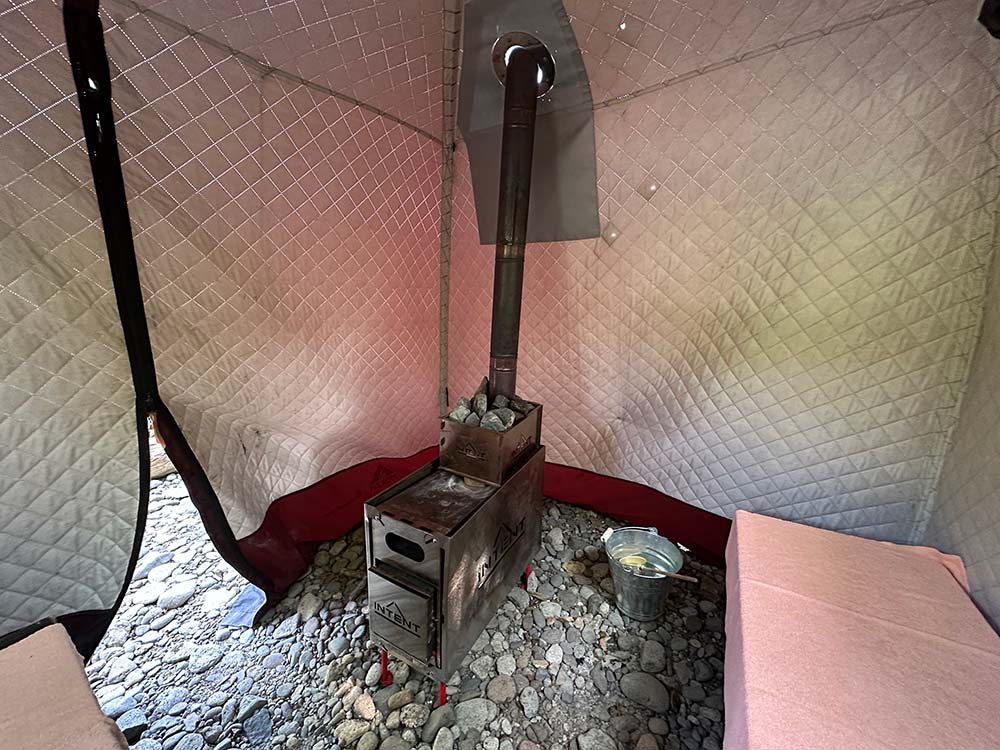
The Tent Sauna is set up right by the Sorachi River, at the same launch point where the whitewater rafters go. It’s basically a little tent with a stove in it that you go sit down in for a sauna bath. Once you’re all steamed up, you can step out and lounge on the deck chairs set up by the river bank, or take a dip in the river to cool down.
The view by the river was absolutely gorgeous, surrounded by green trees. Occasionally some of the whitewater boats would launch, but it was generally very peaceful overall to just sit down and chill out. The river water is pretty cold though – I could not dip my full body in and we kept our water naturally cool by leaving the bottles in the shallows!
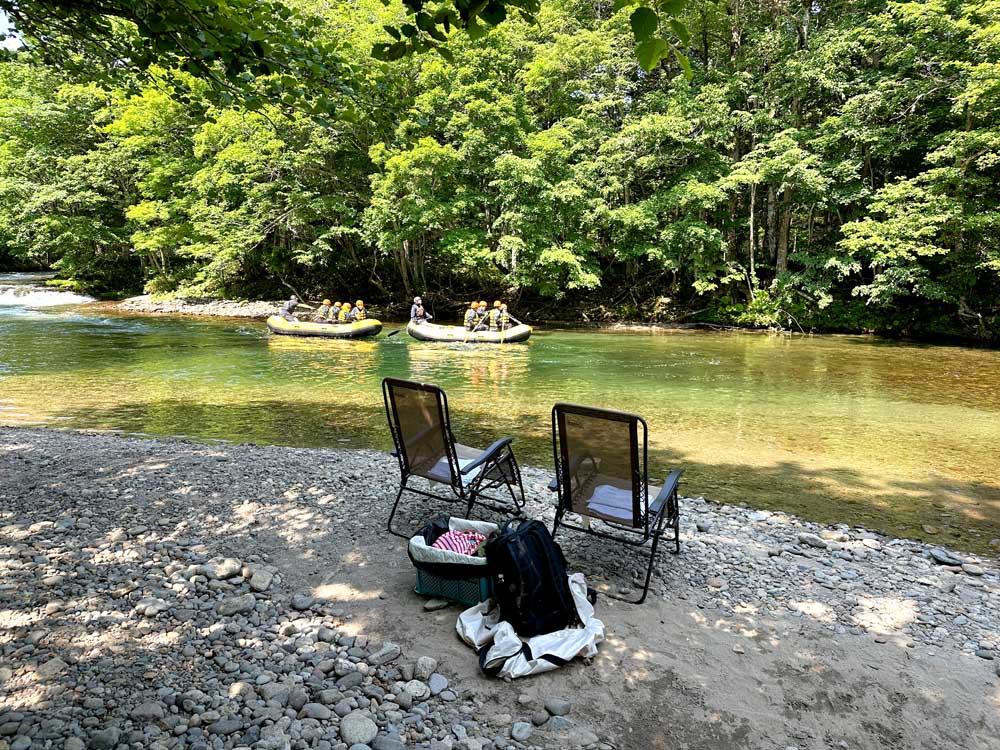
The nice thing is that you really have to do very little, just get yourself there in your swimwear. Towel ponchos and crocs are provided for you to lounge in, and the tent sauna also comes with one of the staff on hand who’s there to help you keep the sauna going so you don’t have to figure out the stove on your own.
The whole experience lasts about 2 hours, but you’ll reasonably need about half a day because it takes some time to get to Minamifurano, but there’s a big rest-stop like area with a bakery (we bought some food to eat by the river) and other eateries as well as a giant montbell outlet for all your outdoor/hiking needs.
If you wanted a more physical activity, honestly the whitewater rafters look like they were having fun so you could consider that too.
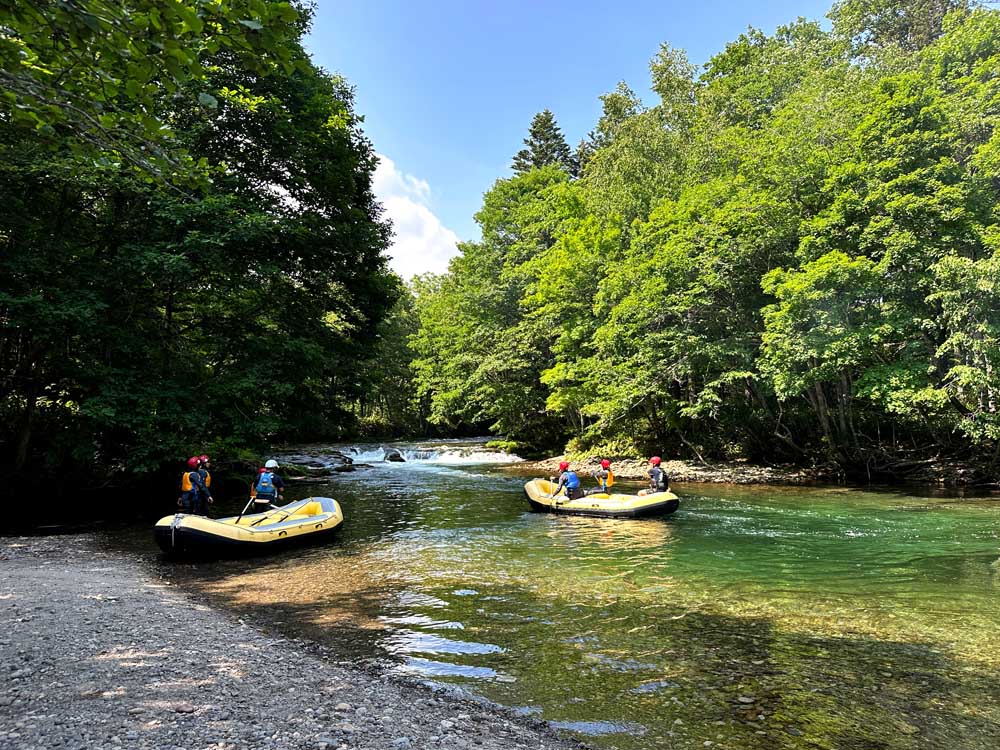
Sorachi River Tent Sauna by Leisure Guide Asobiya 空知川源流テントサウナ [Website] [Google maps] Only available in summer from July to October and costs 26,400 JPY for a roughly 2-hour session either in the morning or afternoon.
Hot Air Ballooning
Something else a little unusual was the hot air balloon ride that we took, and while it was fun, was it worth the money? You might be thinking of the hot air balloon rides people take in Myanmar over the Bagan temples, or in Kenya over the Maasai Mara nature reserve, but this was basically a 10-20min elevated ride up and down, no movement. So while not my kinda thing, perhaps for those who want a view without too much adventure.
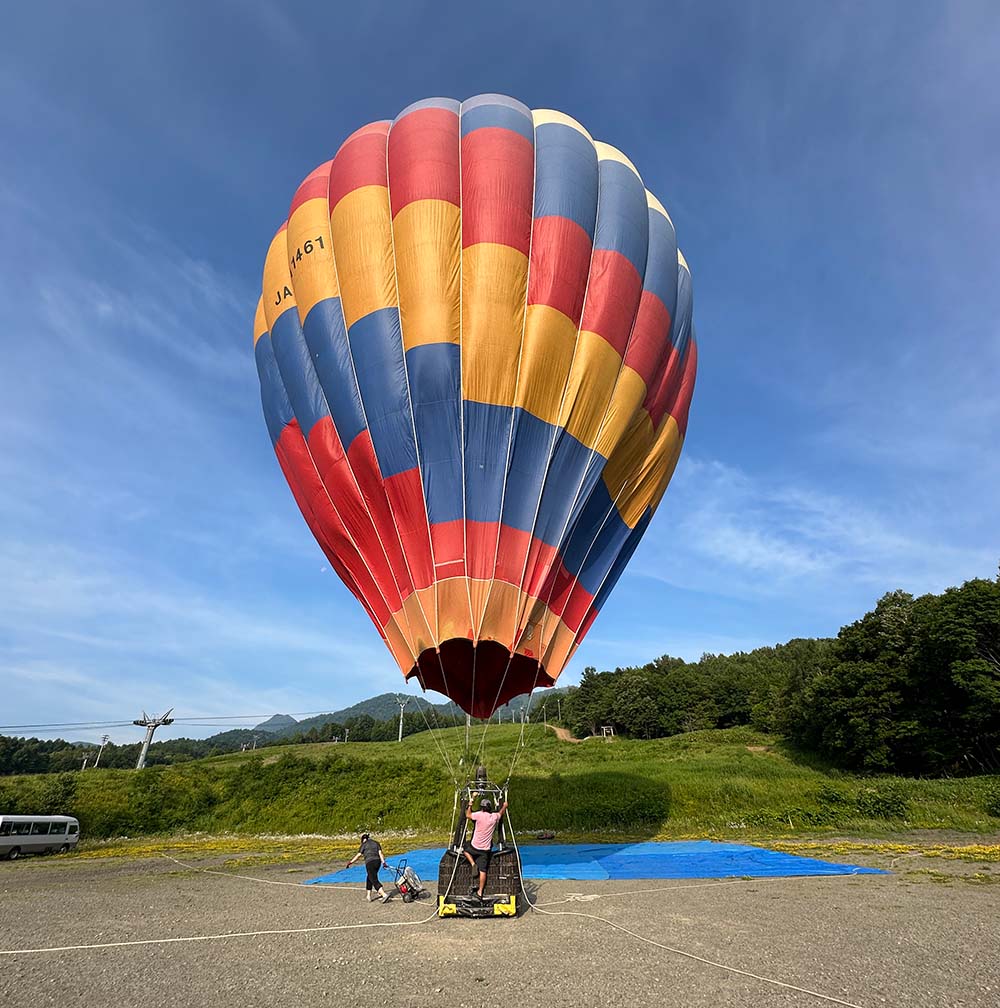
The one plus point was that this was located barely 50m away from our hotel! The hot air balloon was set up right in the carpark that we could see from our balcony, so even though we had to wake up super early at 5am++, it was easy enough to drag ourselves over for this.
This activity is heavily dependent on the weather, particularly whether there are strong winds and/or rain. We had bright sunny weather though apparently it was a tad windy that day, but still ok for us to go ahead. We watched the 4-man team wrestle with the balloon and blast the heated air in, and the balloon slowly righted itself.
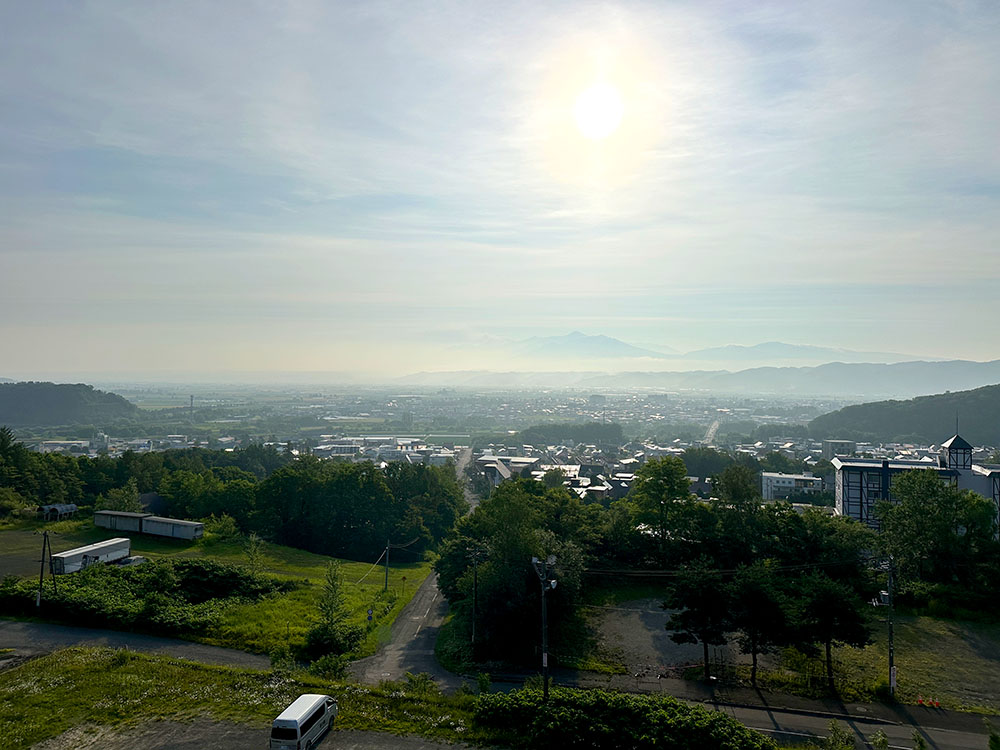
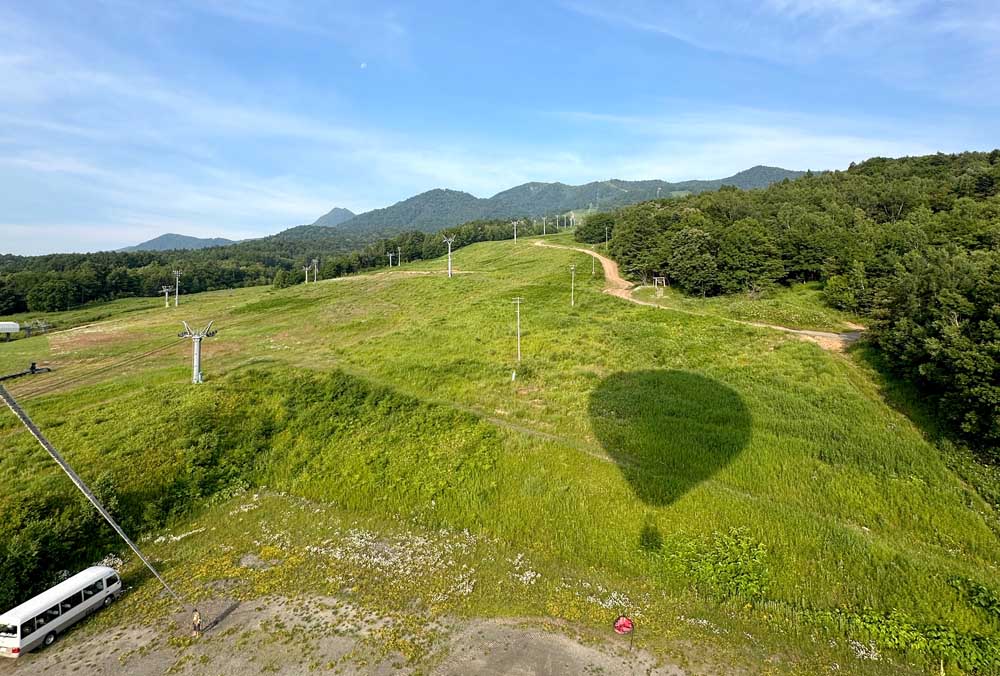
Once it was ready, the team each held onto the ropes and we clambered in quickly alongside our pilot, and upwards we went! Our pilot was pretty good at taking photos of us from various angles, and at its peak height of about 20m we had a nice view of downtown Furano and the ski slope (now mostly grass since it’s summer), there wasn’t that much else to see. After 10mins or so, we slowly descended again.
Hot Air Balloon by Leisure Guide Asobiya [Website] [Google maps] it costs 2,750/pax for flight around sunrise/sunset.
I was looking up hot air ballooning in Furano and apparently Asobiya may offer free winter flights, so keep a lookout for that. Also there are other groups like the Furano Nature Club that offer proper hot air balloon flights that travel (instead of just going up and down), but those naturally cost more: 25,000 JPY and up.
This post is sponsored by TOCOO! [Affiliate link] – if you’re looking to compare Japan car rental prices for your Japan driving holiday, check out TOCOO! which has over 150 companies on its list.
If you’re booking a car with TOCOO!, use my discount code TCJSSG to get 1,000 JPY discount off your booking!

Have you been to Furano? Tell me what I missed and need to check out on future trips to Hokkaido! In the meantime, check out my other Japan posts: