How to Visit Tajikistan’s Seven Lakes on a Day Trip from Samarkand
On this trip to the ‘stans, we spent a few days in Turkmenistan and most of our time in Uzbekistan, but couldn’t resist adding one more country to the itinerary. On one of our days in Samarkand, we took a drive across the border to see Tajikistan and visited the spectacular Seven Lakes (Haftkul) on a day trip. We booked a private tour with door-to-door transport from our Samarkand hotel and an experienced Tajik guide and overall it was a great way to see this beautiful landscape. Here’s what our Seven Lakes day trip was like and what to expect.
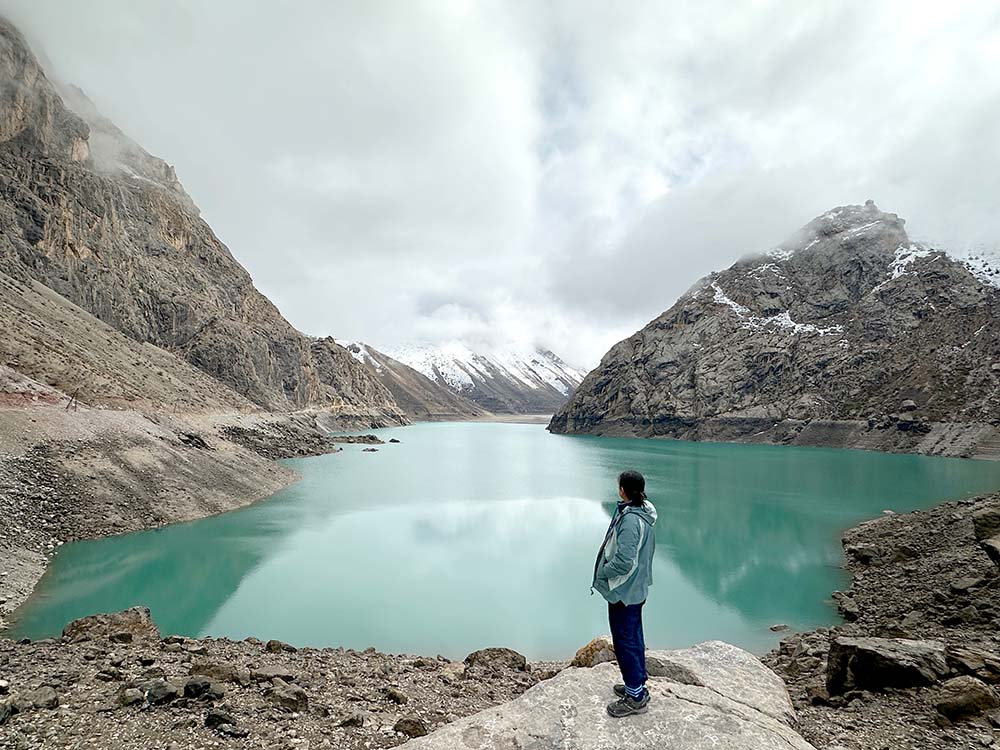
Check out my Instagram Story Highlights for more about Tajikistan’s Seven Lakes or see this video about Tajikistan by my tripmate Ohheyjelly
Where are Tajikistan’s Seven Lakes located?
Tajikistan is mostly made up of mountains – the Seven Lakes also known as Haftkul are located in the Shing Valley of the Fann Mountains on the northwestern end of Tajikistan in the Panjakent region. These glacier lakes collect the runoff of melted snow from the mountain tops and are connected by an underground river and are famous for their distinct characteristics and different vibrant colours.
Our Seven Lakes Day Tour
For this day trip to the Seven Lakes, we booked a private tour with the Day Tour: Samarkand – Seven Lakes, Tajikistan with tour agency Discoverystan. Since we had a small group of 5, this was more convenient then trying to figure out the transport and logistics on our own.
Our Tajik guide Navruz was great overall with pretty fluent English and is an avid trekker himself. He was informative and took care of our group and made accommodations to plan changes and our requests quite well.
The cost when split 5-way came up to about S$160 per person for door to door transport in Samarkand and our private van with driver and guide for a full day in Tajikistan. My tour mates were the ones who found the company with good reviews and did the liaising mostly through email, but generally it was quite easy and fuss free.
Here’s a more detailed rundown of this Samarkand to Tajikistan Seven Lakes day trip itinerary.
Private car pick up from hotel
A van came to pick us up from our Samarkand hotel (Hotel Biluri Sitora) that rainy morning, and drove about 45 mins from Samarkand eastwards to the Uzbek-Tajik border at Jartepa.
Read more about my time in Samarkand, Uzbekistan
Crossing the Uzbek-Tajik Border
At Jartepa, the Uzbek car dropped us off and we made our way on foot through immigration. It was drizzly and you do need to walk in the open at some points, but it took about 30+ minutes to get stamped at Jartepa (Uzbekistan side) and Sarazm (Tajikistan side), not too different from the Singaporean border crossing to Johor Bahru in Malaysia.
(This was also much less arduous than the Turkmenistan-Uzbekistan border crossing earlier in the trip. As a comparison, it took us about 2 hours just to get through the Turkmen-Uzbek crossing, not including the transport to and from the border.)
Pick up on the Tajikistan side
After the immigration counters in Sarazm, our Tajik guide Navruz and a driver picked us up in a different van, and we took a short 15-min drive to the nearby town of Panjakent for a quick toilet stop. Next up was a detour to Panjakent Bazaar to exchange some Tajik somoni and pick up some snacks, before a 2+hour drive into the Fann Mountains and to see our first lake.
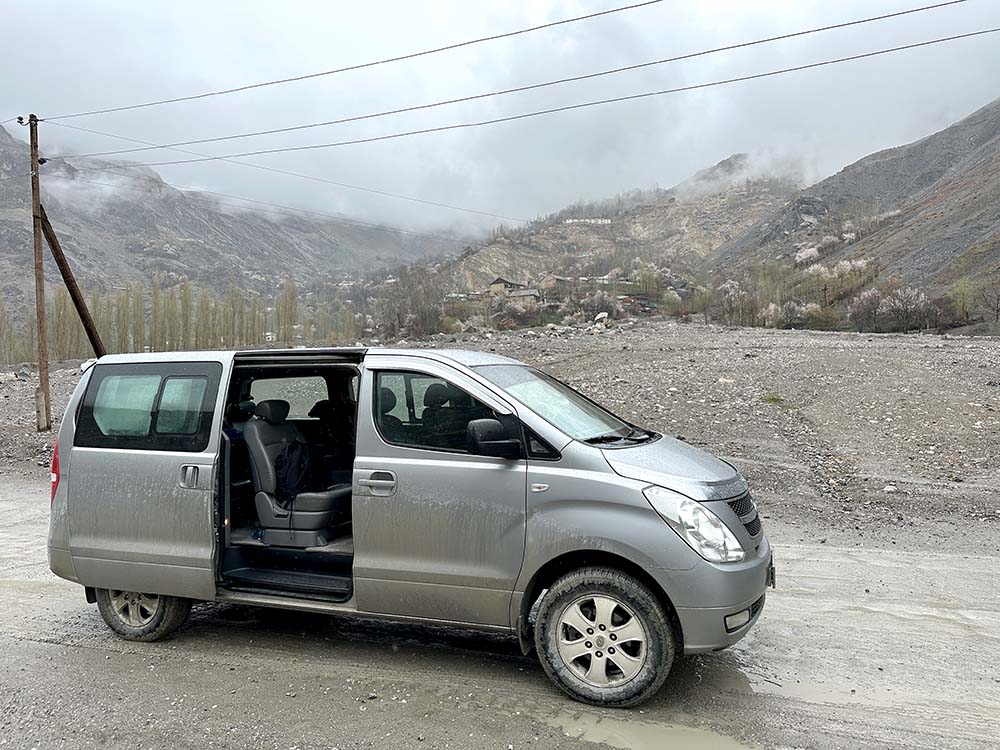
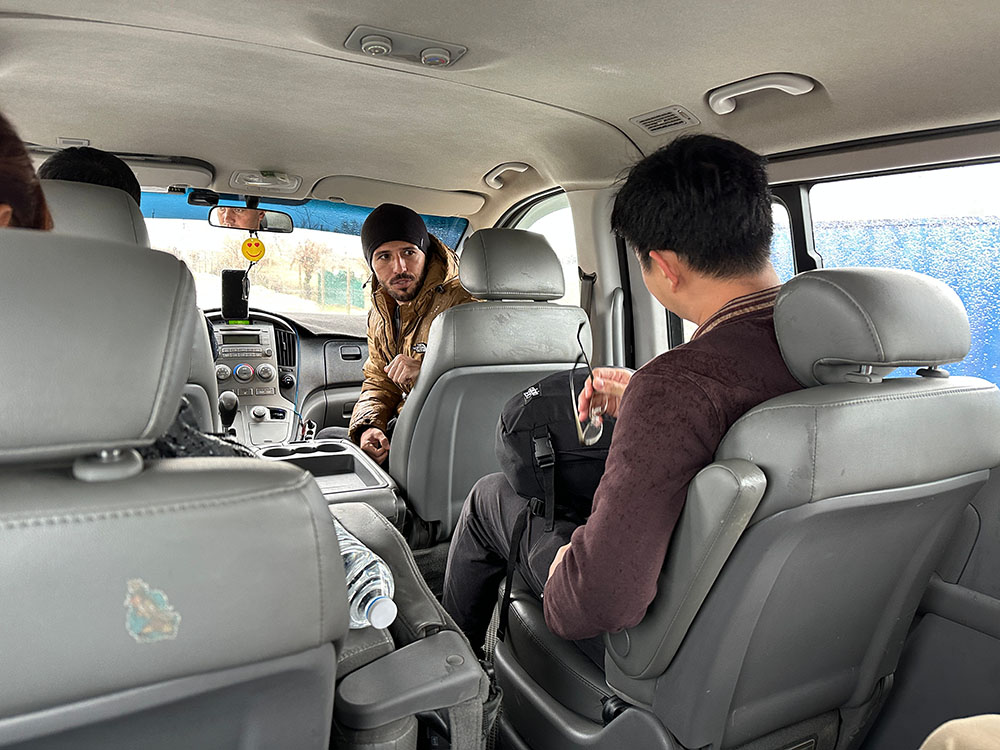
Day trip booked with Discoverystan – Day Tour: Samarkand – Seven Lakes, Tajikistan
After the Seven Lakes
Because we had to skip the 7th lake and had some extra time, Navruz brought us to check out some nearby historical spots like the Panjakent Ruins and Sarazm Archaeological Site (more below) before dropping us back at the Tajik border. After passing through the borders again, our Uzbek van picked us up and brought us back to the Samarkand hotel for the evening.
Can you visit Tajikistan’s Seven Lakes without a tour?
I’m not sure you can visit the Seven Lakes with public transport because you’re up in the remote mountains of Tajikistan and there’s barely any tourist infrastructure or transport in those parts. We didn’t even see any other fellow tourists at the lakes when we visited, so it really is quite remote, or at least it was when we visited in March.
There are mountain villages, and there were some little shared vans (which I assume are the village taxis) that went by our car ever so often, but you wouldn’t have the flexibility to stop and take pictures at your own leisure, and they were typically very full of people carrying things and goods from the village to the town.
Tajikistan doesn’t really have car rentals either, but I also wouldn’t advise driving those mountain roads on your own because the roads are generally unpaved, super bumpy and very narrow. If you don’t have the experience to navigate these roads and especially in weather conditions like fog, mud or snow, it could be quite challenging.
If you have more time or want to stay overnight, there are small guesthouses at Nofin (Lake 4), Khurduk (Lake 5) and Marguzor (Lake 6), but there’s really not much else around.
Tajikistan’s Seven Lakes – A closer look at each lake
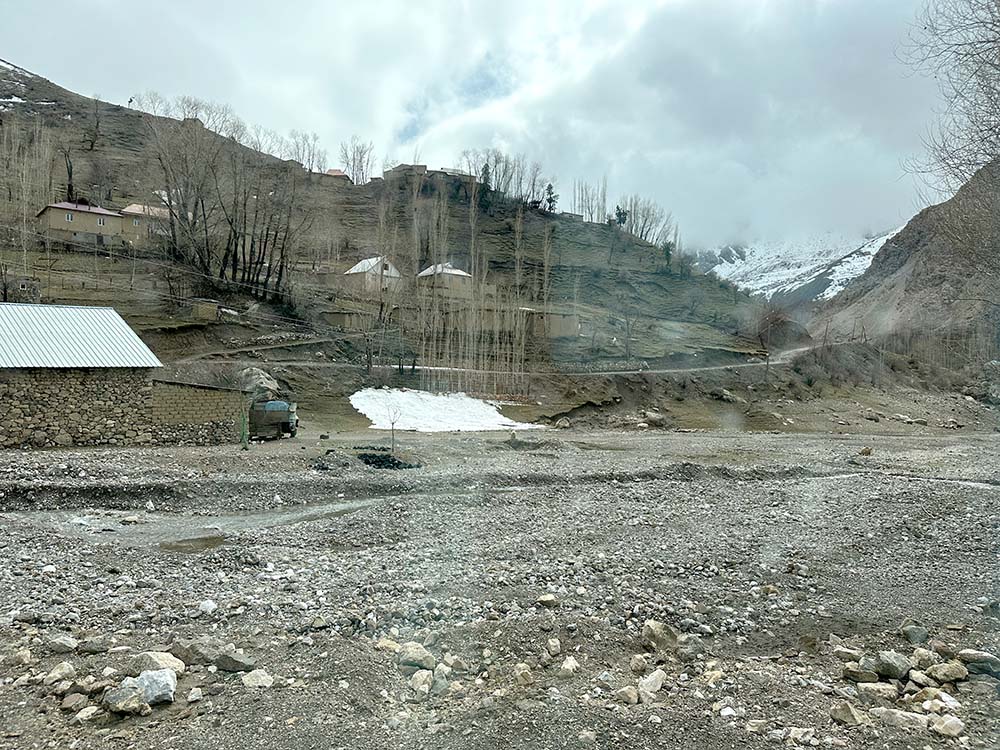
Here are Tajikistan’s Seven Lakes… well 6 of them at least. This day trip is highly dependent on the weather because of the poor mountain road conditions – we had a bit of rain the day before so the road to the last lake was too muddy for the car, hence we only saw 6/7 lakes. We were quite lucky that we got to go at all, because apparently there was more rain the following day and those trips got cancelled as the road conditions were too bad.
Some quick tips:
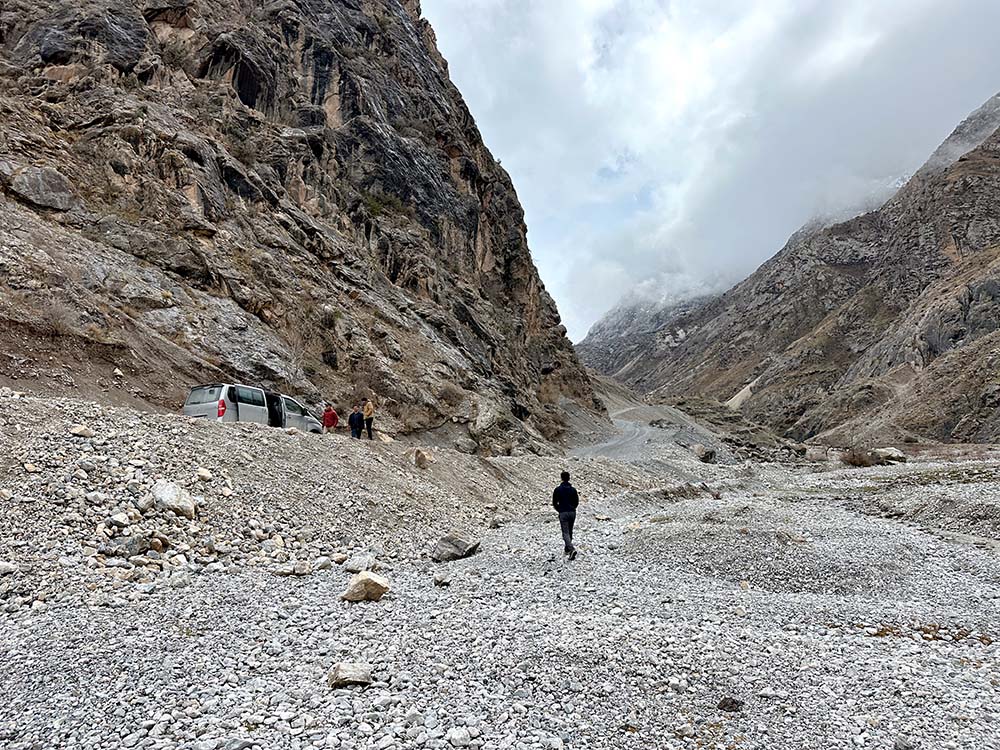
Prepare for very bumpy roads: The roads in the town area were pretty decent, but once we turned off the main highway and started driving up into the mountains is when things start getting really bumpy as the roads aren’t paved, so steel yourself if you’re the sort to get carsick easily. It also gets a bit slow going because of the bumpy and narrow roads.
Bring cold/wet weather gear: The first lake is the lowest at about 1,600m above sea level, and the seventh lake is up at about 2,400m, so make sure you have warm jackets because it can get COLD, at least when we were visiting in late March. We had rain as well most of that day so without the sun it was extra chilly. I had an Adidas tracksuit jacket, a Uniqlo down jacket and a waterproof layer on top of that, but you definitely want layers because it gets warmer when you descend the mountain.
Inconsistent naming: There isn’t a lot of consistency with the spelling of the lake names so if you’re looking them up online, you’re going to see many different versions, I’m going with what I remember the guide telling us and Google maps.
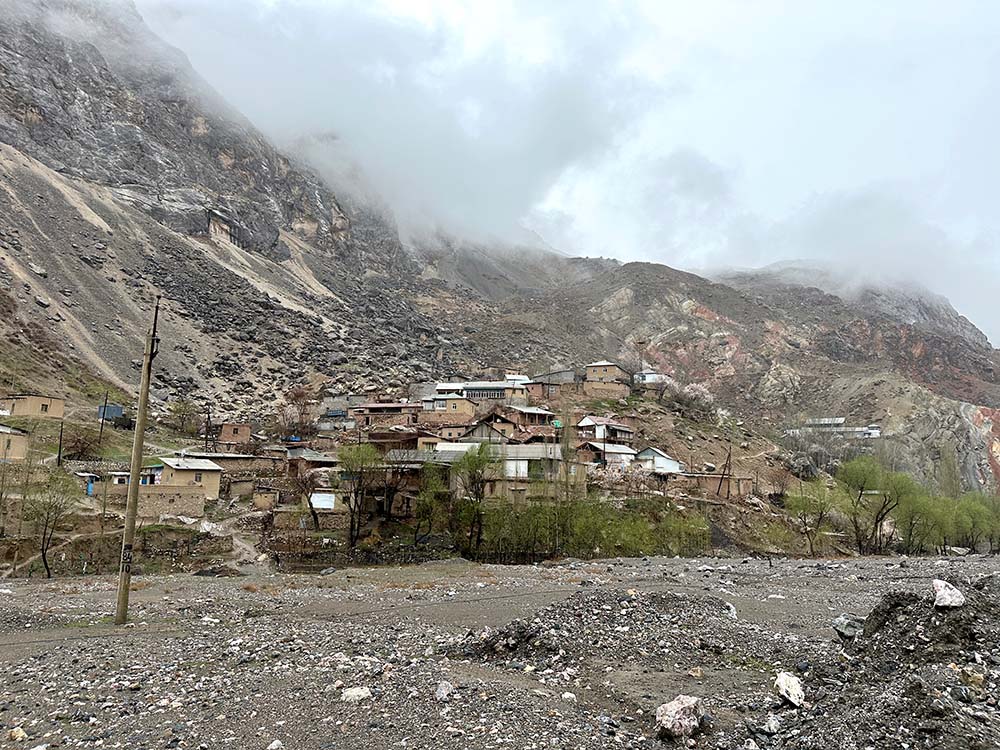
Lake 1: Nezhigon (Мижгон)
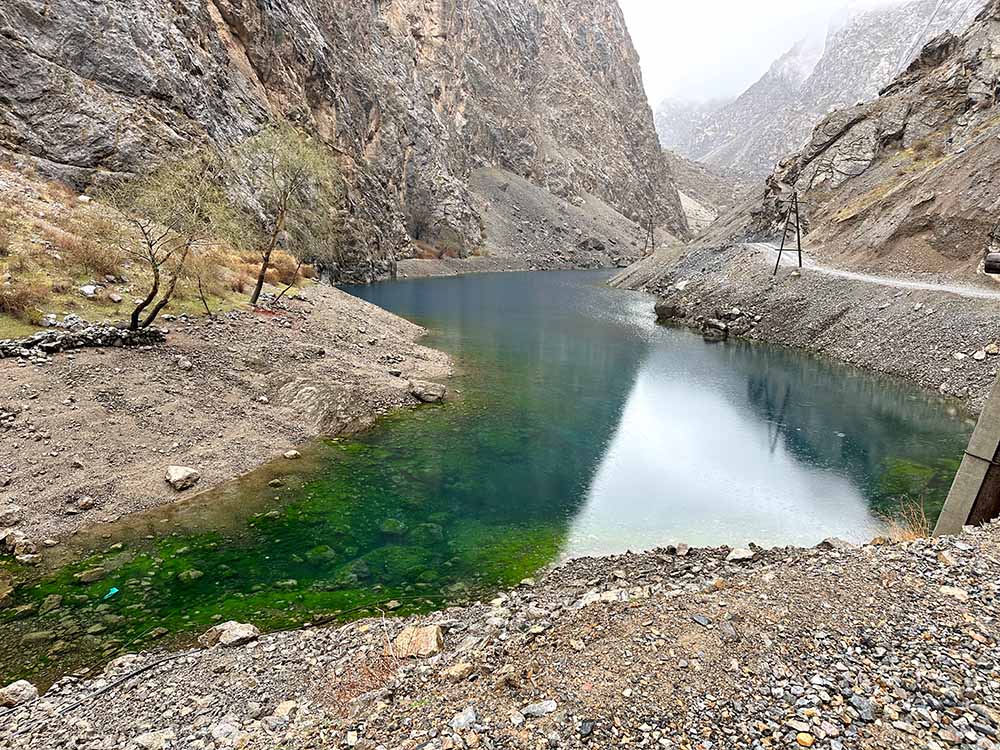
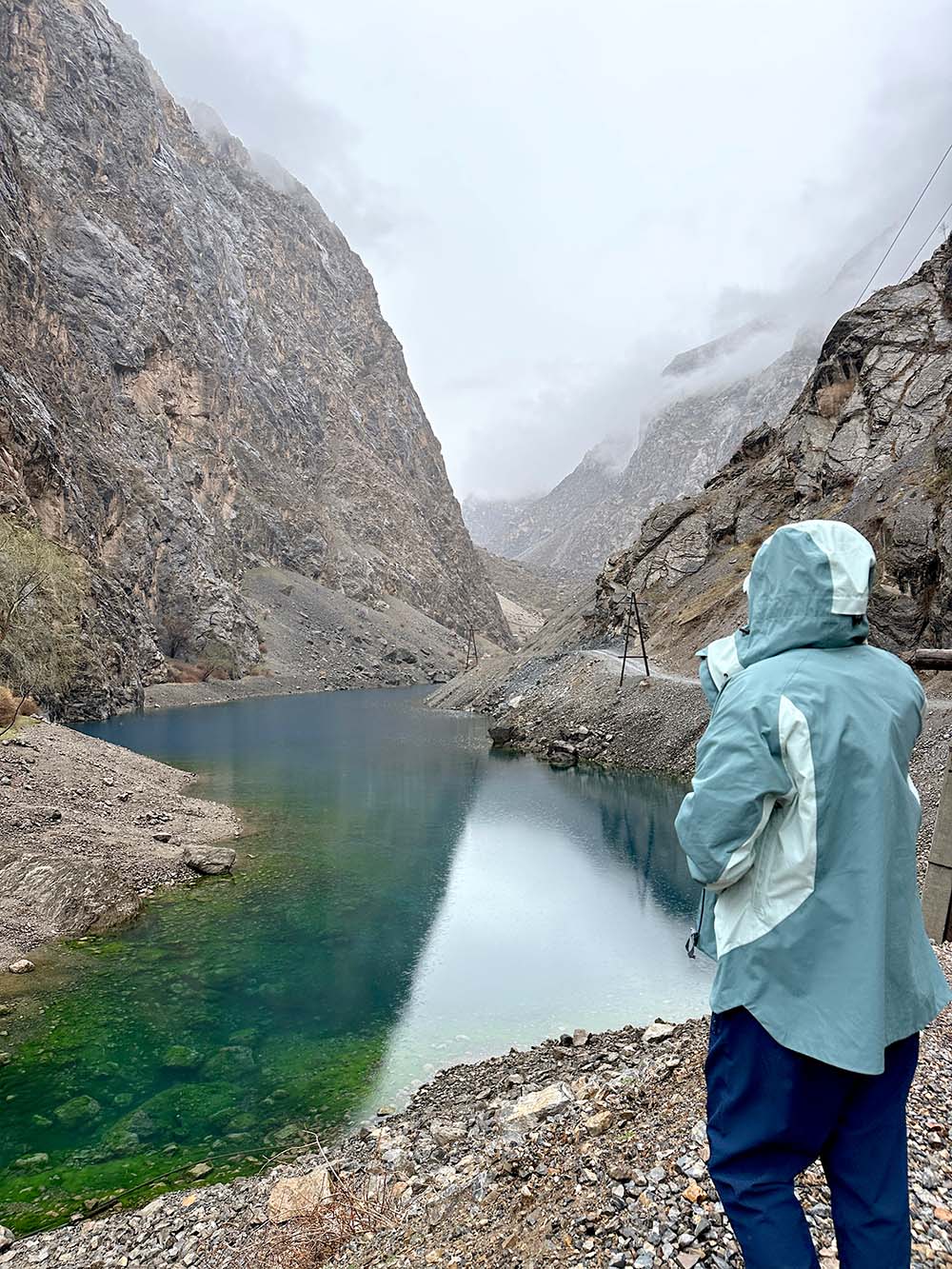
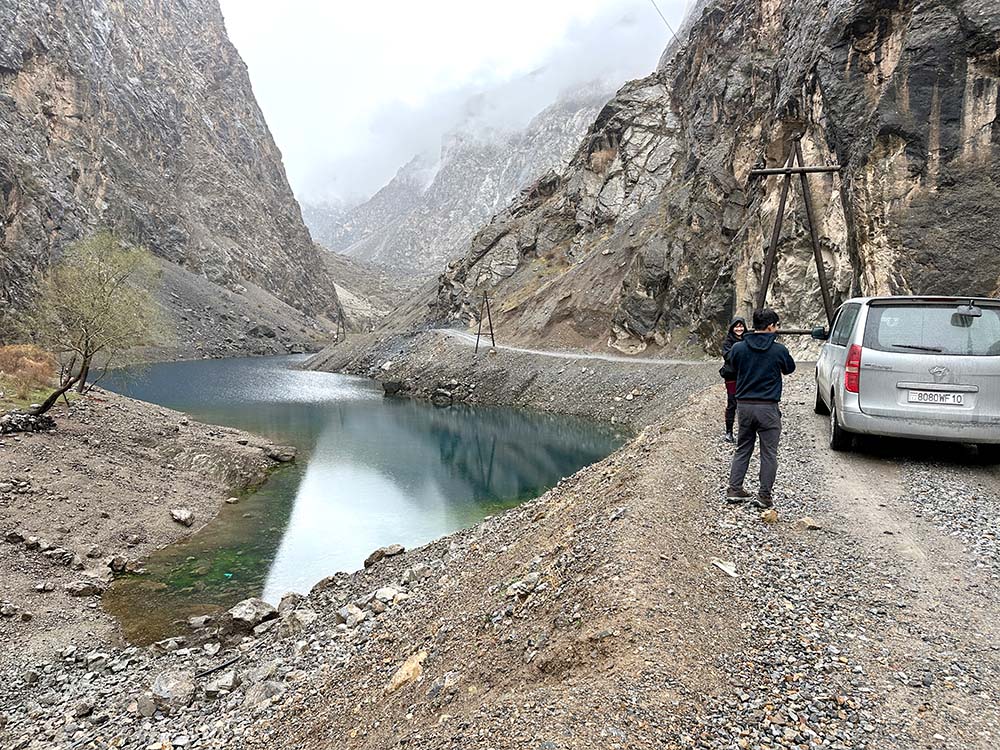
Lake number 1 is Nezhigon (sometimes Mizgon) or the Eyelash for its unusual shape. This is the lowest lake at 1,600m, and I thought it had the prettiest, clearest water. The gradients of green and blue would have looked spectacular had the sun been shining (at this point the clouds were quite low and it was drizzling) – our guide says you can see 6 or more colours in the summer!
If you’re a geocacher, this is also a good spot for you… IYKYK
Lake 2: Soya (Соя)
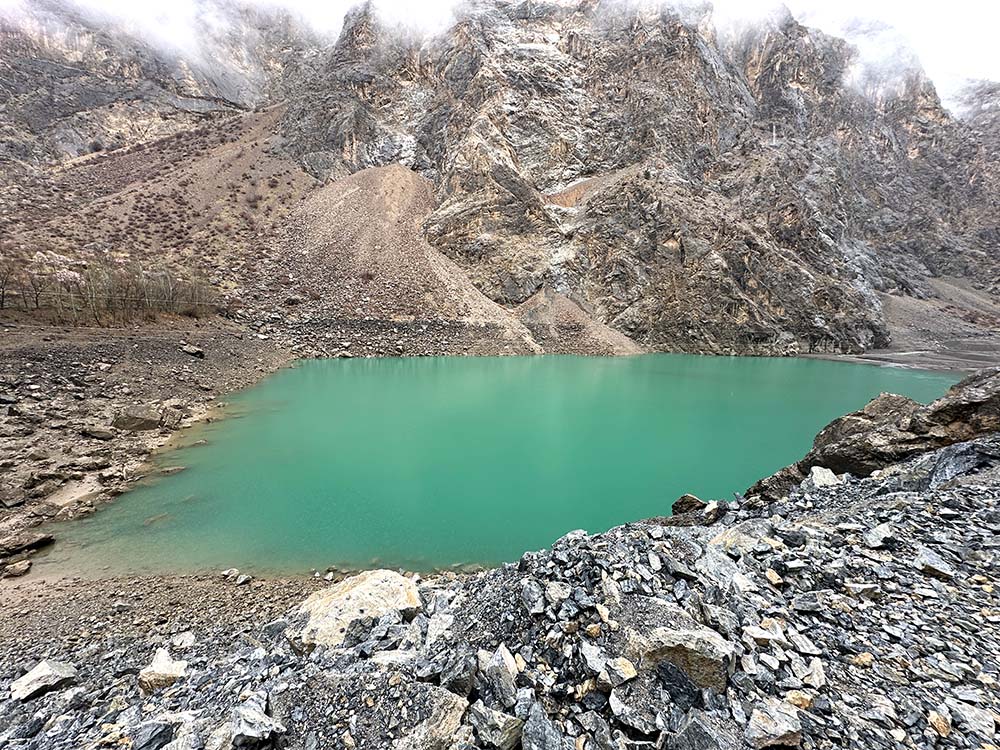
The next lake Soya is not very far off, perhaps about 15mins drive away. Soya is also called the Shadow Lake as this lake is always in the shade thanks to the surrounding mountain peaks. It also had a lot more sediment than the first lake, so the water wasn’t as clear. Though apparently all the lakes are linked by an underground channel which filters the water some.
You could see that the water levels are usually higher from the dark marks on the mountain side, but it must have been a bit dry as the snow hadn’t fully melted yet, so not as much runoff had collected. But we could see some of that runoff flowing into the river on the upper end.
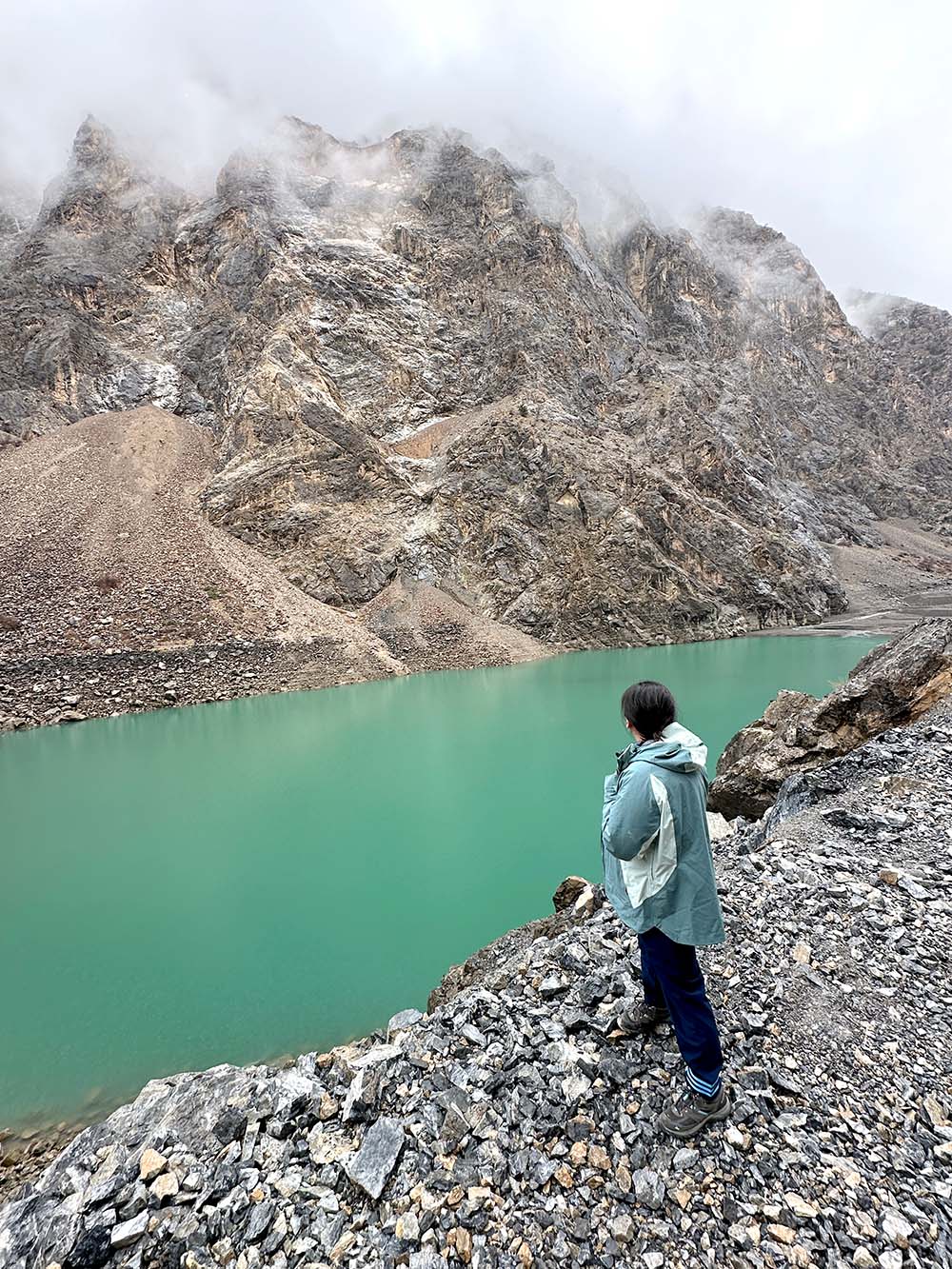
Lake 3: Gushor (Ҳушёр)
Lake no. 3 or Gushor was pretty much down the road from Soya, barely 5 mins drive away. It’s a longer lake compared to Soya, and has a nice valley view.
Gushor apparently translates into vigilance/watchful because there were (are?) a lot of POISONOUS SNAKES around here (!?!?!?), so you had to have constant vigilance. Yeah I didn’t see any snakes when we were there but you know I was looking out extra hard just in case.
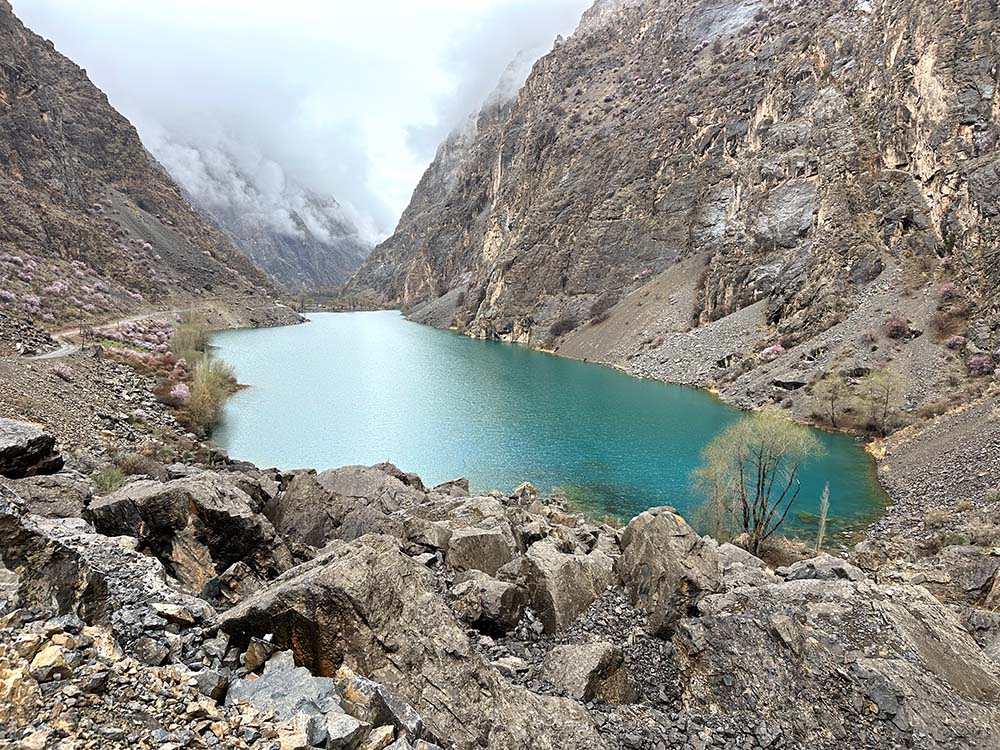
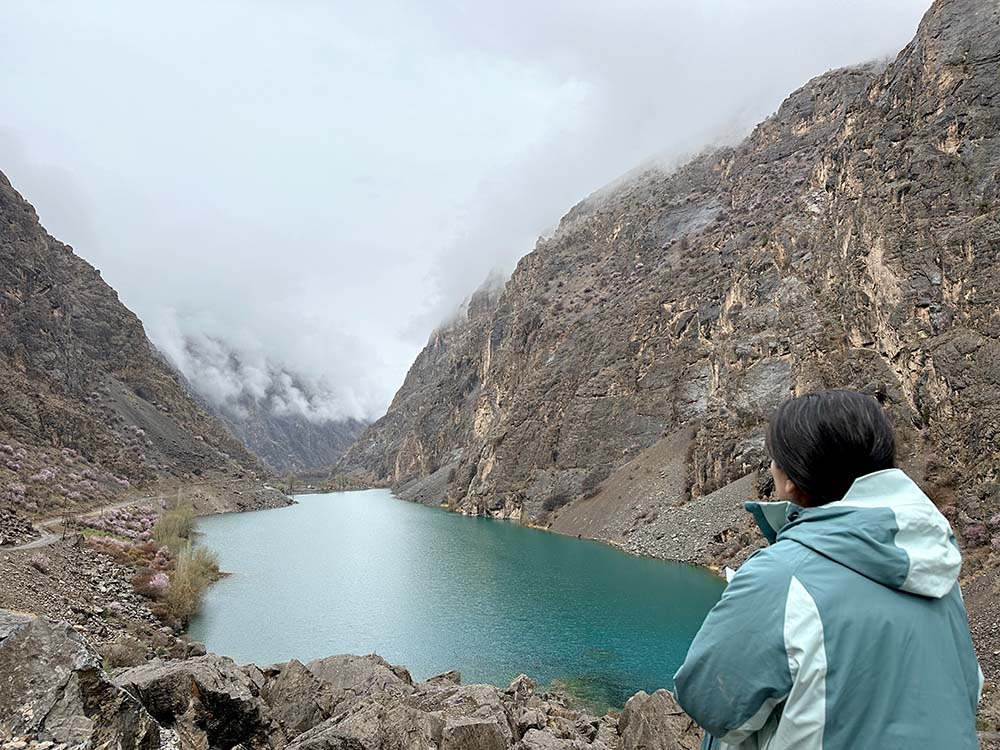
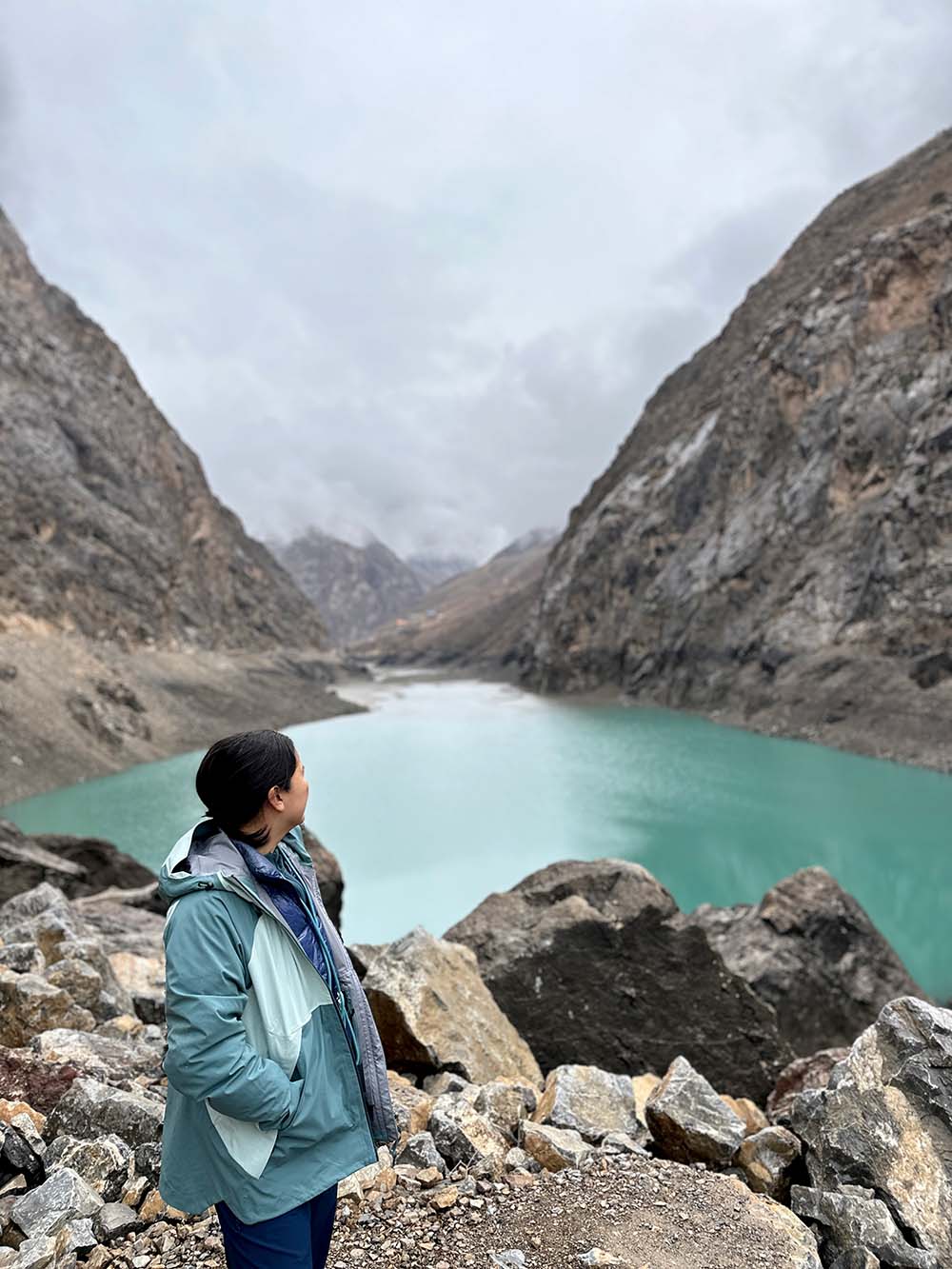
Lake 4: Nofin (Нофин)
Another very short drive away is Lake no. 4 is Nofin or the Central/Middle, a good name since it’s the midway point of the 7 Lakes. This is the longest lake at about 2km, but because water levels were a bit low at that point (you can see the dark vs light rocks on the lake banks), the lake wasn’t its usual length!
It’s supposed to have a bit of a red tint, but because there wasn’t much sunlight, we were mostly just seeing various shades of greenish blue that day.
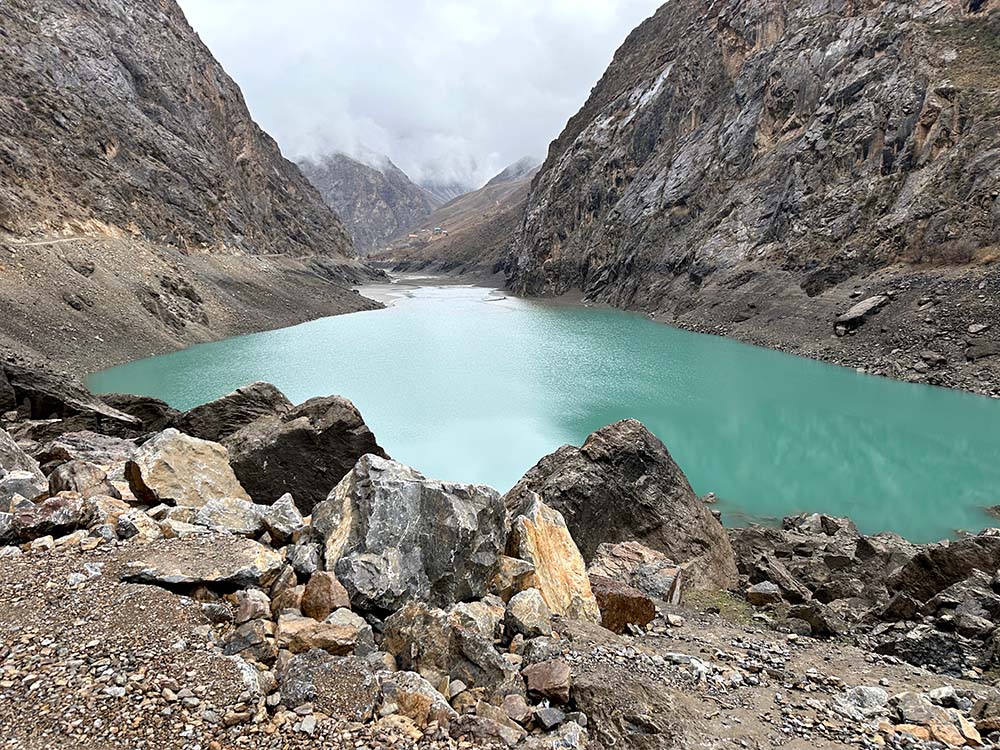
Lake 5: Khurduk (Хурдак)
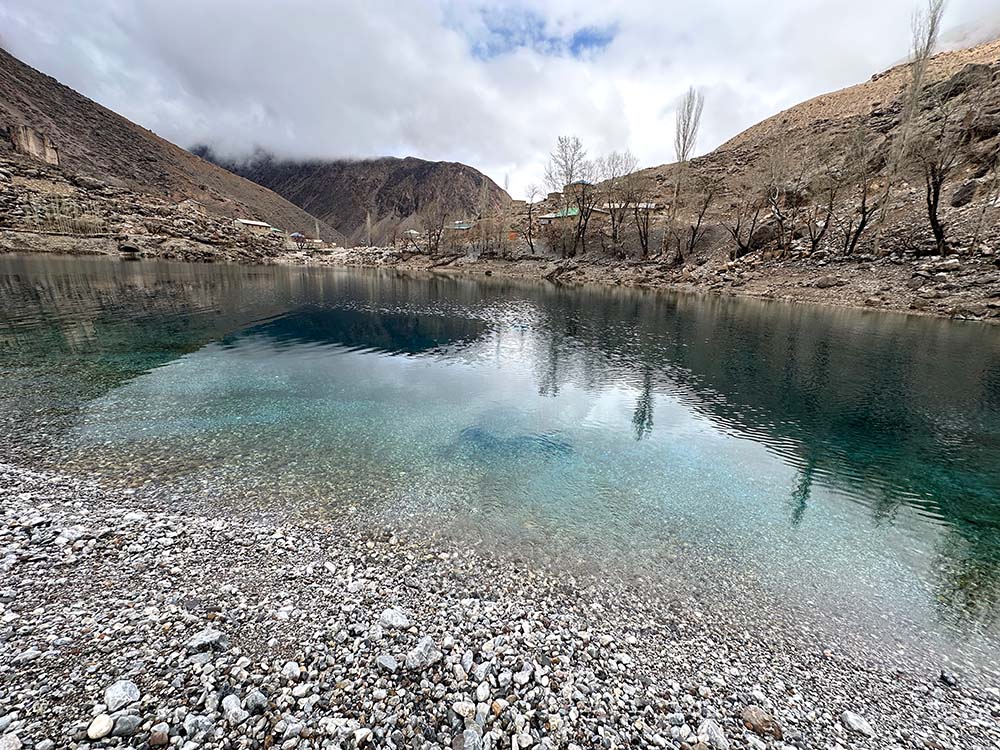
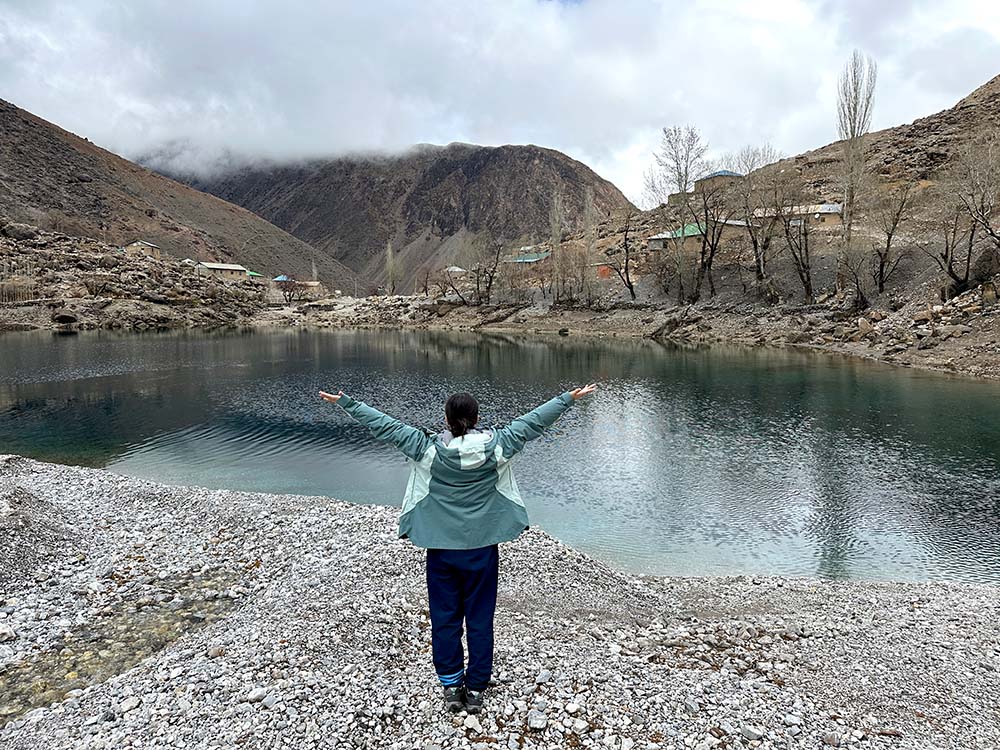
Khurduk or Churduk aka the small one as it is the smallest lake of the 7. This lake is close to the village of Padrut, so we had lots of village children pop out to say hi when we clambered down the stony banks of the lake. The weather was starting to turn a little at this point – less rain, some hints of blue sky, but we were getting higher so still quite chilly.
We could get right up to the lake to touch the water here. Very clear, and also super cold!
Lake 6: Marguzor (Марғузор)
Marguzor is the Lake no. 6 and the largest and I daresay the most scenic of all the lakes. The snowcapped mountains all around it made it look extra pretty, and we had a bit of sun emerging at this point for the nice shots. There’s a very nice rocky ledge where we took most of our pix from.
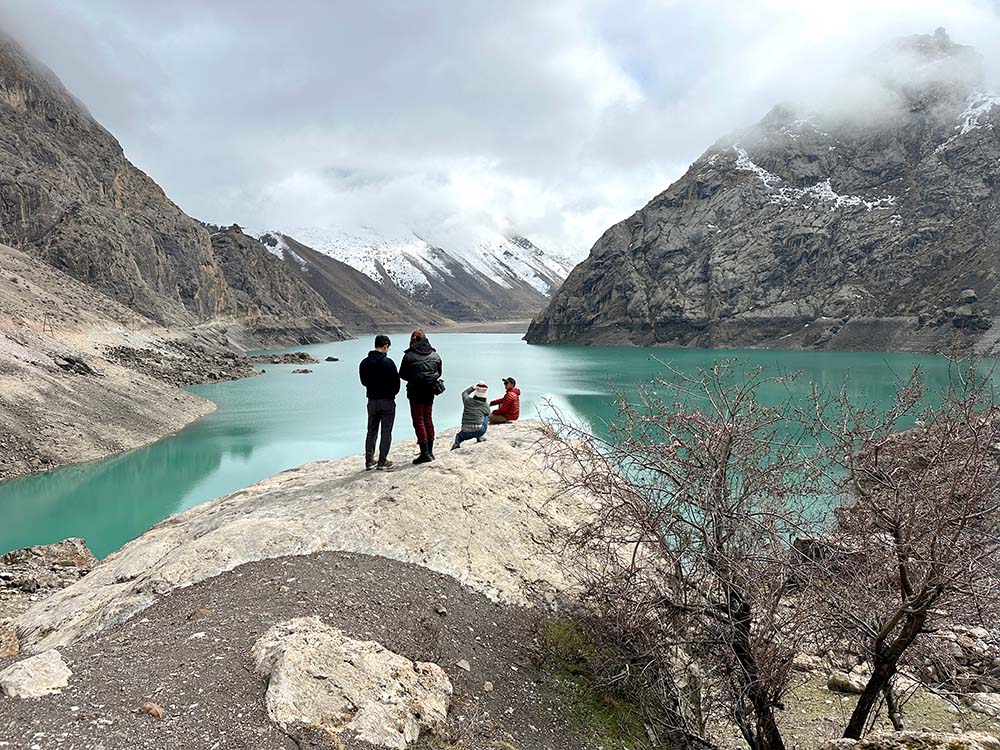
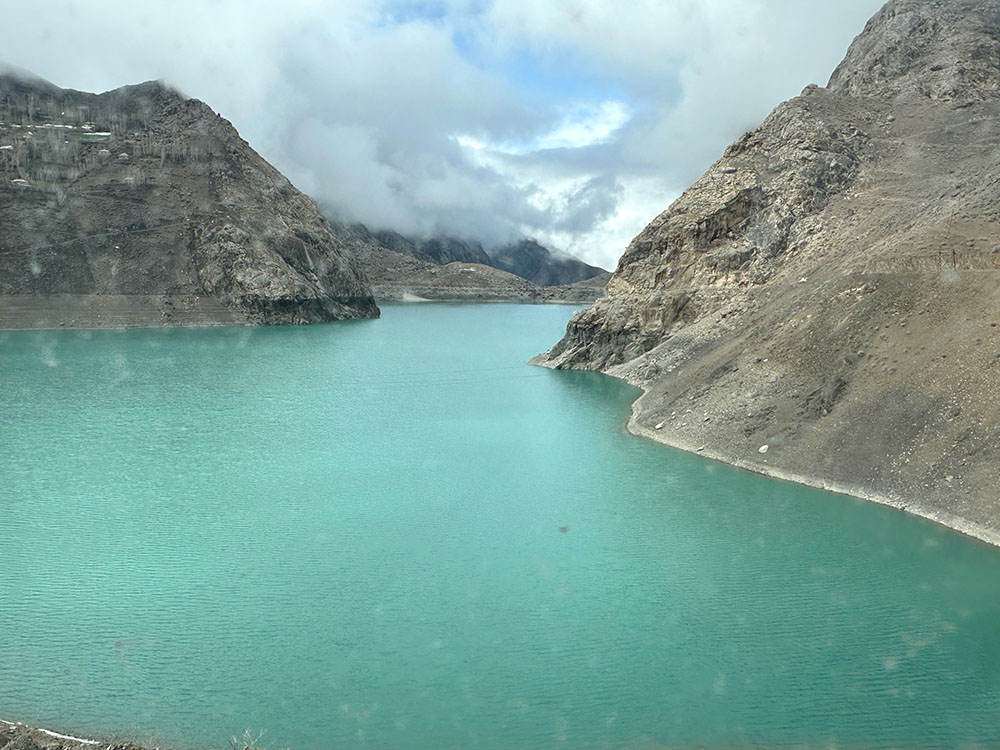
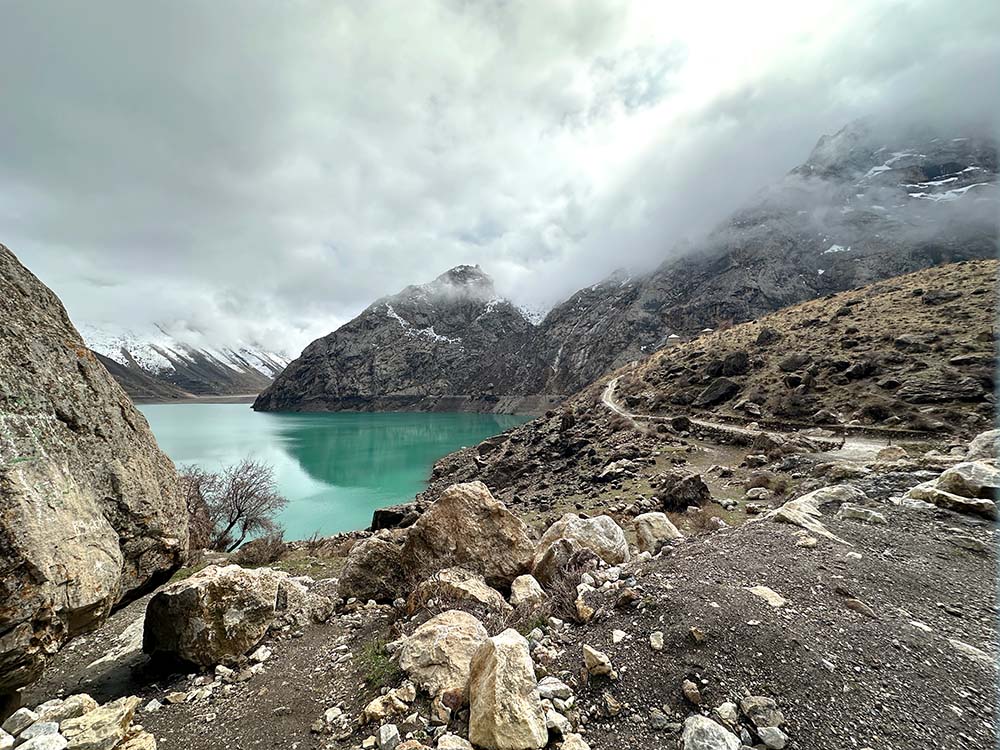
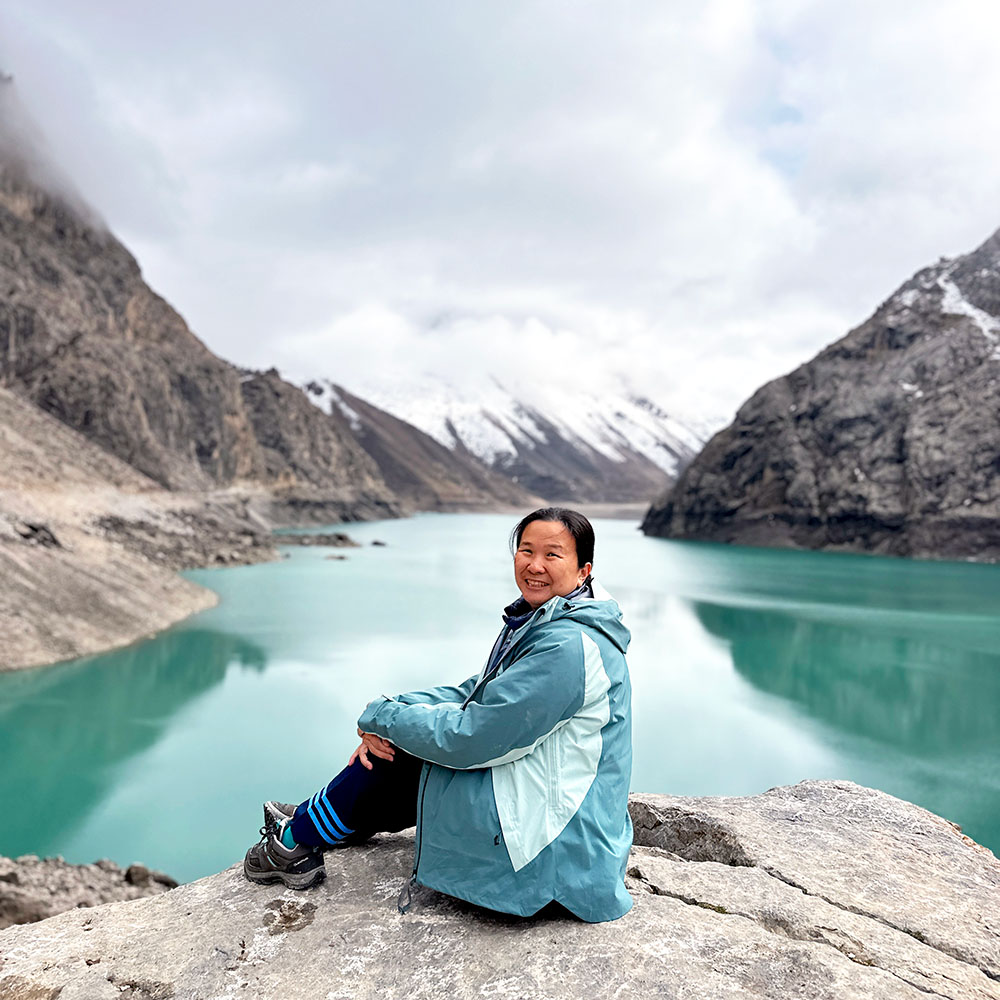
Lake 7: Hazorchasma (Ҳазорчашма)
We decided to see if we could make it to Lake 7, Hazorchasma. This lake is not along the main road like the others and requires a short hike to get to, but unfortunately because of rain the previous night, the ground was too muddy for the car to get to the usual point. If we tried hiking from the closest we could get to, it would take about 2 hours round trip, and we just didn’t have the time for that, so sadly we had to turn around and trundle back past the 6 lakes and exit the mountains.
Other things to do in Panjakent
The Seven Lakes was the highlight of the day trip, but we did make a few little stops in Panjakent and Saramz as well.
Panjakent Market
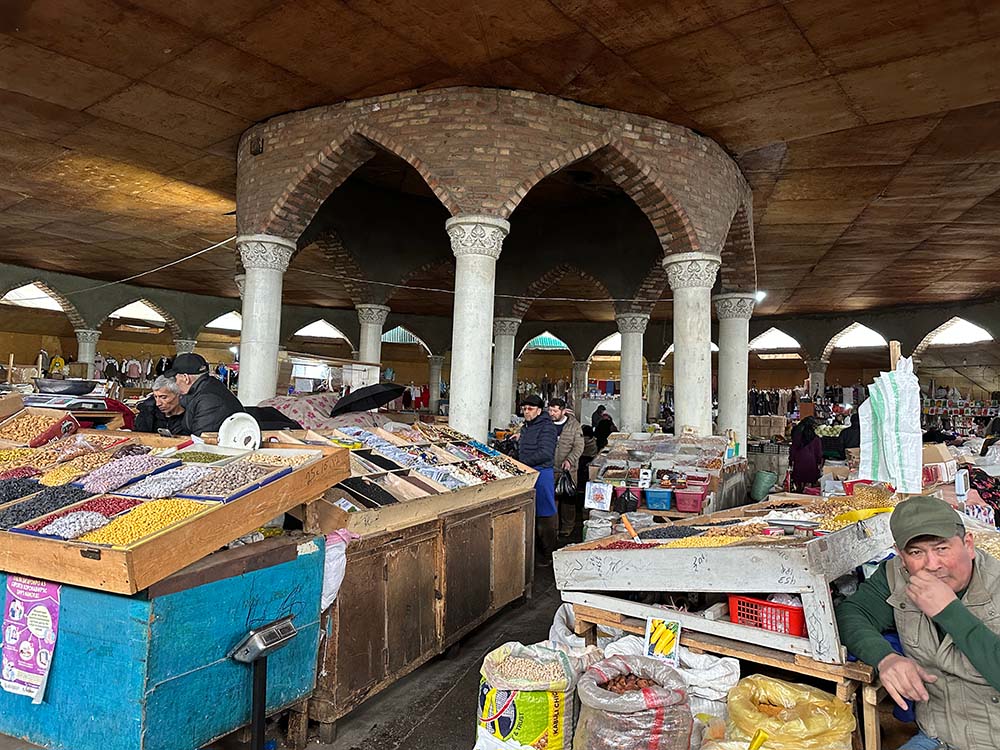
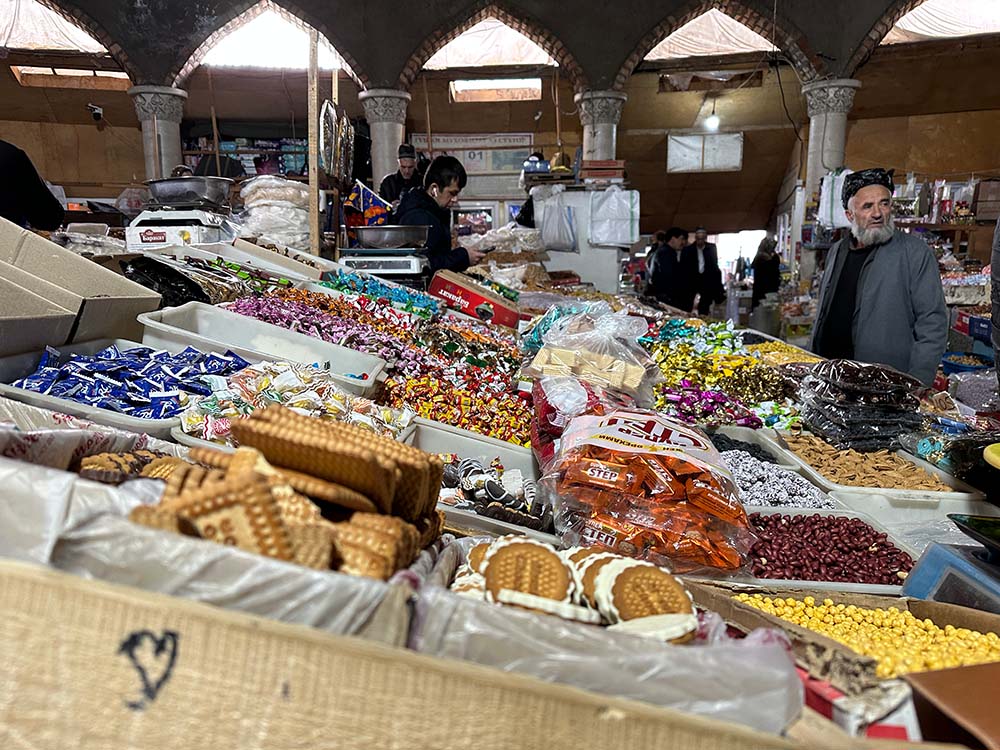
We stopped by Panjakent Bazaar before heading up to the Seven Lakes. The Stans have really cool and atmospheric local markets, and this one was sprawling and bustling with people. We pooled some money together to change some Tajik Somoni – the bank is basically done on a sofa and a table with a man holding a wad of bills.
Navruz showed us around the market a bit. The oldest part of the market is the grandest with these lovely pillars and brick walls, dating back to the 16th century. It used to be open-air but luckily for us since it was raining that day, they’ve installed a roof. This market was full of local people and packed to the brim! Some local produce that was in season – plenty of apricots, walnuts, honey and tea!
Ancient City of Panjakent
Since we didn’t hike to the 7th lake, we had a bit of time to see some things before heading back to Samarkand, so we went to check out the ancient city ruins of Panjakent – not quite UNESCO but on a tentative list. Panjakent was once a key city in early Sogdiana days which dates it back to the 5th-8th century.
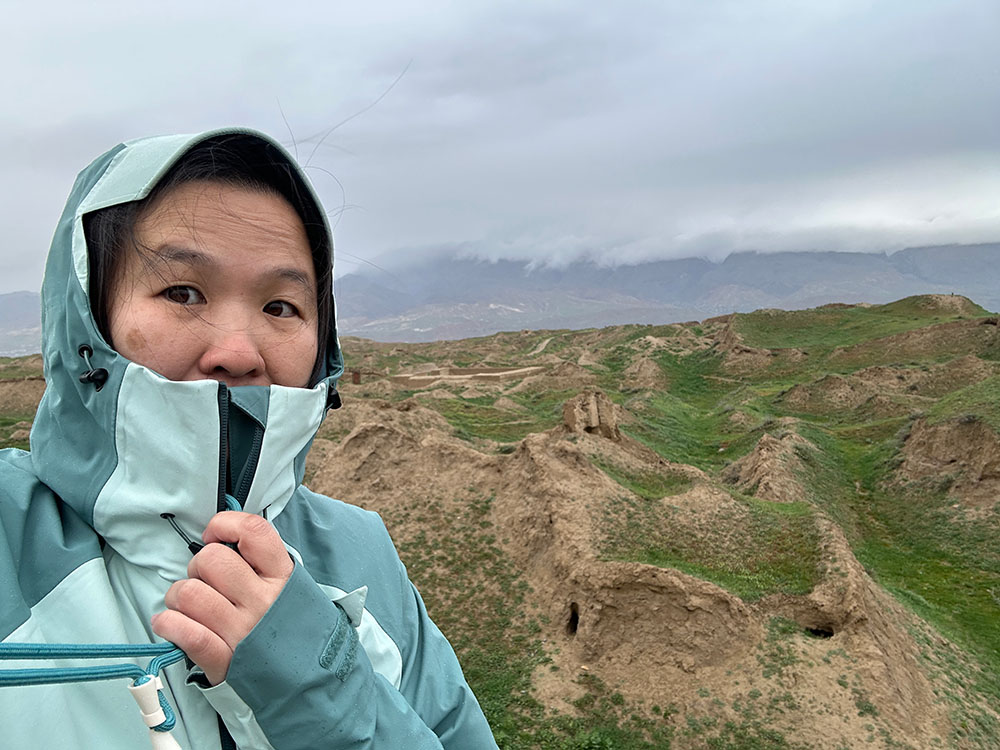
There are some important ruins that were unearthed in the 90s that showcase the remains of a vast citadel that’s over 2,000 years old, but unfortunately other than preserving it and removing the artefacts to the museum, not much has been done about the site itself – there are a handful of signs, but you probably need a guide to give you some context otherwise you’ll just be looking at ridges. You can kinda make out shapes of houses and walls, but the rest of it requires your imagination.
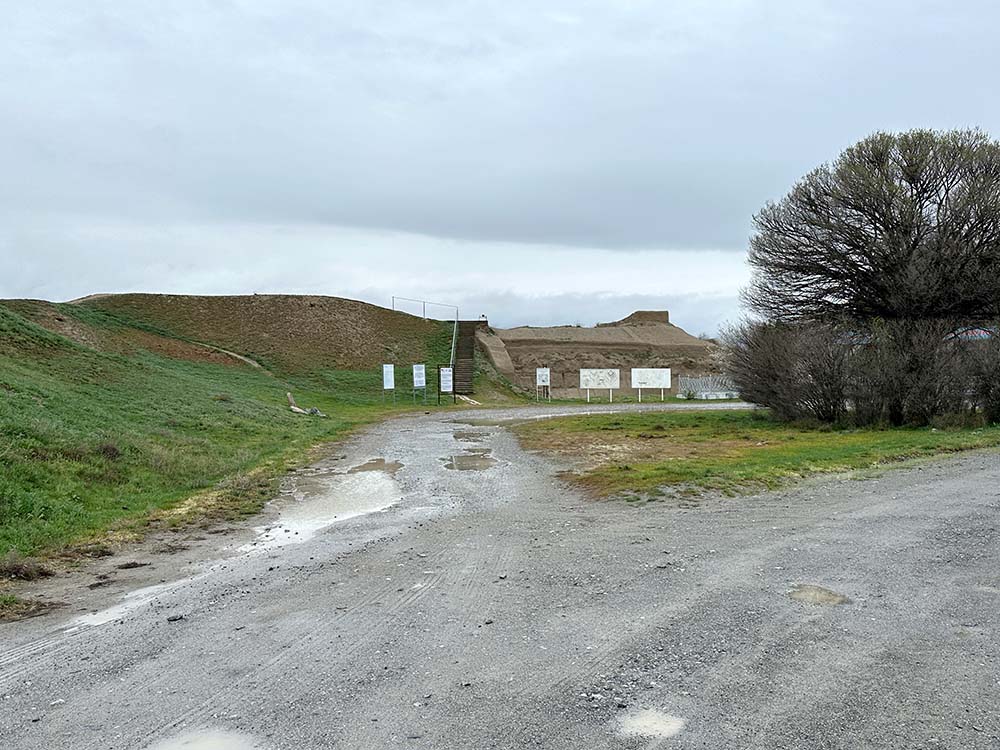
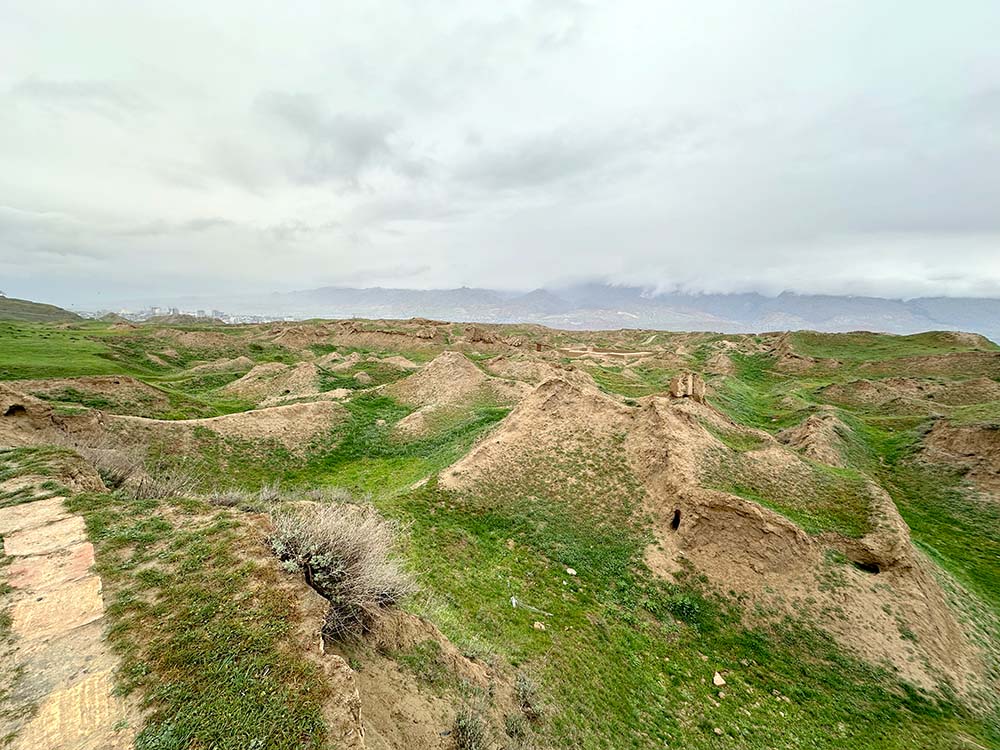
You can’t tell from the pictures but it was SO WINDY and SO COLD.
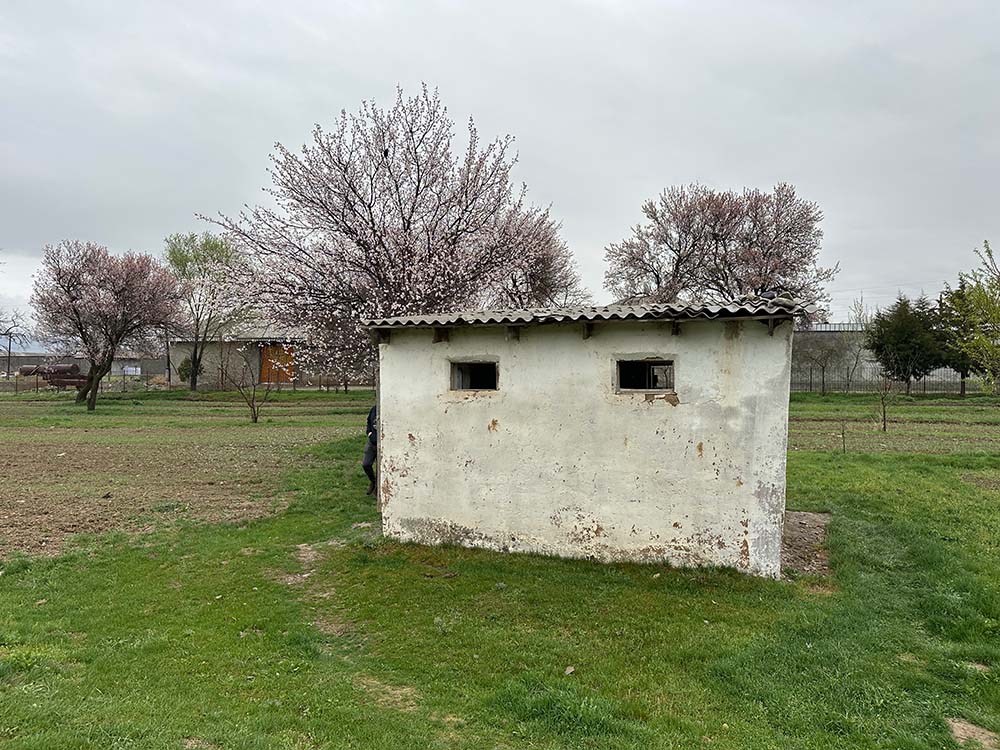
Also there’s a toilet here. More of an outhouse with a hole in the ground, but it’s decent enough when you need to go~
Sarazm Archaeological Site
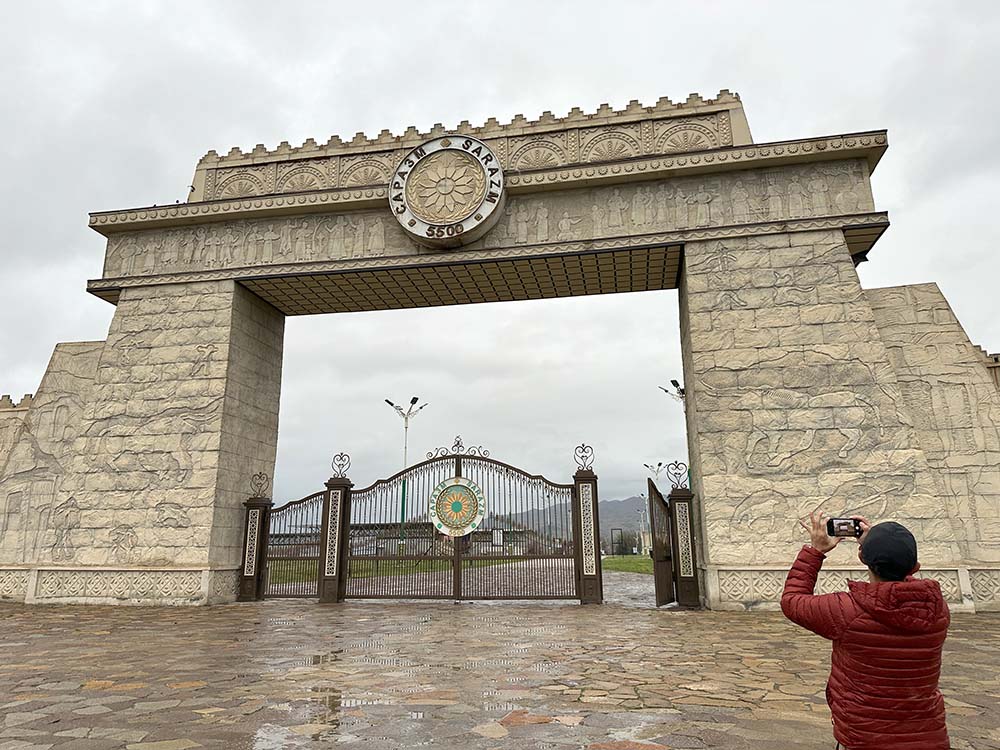
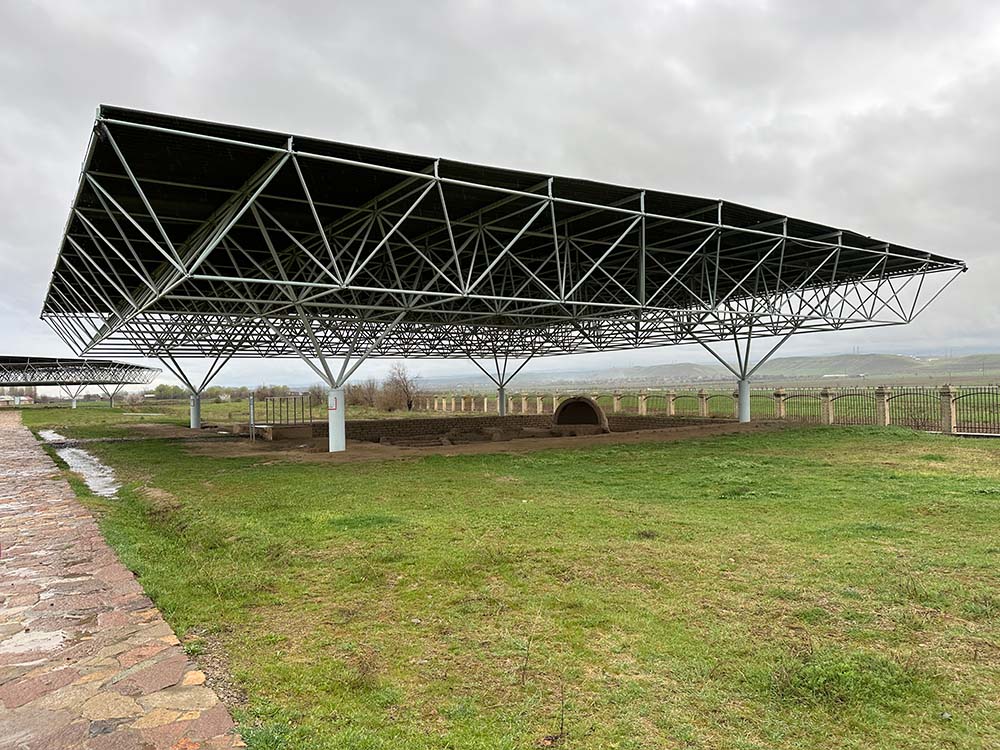
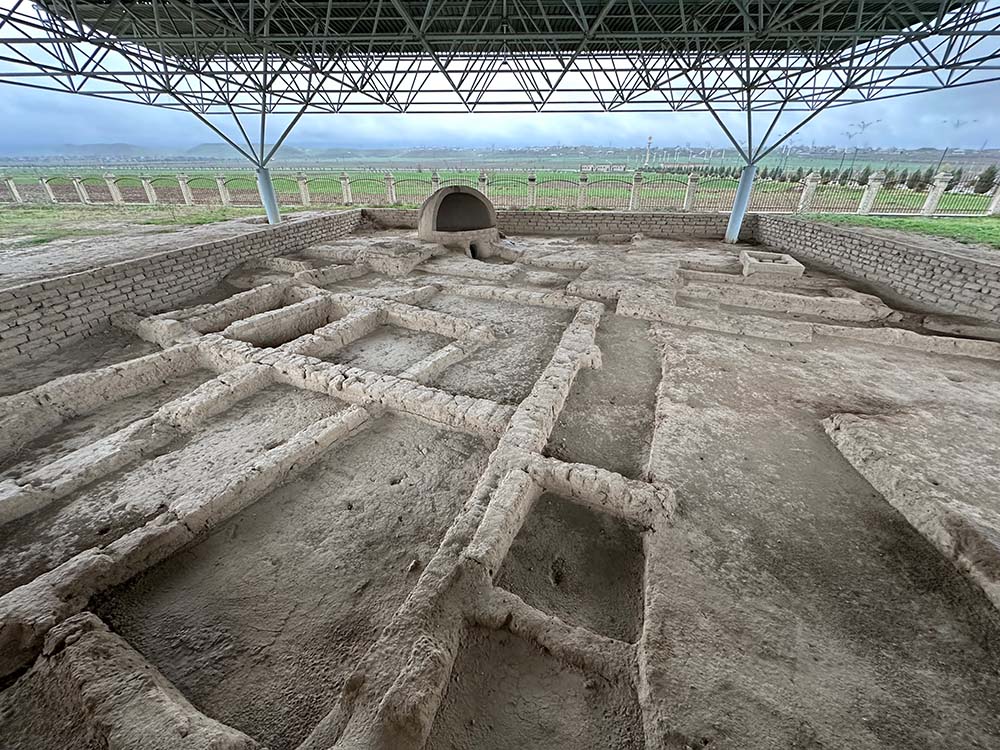
Even closer to the border is the Sarazm Archaelogical Site, a proto-urban UNESCO site which dates as far back as 3000-4000 BCE – that’s roughly 5,000-6,000 years ago and a crazy number to imagine. The remains of the settlement in Sarazm are considered the oldest in all of Central Asia.
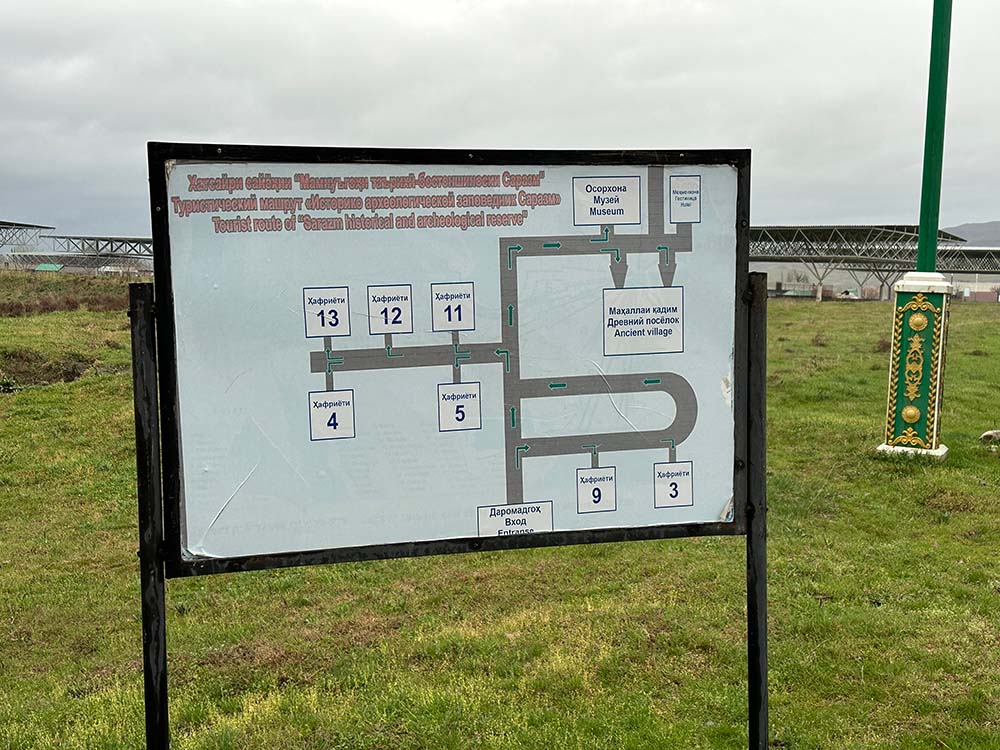
The site is quite vast but we didn’t walk all of it, just checked out some of the uncovered plots nearer the entrance that showcase the way these early people lived. Apparently it was a matriarchal society, and all about communal living and extended families.
They’ve definitely put it more work here, with roofs to cover the dug up sites and lots of signage to explain things, but by this time we were also pretty pooped and the rain/wind had come back again so we didn’t spend too much time here.
After this, we headed back to Samarkand for the evening and were too lazy to even go out for dinner, opting to order in some KFC and kebabs with Yandex Go, but my first foray into Tajikistan was definitely quite memorable even if we didn’t manage to see all the lakes in the best conditions.
Later on in Tashkent, we would do another Tajikistan day trip, this time to its second largest city Khujand towards the north, and has very different vibes from this mountain adventure.
Have you been to Tajikistan’s Seven Lakes? Tell me what your experience was like, and check out my other posts from this ‘stans trip that included Turkmenistan and Uzbekistan.