Exploring Samarkand: My favourite sights and eats in Uzbekistan’s historic silk road city
Last updated July 23rd, 2026
Our next stop on our Uzbekistan trip was Samarkand, another city rich in history as a historically prominent city on the Silk Road. It’s a beautiful city though unfortunately we were pelted with rain throughout, but still we spent a good 4 days in Samarkand and saw even more impressive architecture than what we saw in Bukhara. Here’s a look at what I did and more things to do in Samarkand if you’re planning a trip to this majestic city in Uzbekistan.
As a quick recap, I travelled with friends first to Turkmenistan for a few days before crossing the border into Bukhara, and then took the high speed train from Bukhara to explore Samarkand. We navigated Samarkand by walking and via Yandex which has ride shares and food delivery and did a day trip to the Seven Lakes in neighbouring Tajikistan.
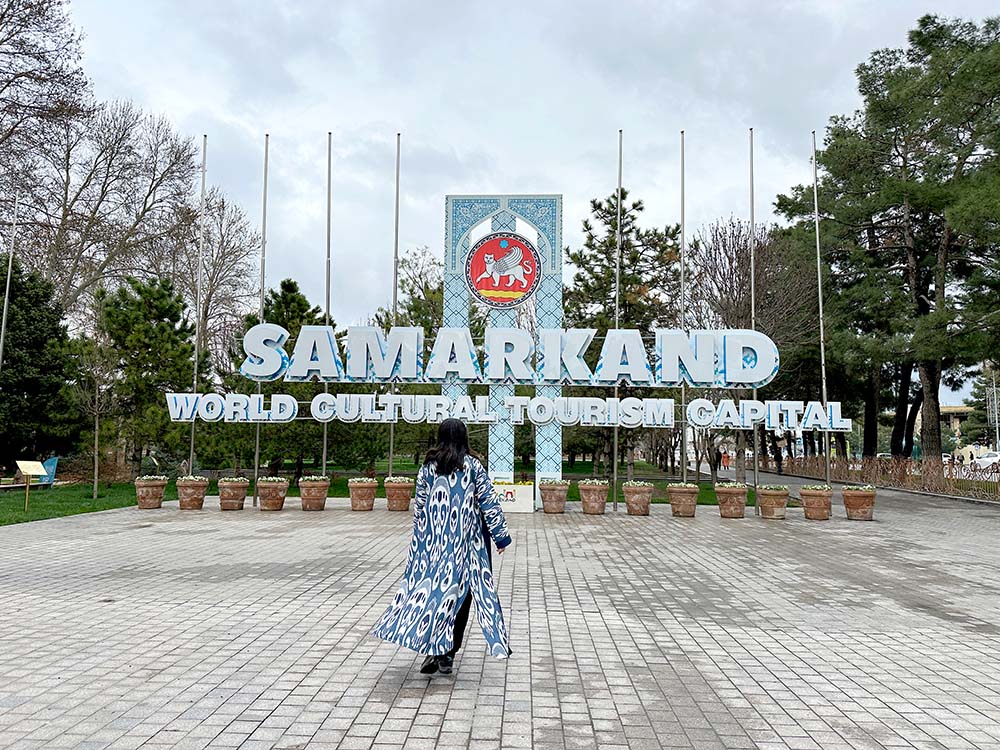
Read my independent travel tips for Uzbekistan and see more of my time in Bukhara and modern capital Tashkent.
Things to do in Samarkand
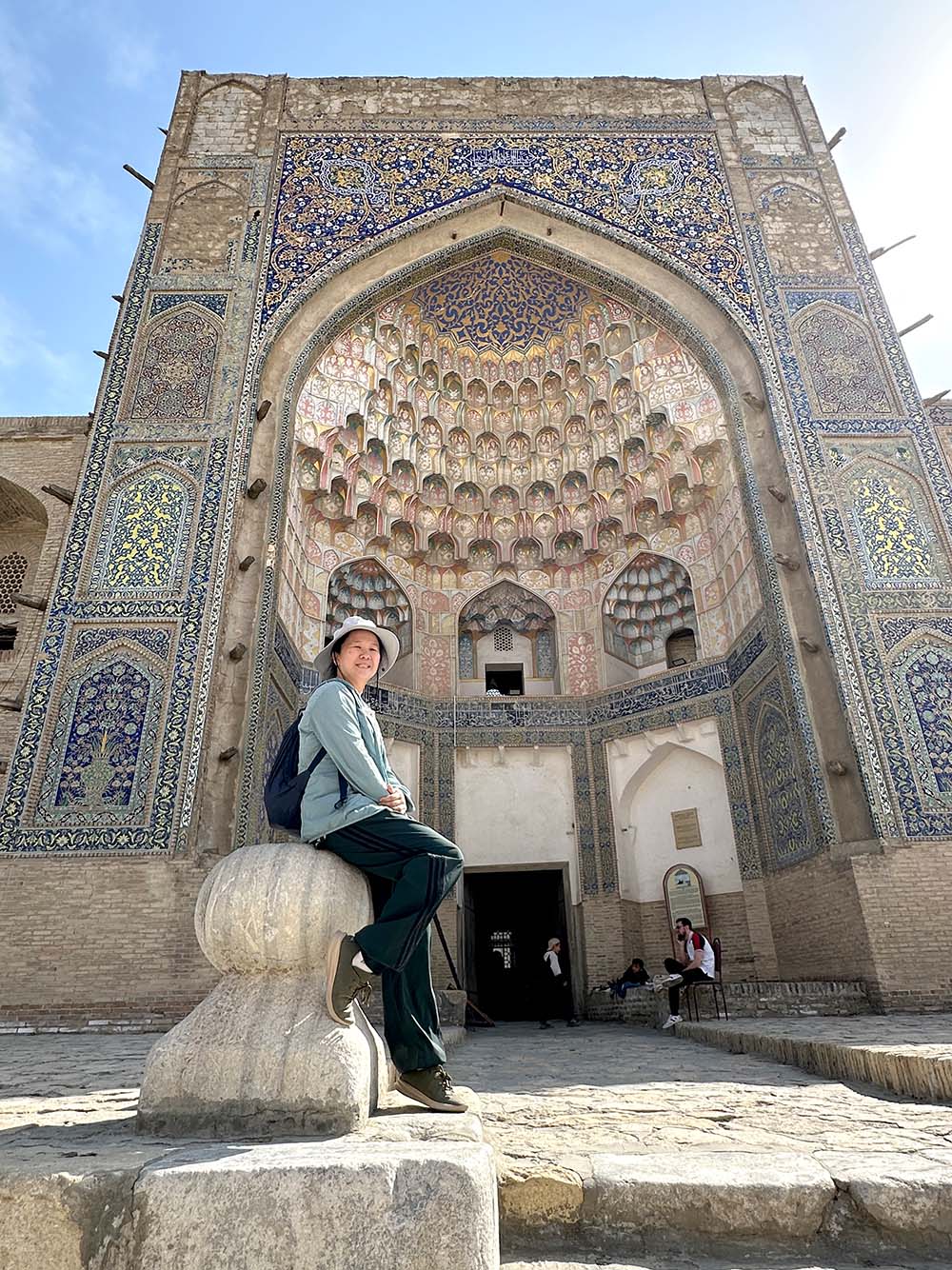
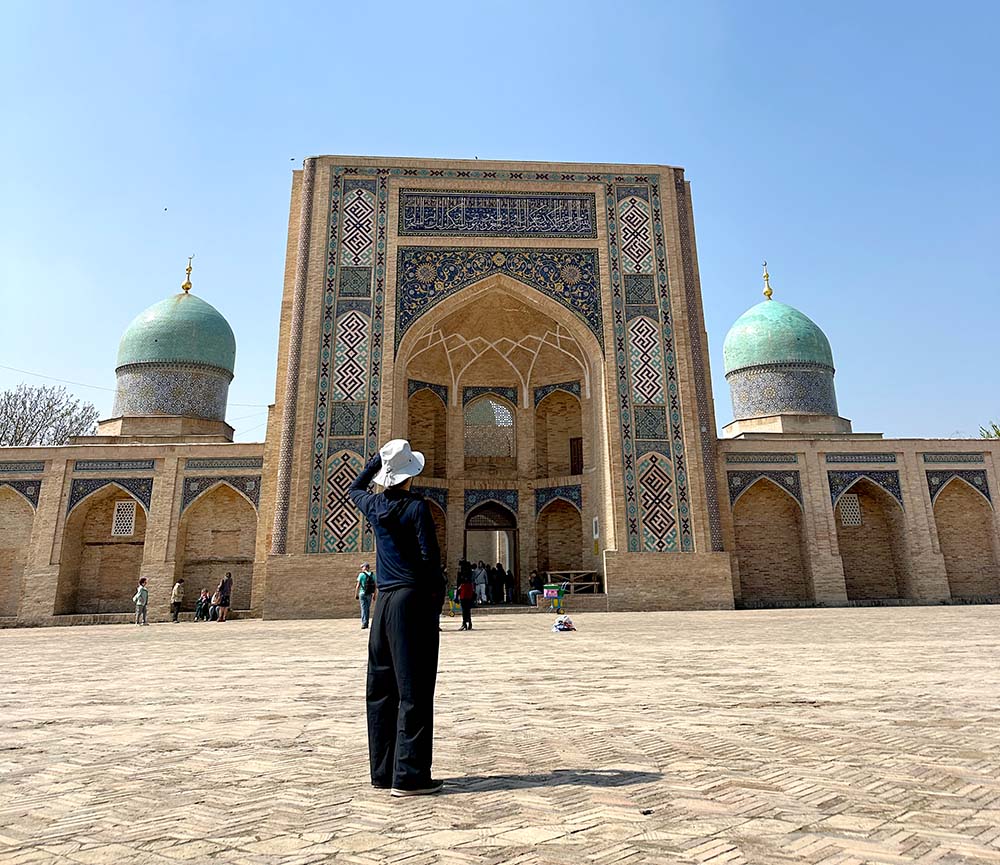
Samarkand has a long rich history and listed as a UNESCO site for its melting pot of cultures.. one key period was in the 1300-1400ss when it was the capital of the Timurid empire. I thought Bukhara had plenty of amazing azure-tiled architecture, but there were EVEN MORE beautiful buildings here in Samarkand, and grander versions to boot. We saw more lovely M’s in Samarkand – more madrasahs, mosques and more. If only the weather had been nicer… you’re going to see a lot of me looking quite drenched throughout.
Compared to Bukhara, I found Samarkand less walkable overall, which is partly because our hotel (Hotel Biluri Sitora) was not in the central historic area like it was in Bukhara. I highly recommend downloading Yandex and using that to get around as it is cheap and convenient and you’ll have less issues trying to give directions. That said, we trekked up and down the stretch between Registan Square and Bibi Khanym quite a number of times.
You’ll notice also that there are less food recommendations in this post, that’s because on some days we were just too tired to go out and decided to get food delivery via Yandex. Also, my travel companions needed their Asian food fix, so yes, we ended up at a Korean restaurant too.
As always, check out my travel mate Oheyjelly’s vlog of our Samarkand leg if you want a video recap of what’s described here.
Amir Temur Mausoleum (Gur I Amir)
Amir Timur or Tamerlane is a key name in Samarkand and Uzbekistan’s history as the founder of the Timurid Empire in the 1300s. Besides being key to all the blue architecture, his descendants were also where the Mughal style architecture came from (aka stuff that looks like the Taj Mahal).
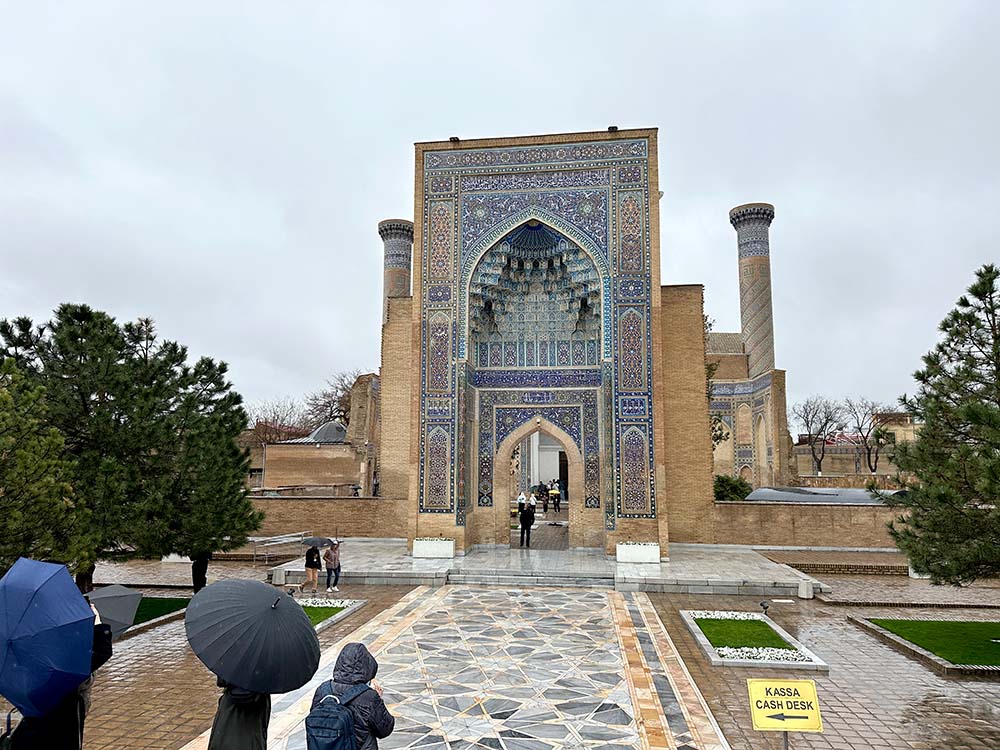
The Gur I Amir or Tomb of the King is where you’ll find Timur’s tomb, along with some of his descendants like grandson Ulugh Beg (he comes up a lot in the history as well), and even his honoured teacher – there’s a small exhibit of sorts outside the chamber that tells a bit of this history.
If you think the outside of this mausoleum looks fancy, the inside is dimly lit but even grander with a soaring dome ceiling covered in lots of gold intricacy and even bits of jade worked into the walls.
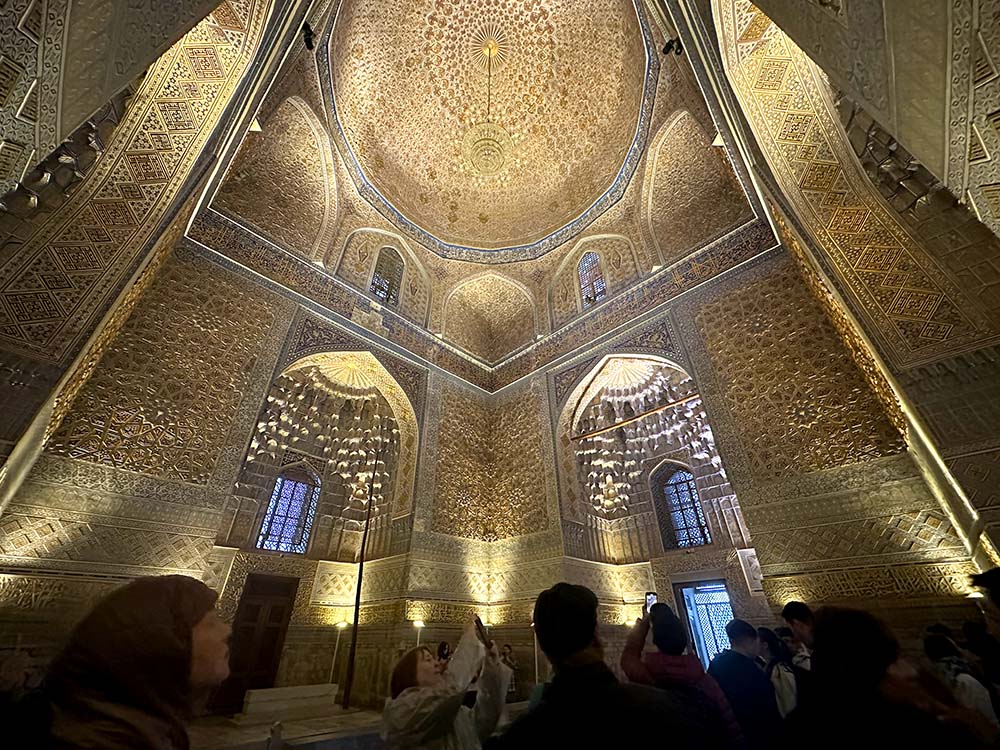
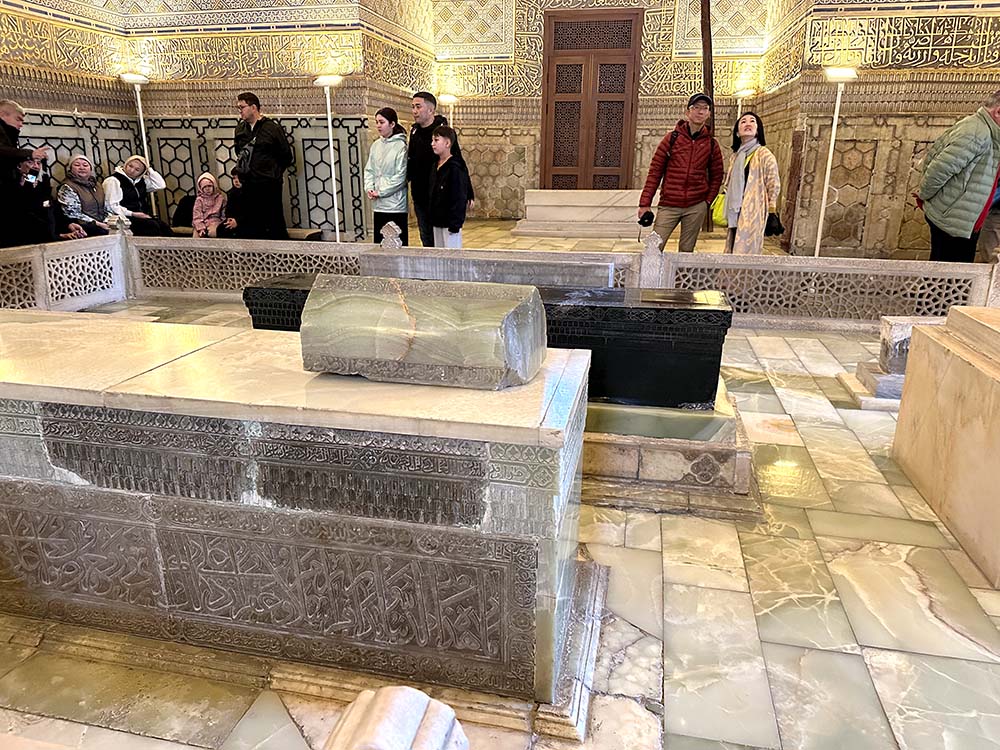
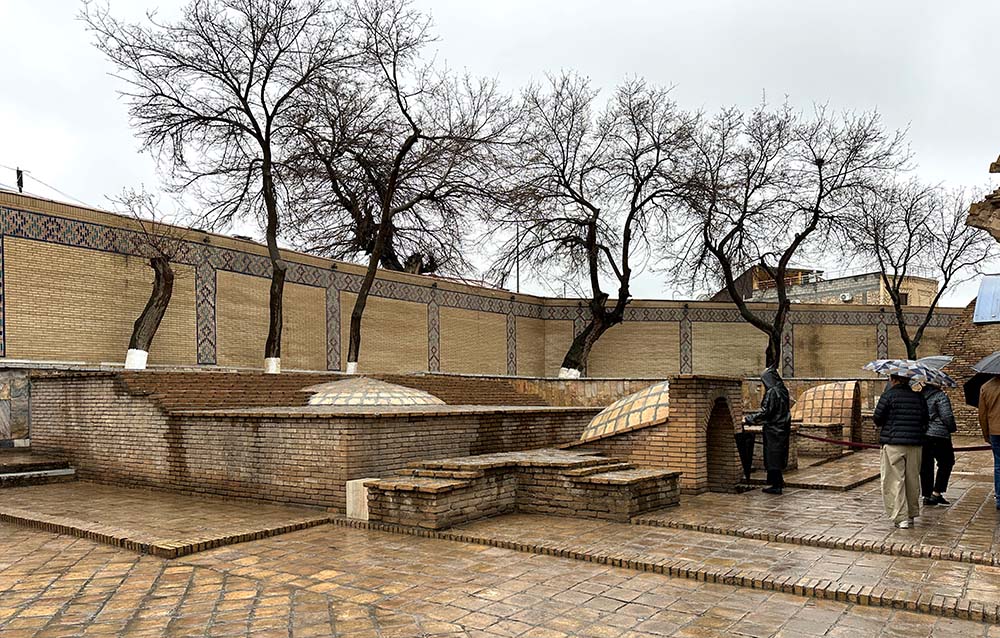
Amir Temur Mausoleum / Gur I Amir [Google maps] Entry fee 75,000 UZS
Registan Square
The main centre of Samarkand is this massive public square called Registan Square flanked by 3 historic madrasahs (Islamic religious schools). Fun fact: Registan actually means ‘sandy place’, though there’s nothing sandy about this place at all these days.
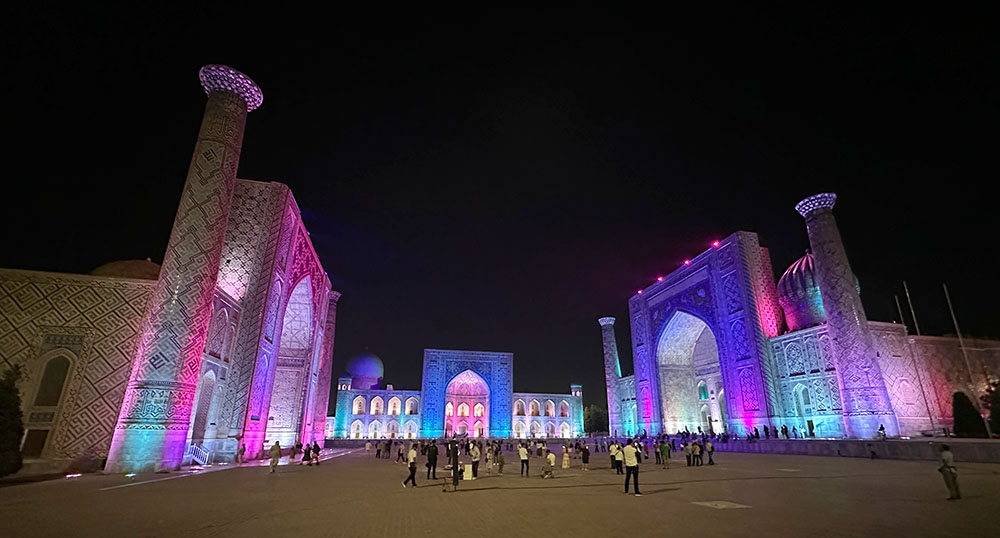
We visited this square on our very first evening in the city and were surprised to find it all lit up. There is a light and music show that you can watch from the front stairs where the madrasahs are lit up with colour lights in sync with music.
There is also a real earworm of a tune that goes ‘Samarkand, Samaarrrkaaannnd’ – I didn’t get it on my videos but in the process of searching, I realised that there is actually a more sophisticated 3D building projection show complete with narration that tells the entire story of Uzbekistan’s history, though it looks like we missed that and saw a more generic light and music show.
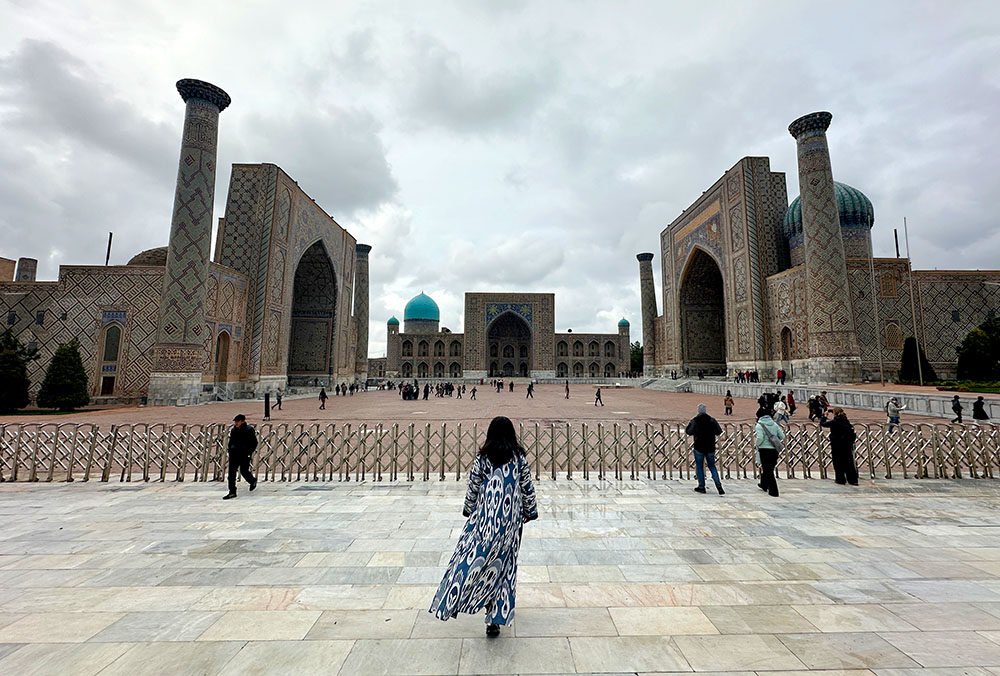
The next day we went back to Registan Square and bought the entrance ticket to enter the compound. This gives you access to the 3 Madrasahs that border the square.
Ulugh Beg Madrasah
Ulugh Beg Madrasah is the oldest of the lot built in the early 1400s – this seems to have been built about the same time period as the one in Bukhara, but the Bukhara one is older and not as grand. Ulugh Beg is a name that comes up a lot in Bukhara and Samarkand history as he was the grandson of the original King Timur – fantastic scholar, great astronomer but apparently not a good leader lol.
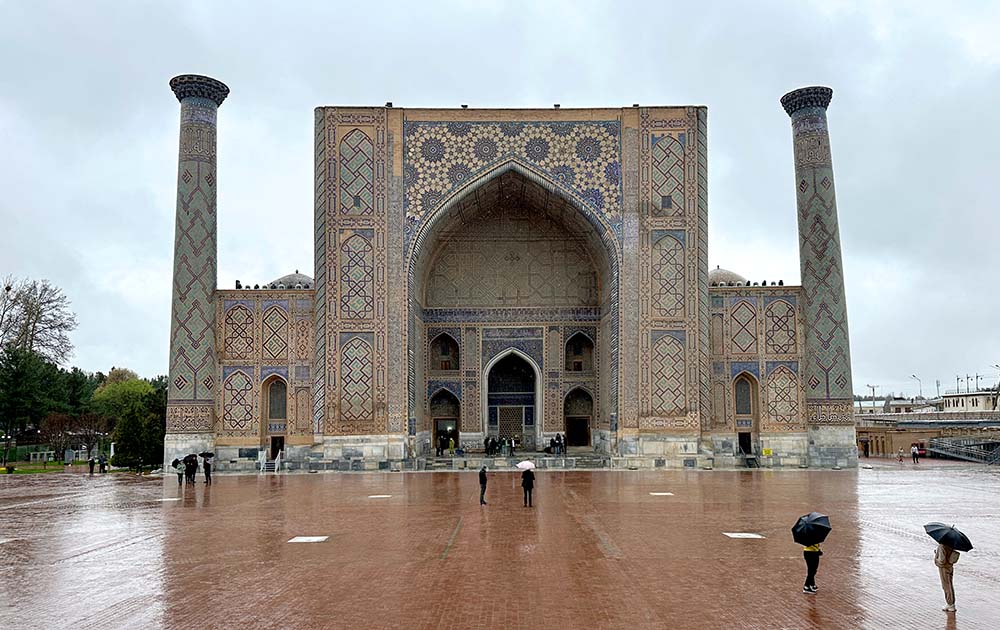
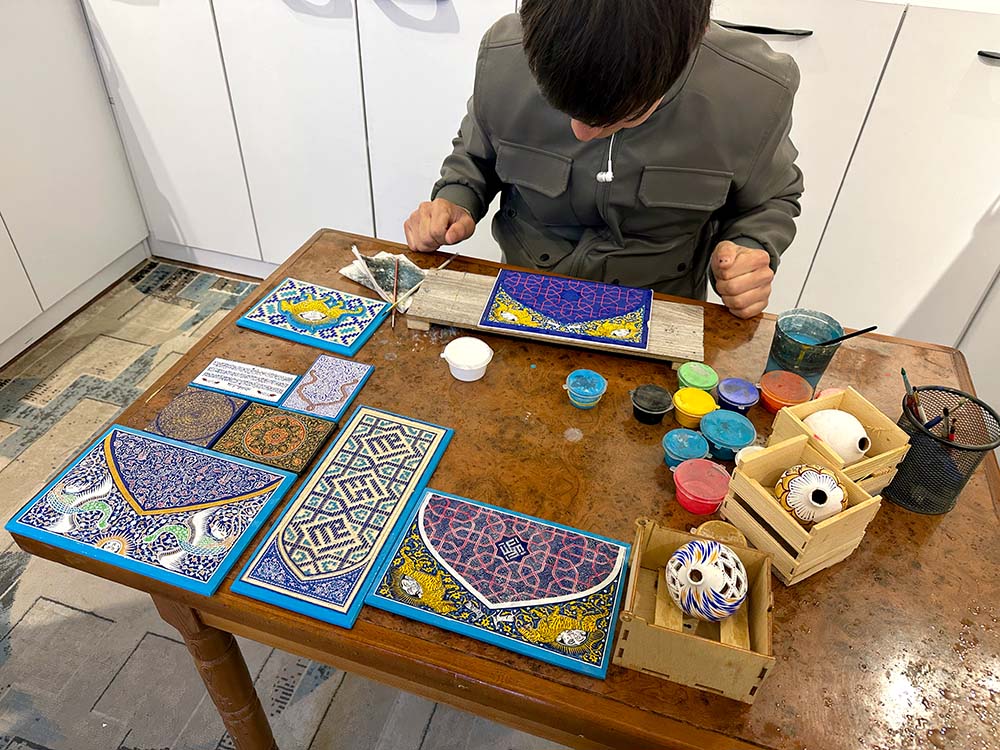
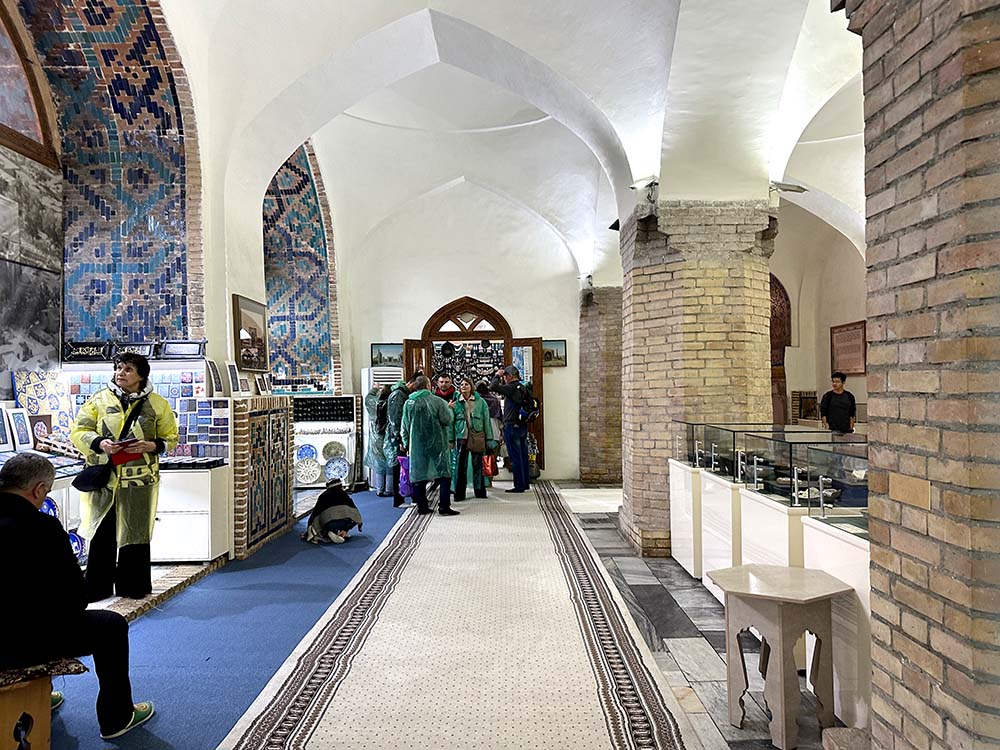
This was the first madrasah we popped into and we were mostly just happy to get out of the rain for awhile. We found small little staircases that led upstairs, and little rooms that were once dorms and school rooms now had shops selling souvenirs in them. I found one with a guy handpainting magnets and other trinkets – I can’t resist a good Islamic -style tile so I had to get one for myself!
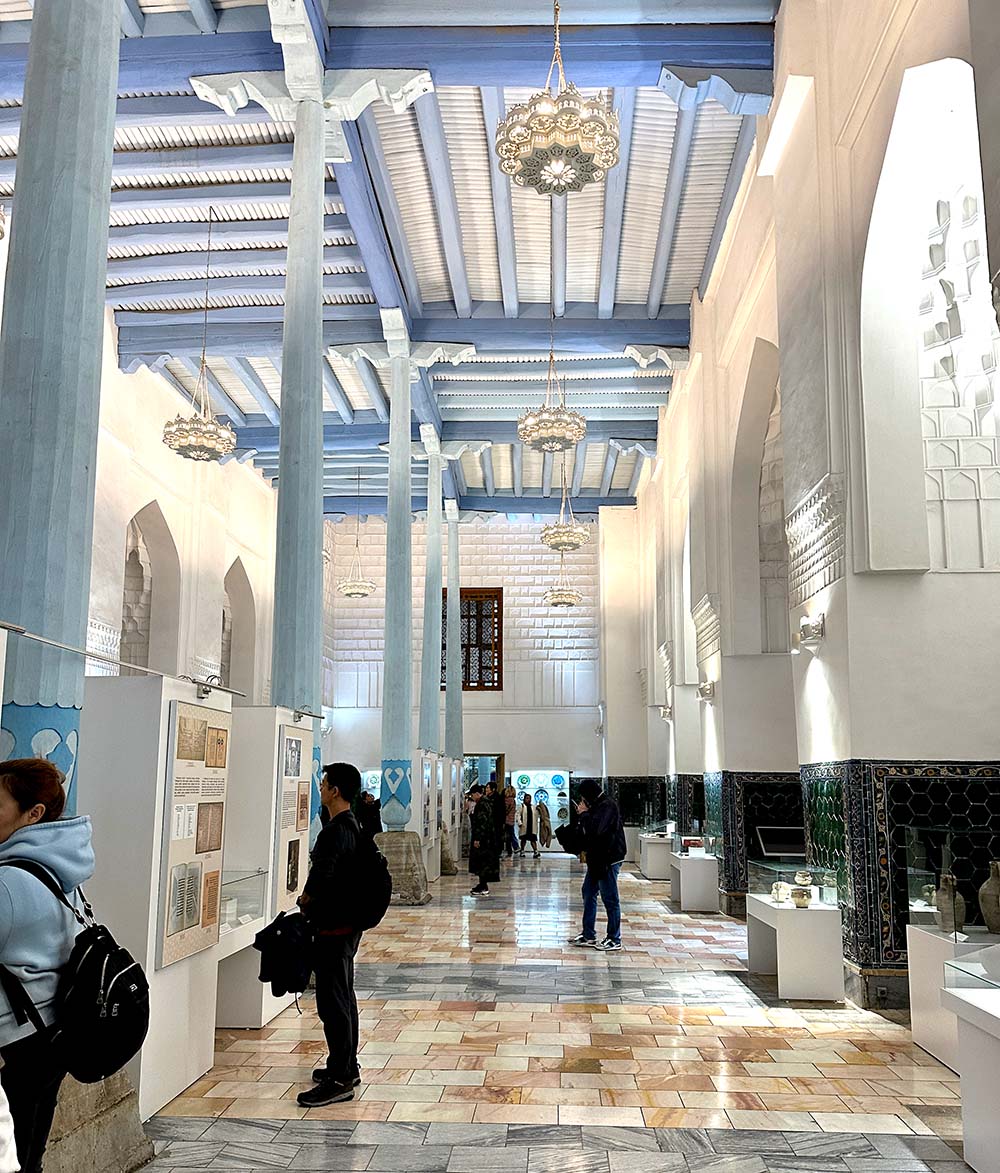
On the lower level, we found another area where there was an ongoing exhibition about Ulugh Beg and his achievements. Thankfully there were english panels, and lots of little dioramas showcasing his work.
Tilya Kori Madrasah
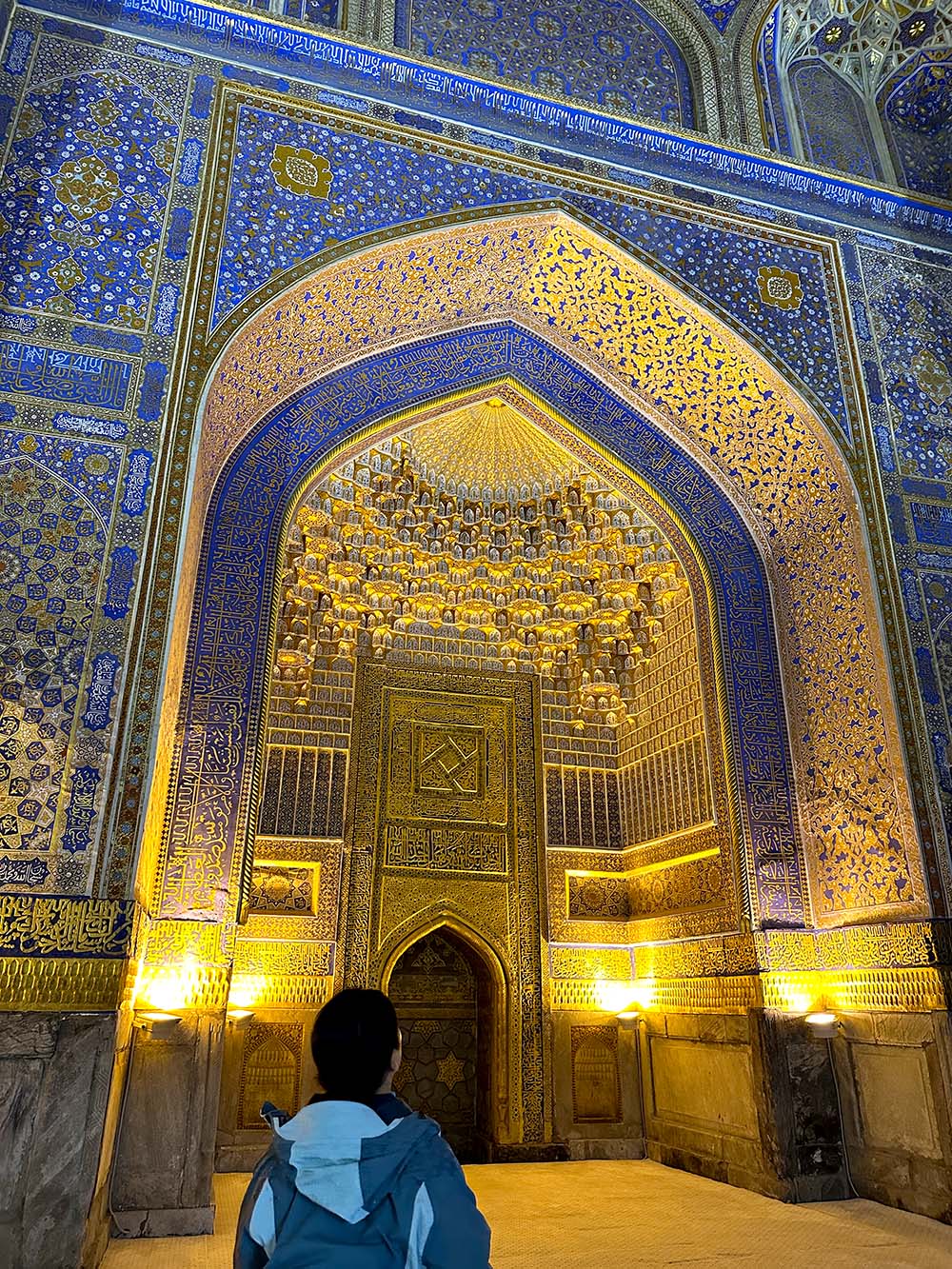
Tilya Kori Madrasah is in the centre of the square and the newest of the 3 madrasahs – that just means it was built in the mid 1600s more than 200 years after the Ulugh Beg Madrasah. The name Tilya Kori apparently translates into something like ‘covered with gold’, which is a pretty apt description when you enter the domed mosque inside.
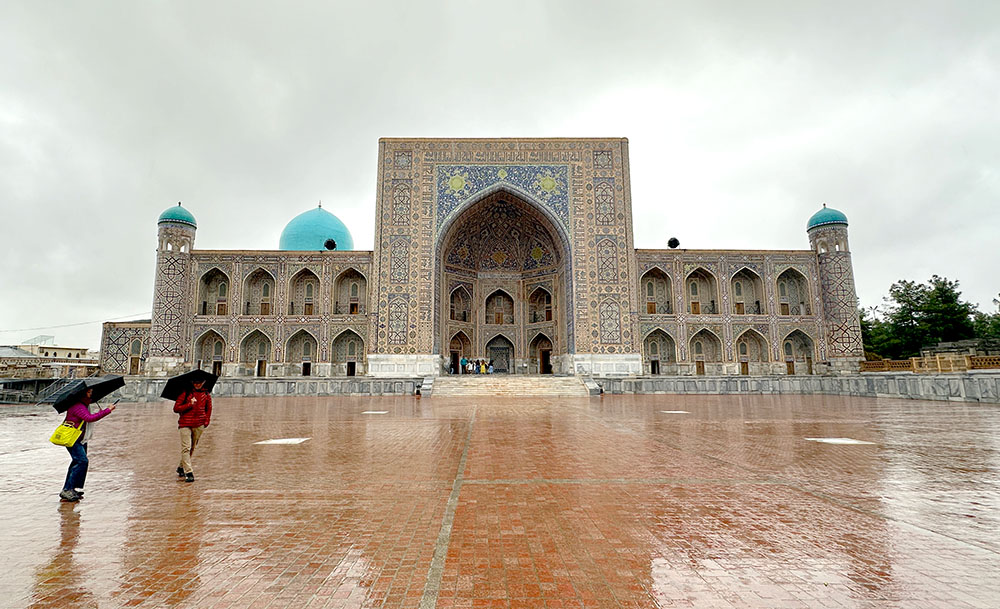
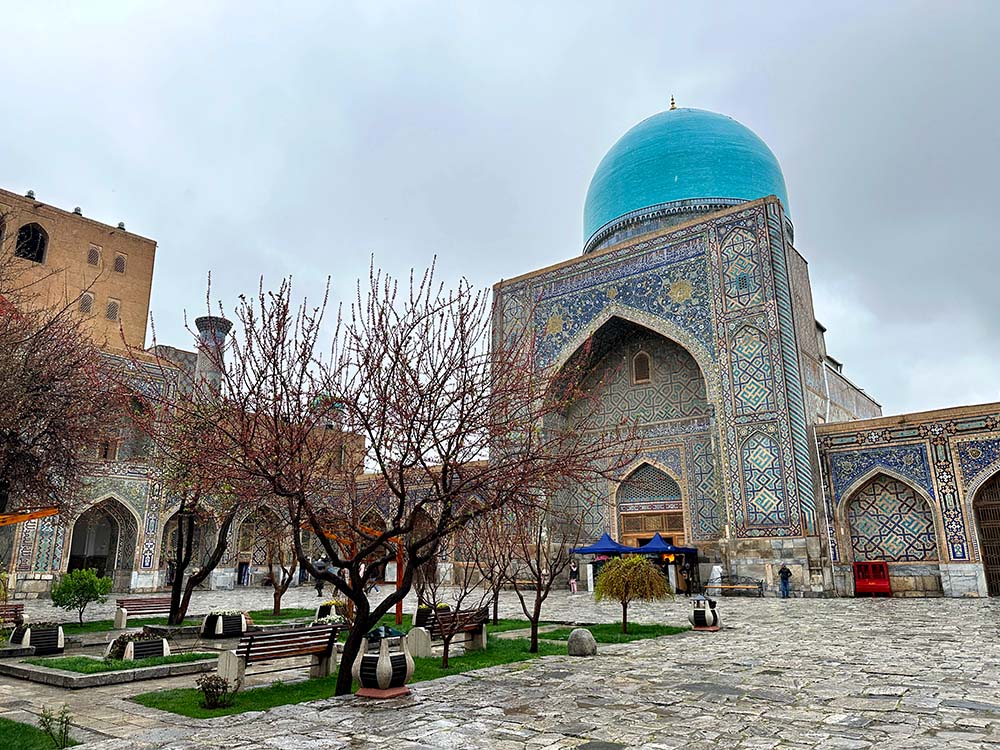
The mosque was one of the most important buildings in Samarkand back in the day, and today you can still visit it though you have to take out your shoes as it is carpeted inside. It is also very, very gilded in gold and Islamic decor.
Sherdoh Madrasah
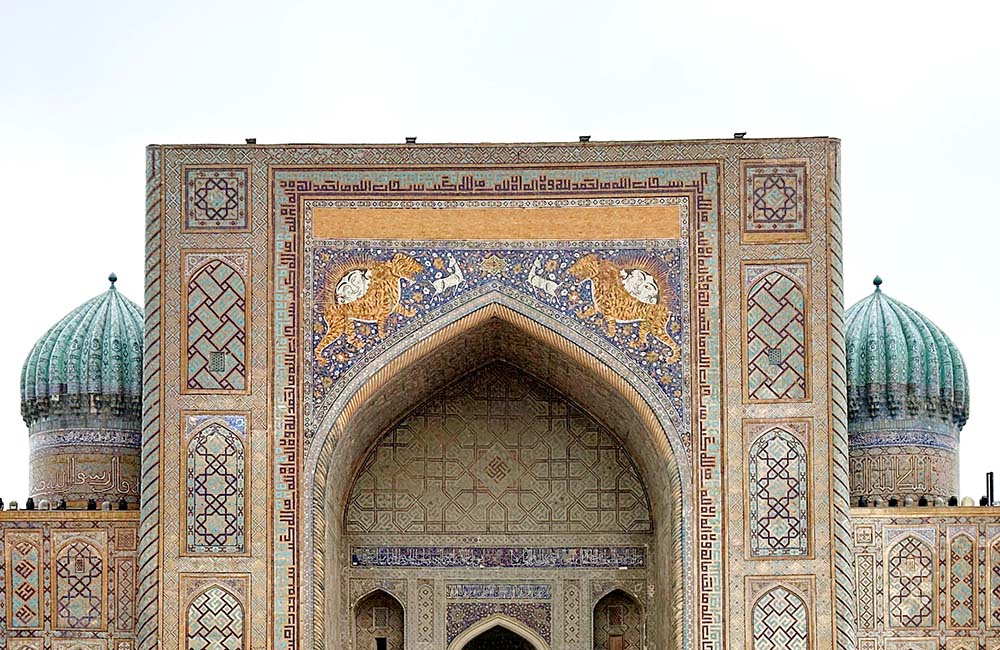
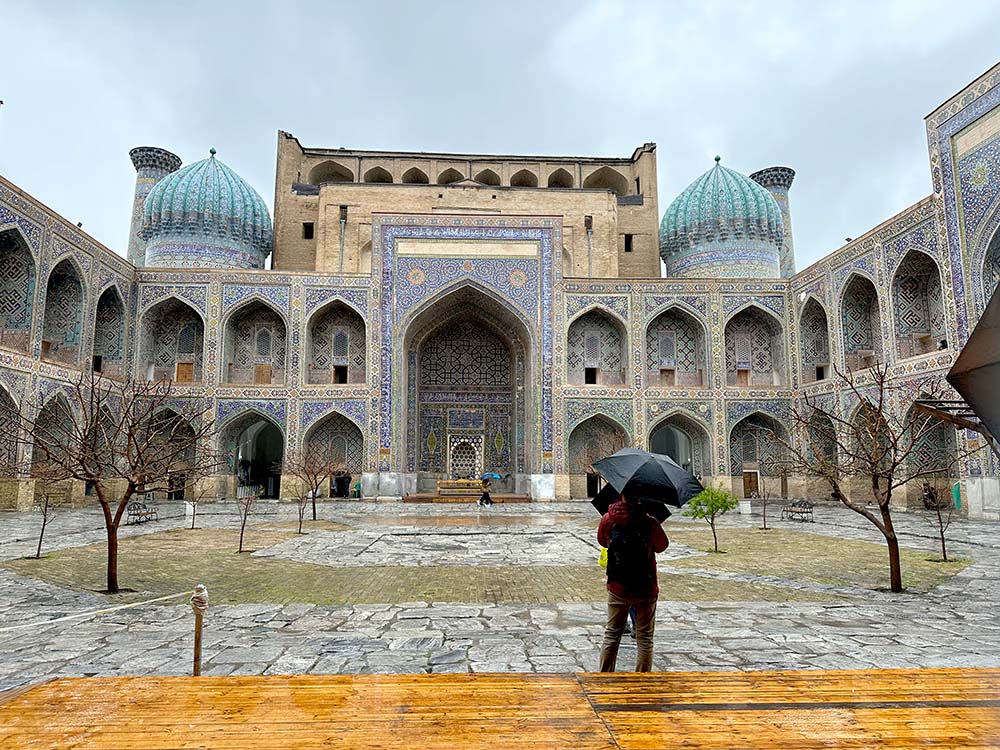
Sherdoh Madrasah was built just a few decades before Tilya Kori in the early 1600s, and meant to mirror Ulugh Beg Madrasah which sits across the way. It’s most distinctive feature is the pair of twin tigers on its facade – Islamic design typically doesn’t feature living creatures or plants, so this is quite unusual. It also has 2 domes on either side of the entrance.
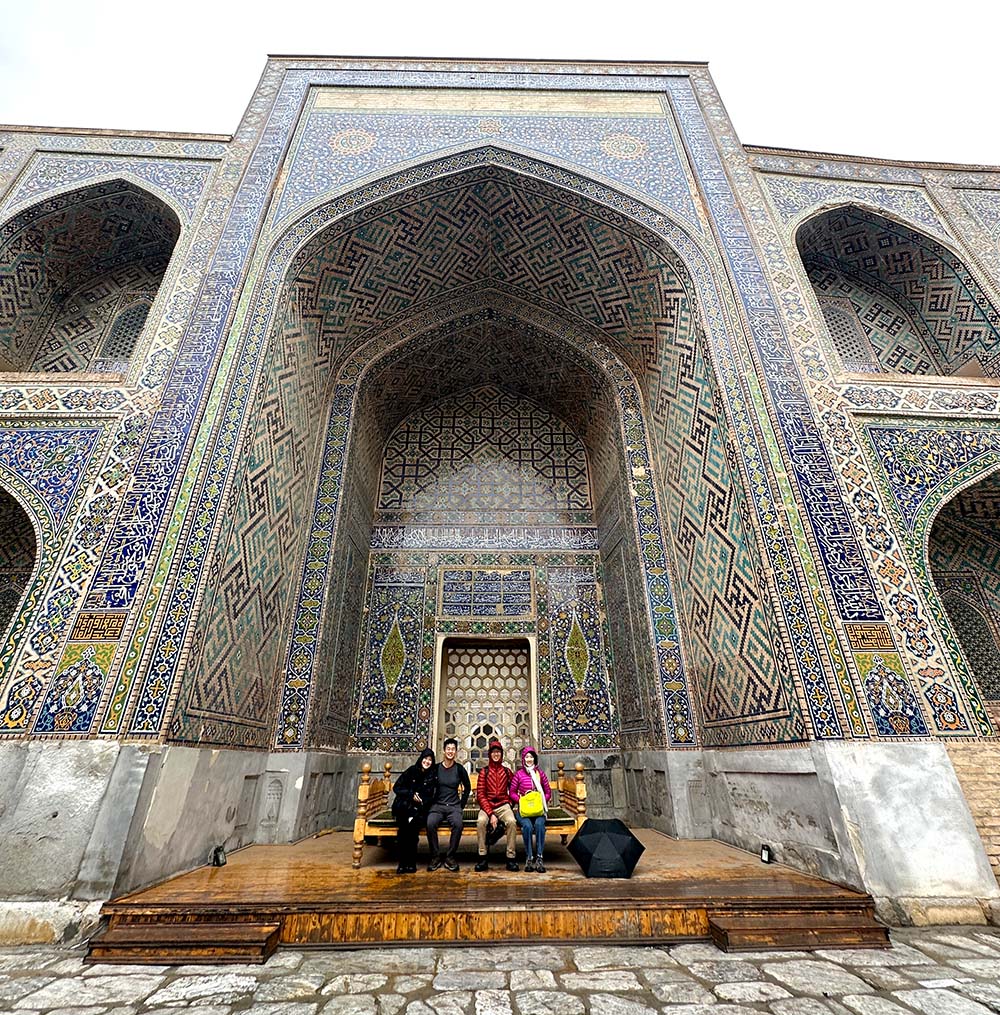
We didn’t do much in this compound, mostly just wander around and admire the architecture in the courtyards.
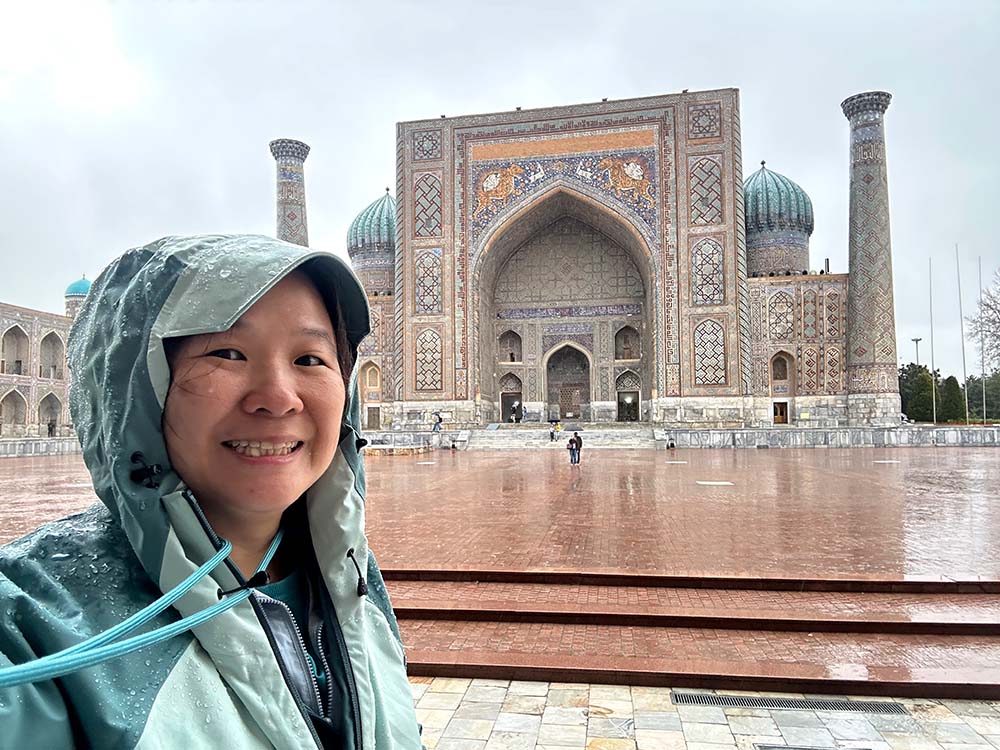
Registan Square [Google maps] – Entry fee 65,000 UZS, purchased at the ticket counter near the Ulugh Beg Madrasah
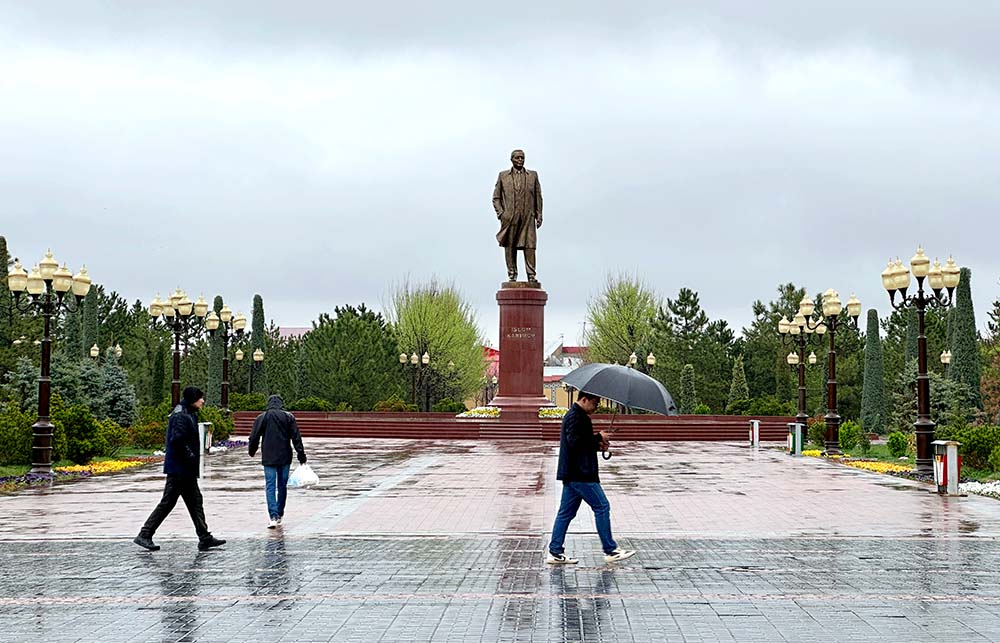
Next to Sherdoh Madrasah is a small park where this statue of Islom Karimov stands – he’s the first president of Uzbekistan.
Bibi Khanym Mosque
A nice pedestrianised road called Tashkent Road towards the north of Registan Square leads to more landmarks in Samarkand. The most majestic is the Bibi Khanym Mosque (also known as the Amir Temur Mosque), and while we saw plenty of mosques and madrasahs on this trip, this mosque is one of the largest in the world, with the entrance arch iwan standing at 38m in height! It doesn’t look that large in pictures, but look at the size of the people in comparison to get a better idea of the scale.
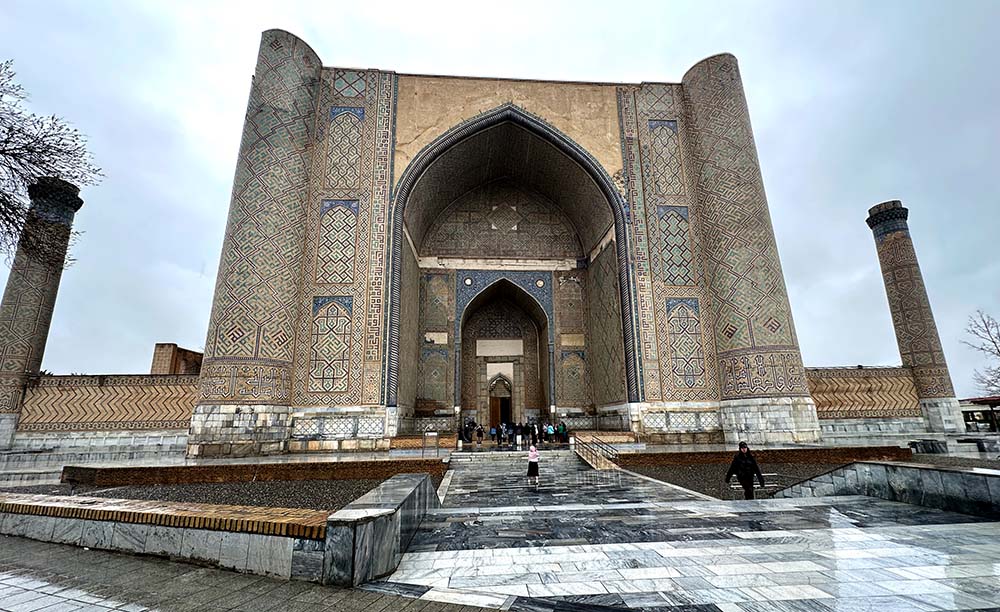
The mosque is named for the wife of Timur, aka the guy who founded the Timurid empire back in the 1400s. Though the mosque is impressively tall, it faced construction issues right from the beginning and was left to languish after the end of the Timurid empire in the 1600s, as well as suffered earthquake damage in the late 1800s. Some of it has been restored by the Soviets and Uzbek government, but you can still see lots of wear and tear all around the compound.
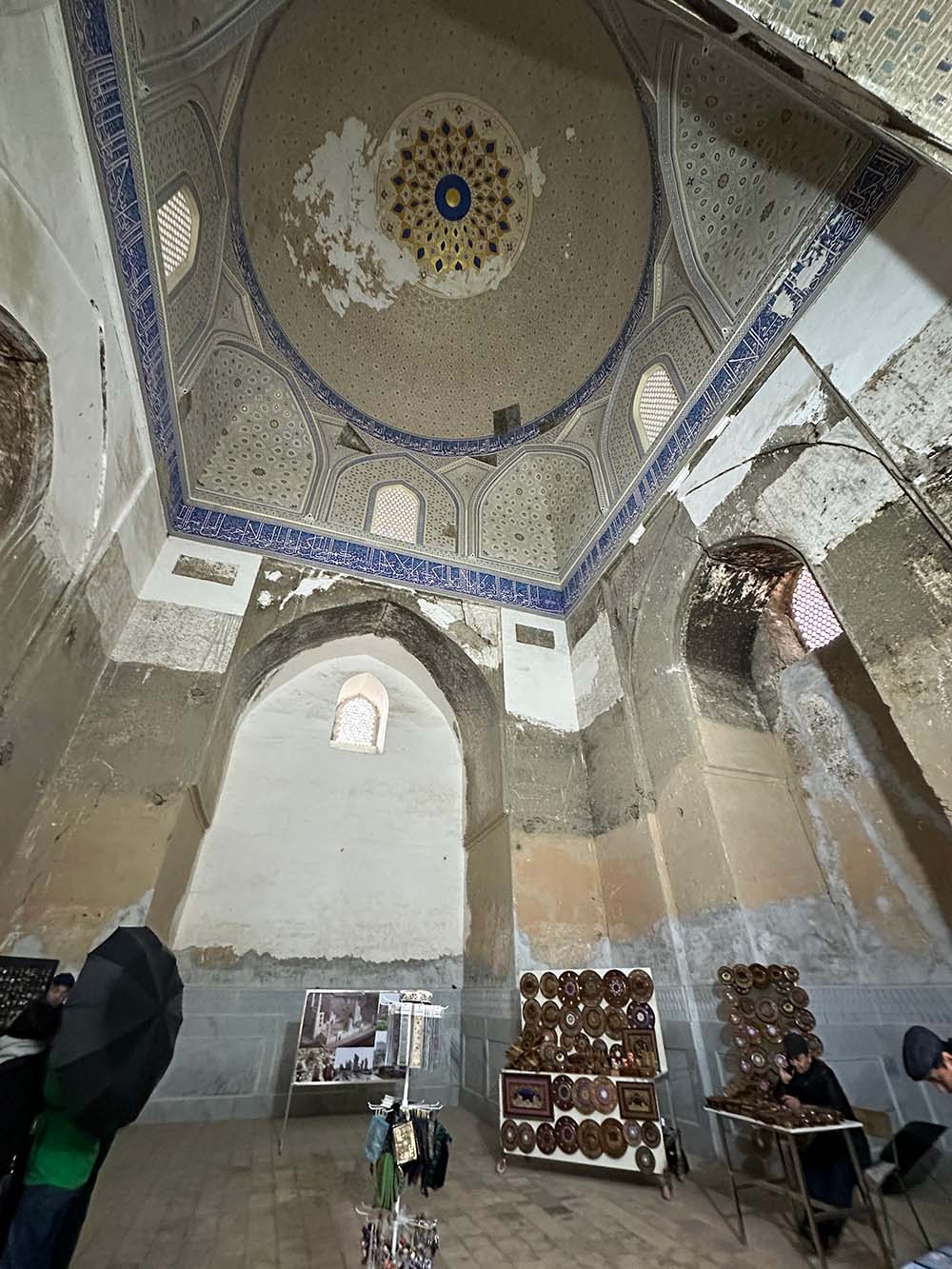
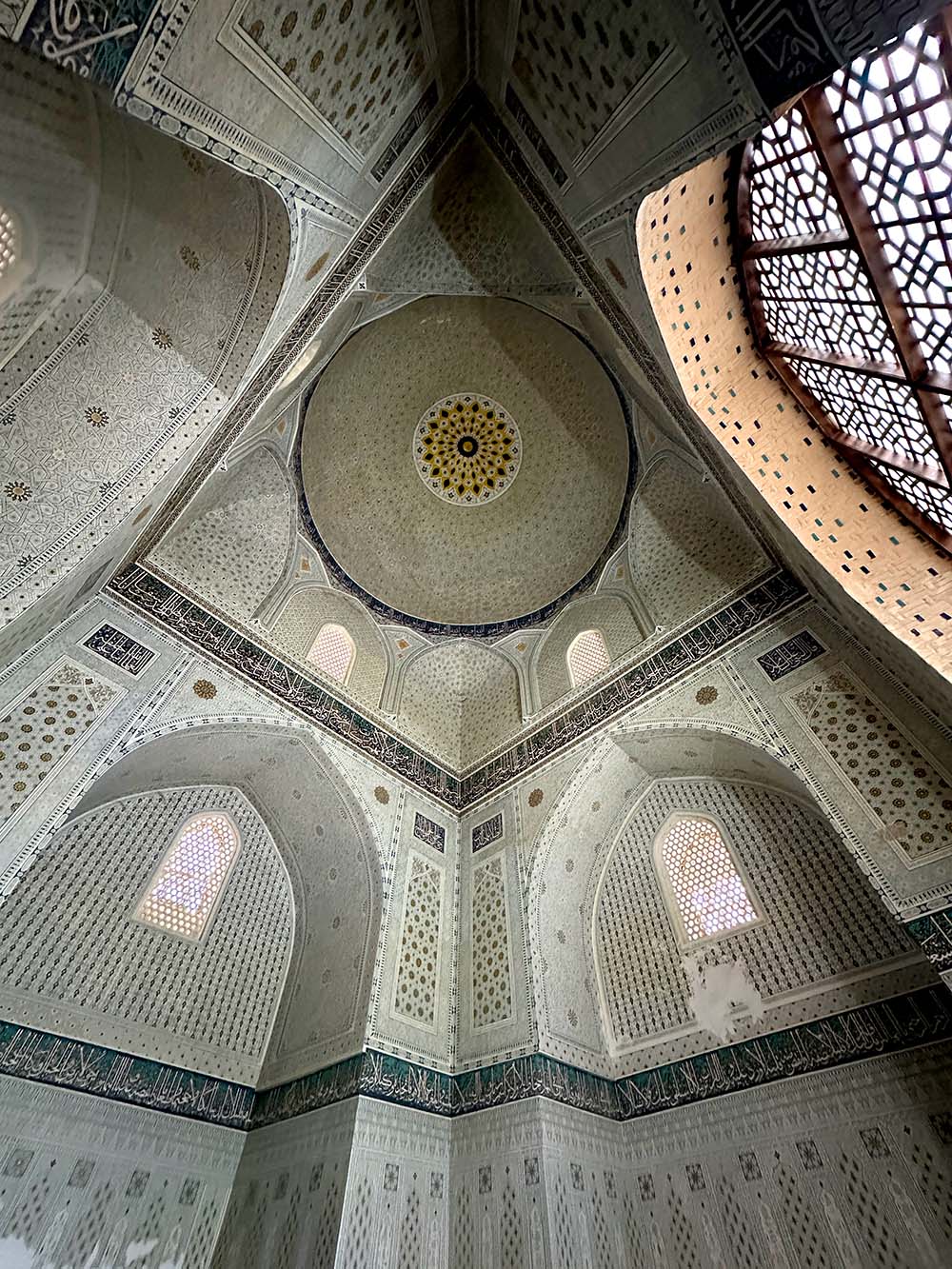
There is an entrance fee to Bibi Khanym Mosque, and you can wander around inside to see the inner courtyards and some of the mosques. As with most of Uzbekistan, a number of these buildings are occupied by souvenir shops.
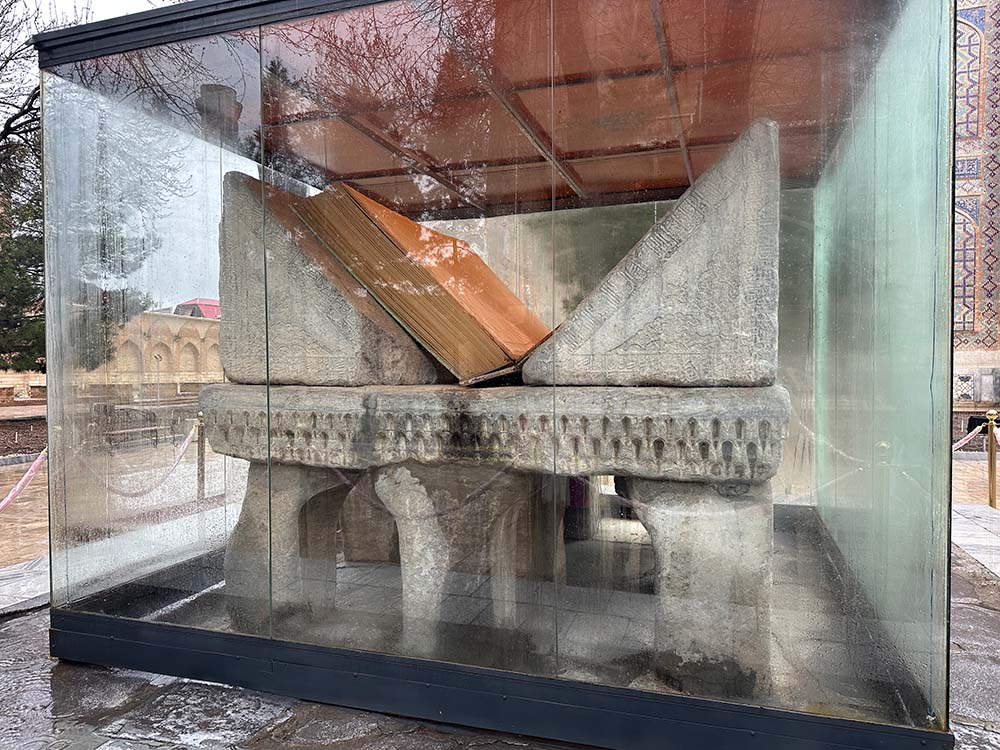
There is a very large Quran book sitting atop a Lavh desk (a special table used to hold the quran) in the middle of the courtyard.
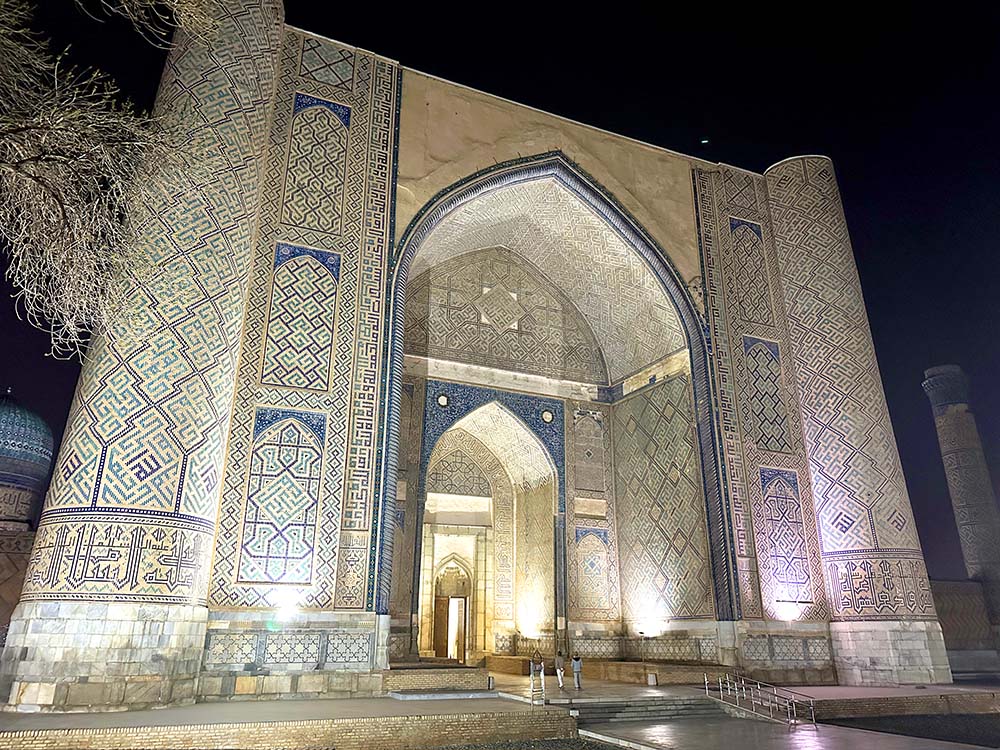
Bibi Khanym Mosque [Google maps] – Entry fee 50,000 UZS, purchased at the ticket counter at the entrance
Siyob Bazaar
Samarkand has its own market place, and down the road from the Bibi Khanym Mosque is the Siyob Bazaar, the largest market in the city. It’s a mishmash of open-air and covered spaces, and perfect to pick up food and souvenirs. I tried some freshly squeezed pomegranate juice here (yummy) and loved the colourful displays of fruits, bread and other produce all around.
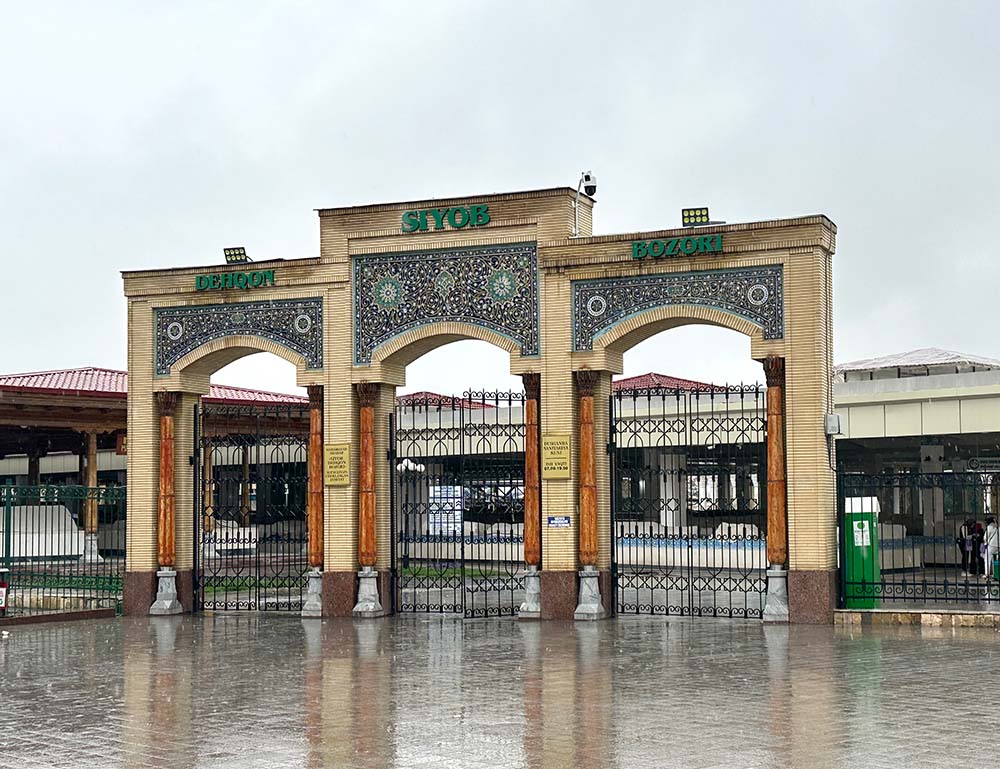
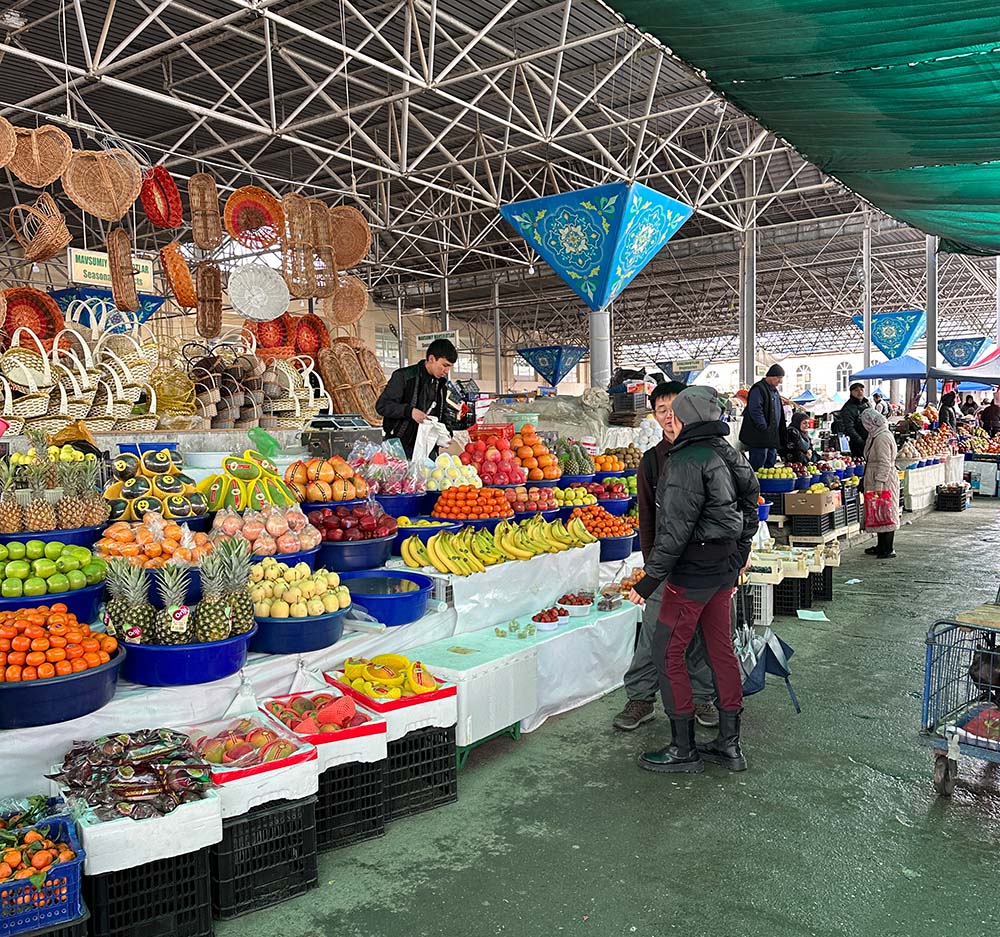
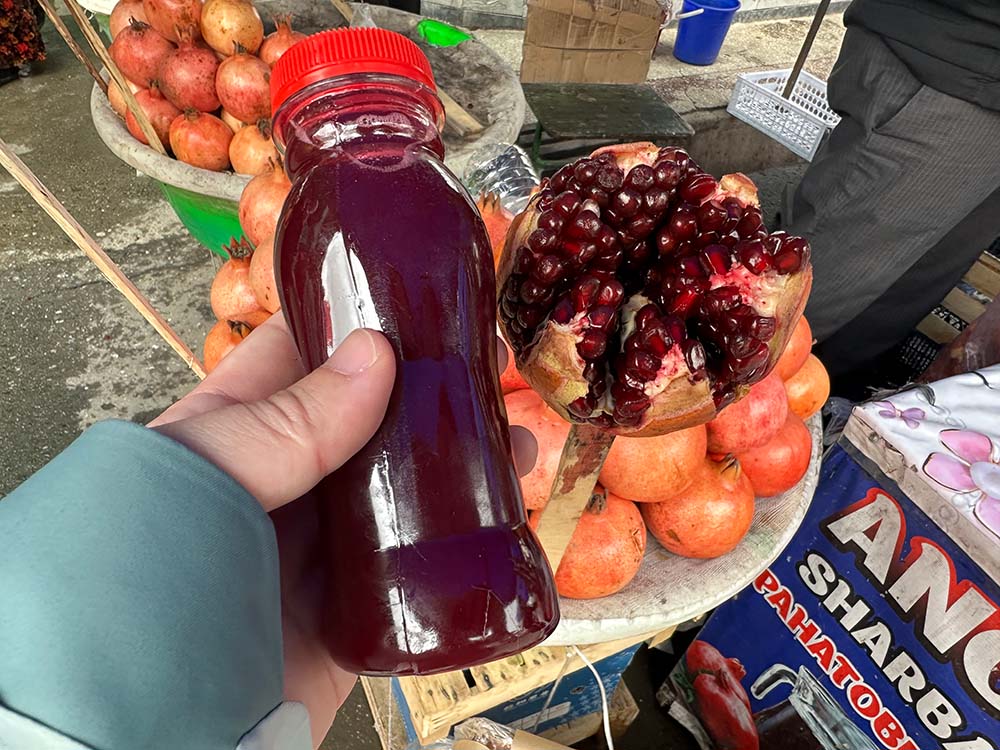
Siyob Bazaar [Google maps]
Hazrat Khizr Mosque
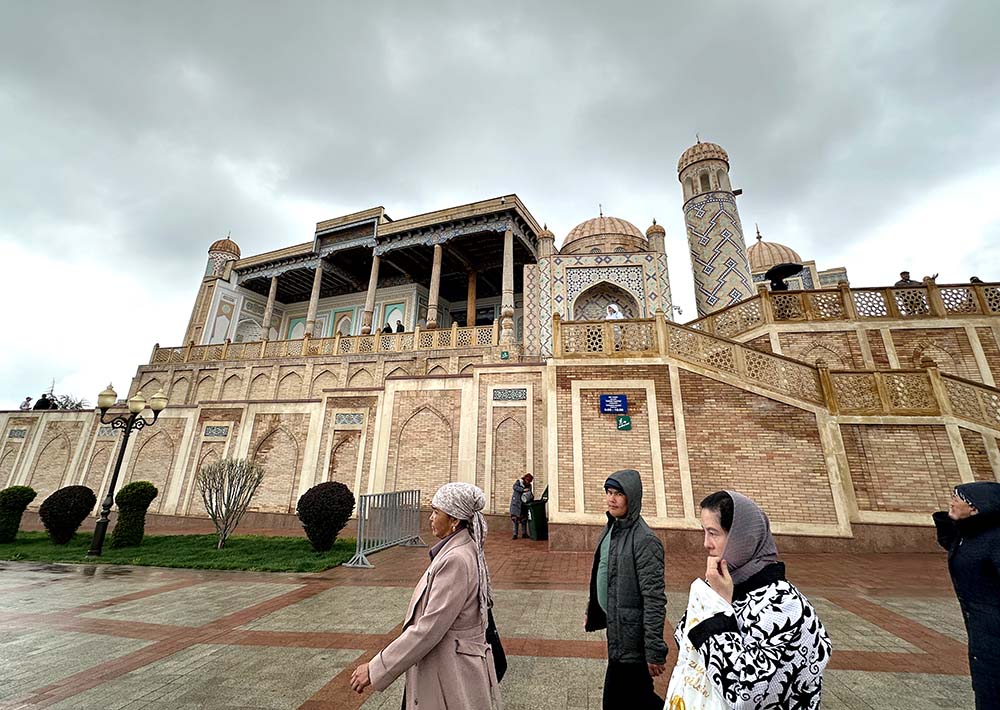
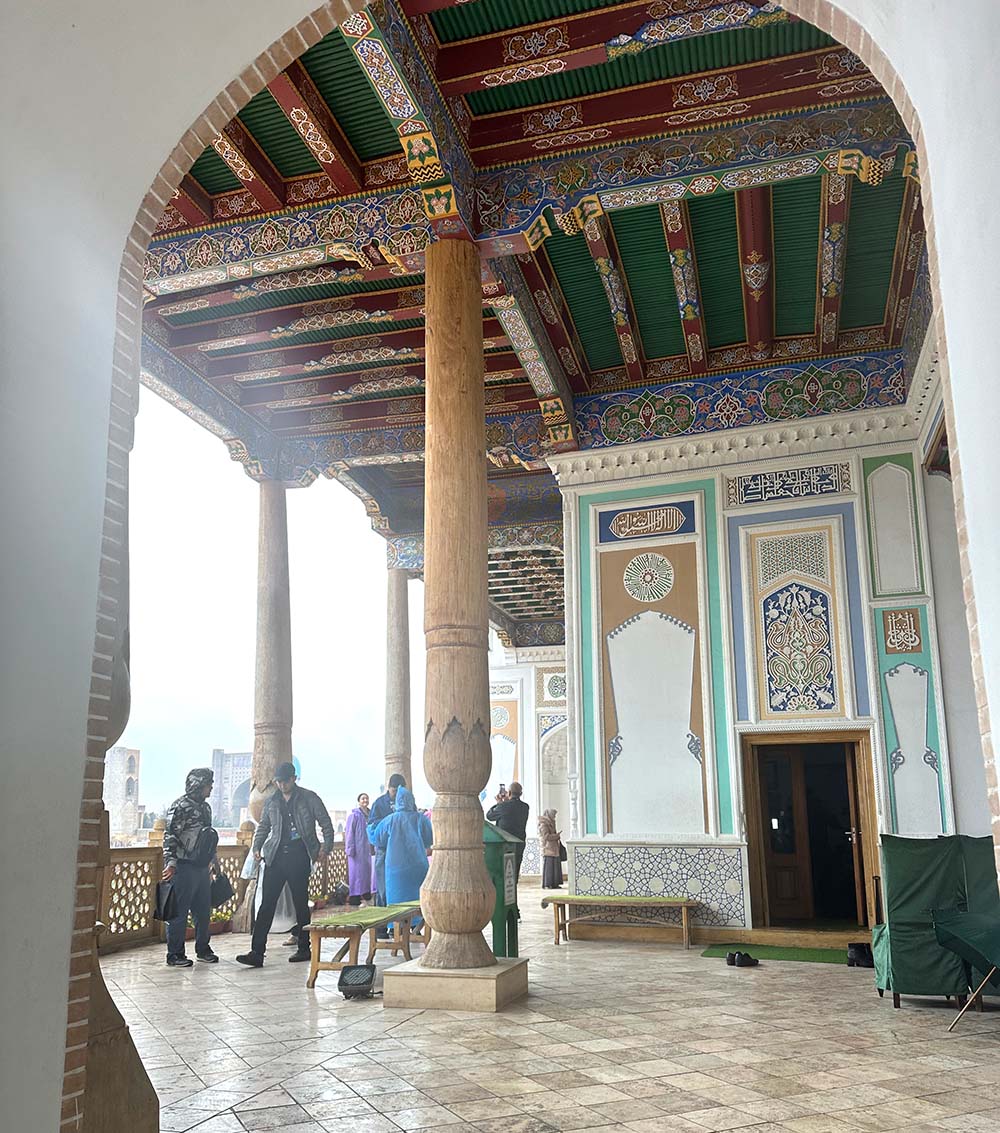
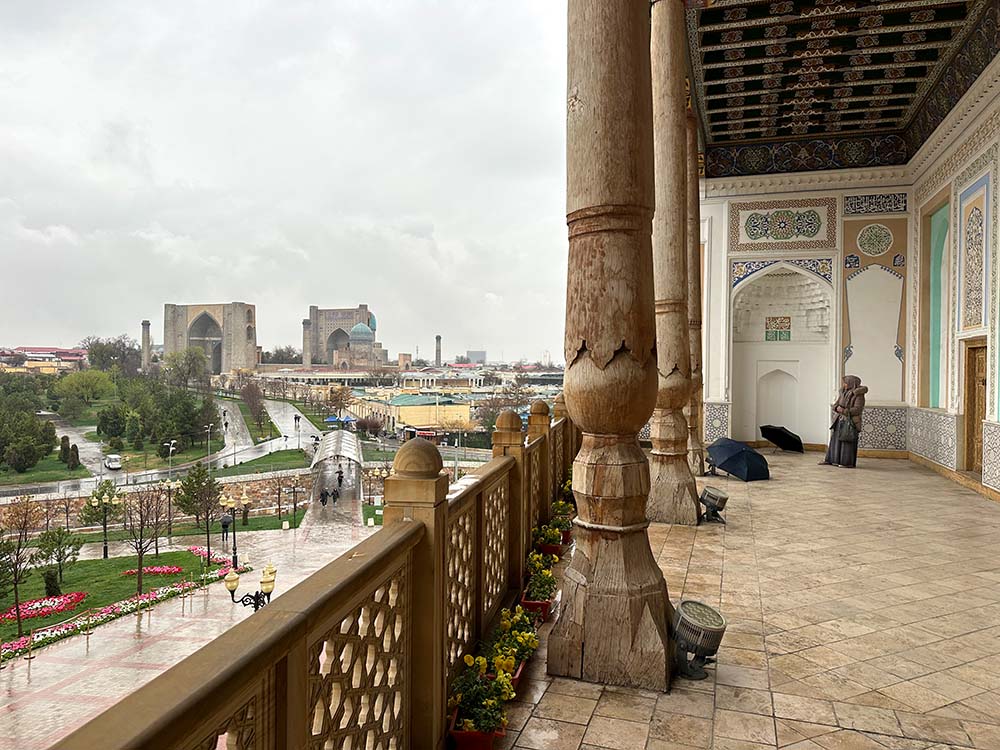
Across the main road from Siyob Bazaar is another mosque called the Hazrat Khizr Mosque. While much smaller than Bibi Khanym, this mosque named for Hazrat Khizr, an ancient Islamic prophet, is much older, apparently dating back to the 8th century though this current iteration was built in the late 1800s.
It has a nice elevated view of the city and the architecture is very intricate and beautiful, though w were mostly there to hide from the rain.
Hazrat Khizr Mosque [Google maps]
Shah I Zinda Ensemble
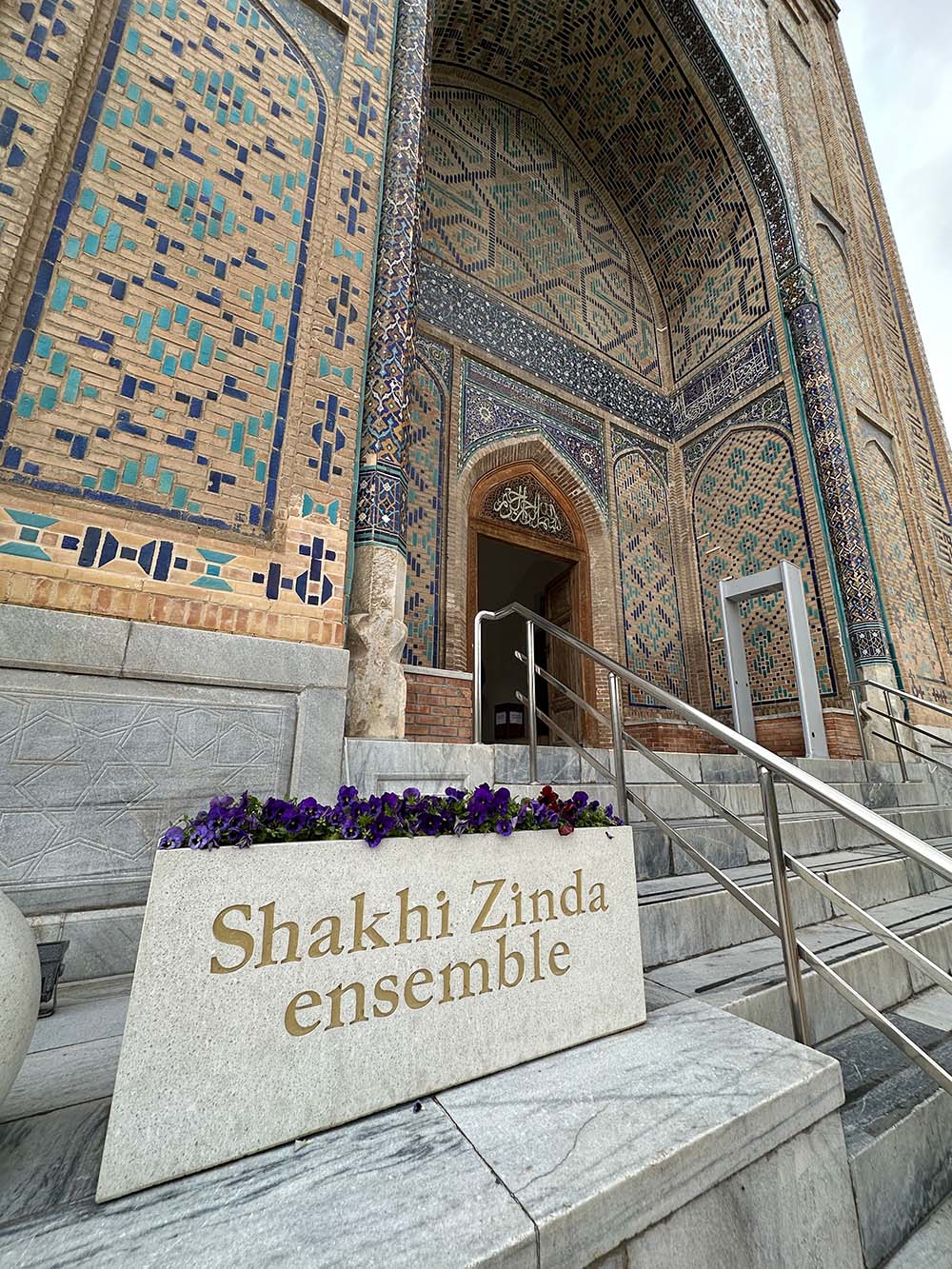
One of Samarkand’s more unusual sights was the Shah I Zinda Ensemble or the Shah I Zinda Necropolis, a collection of tombs and mausoleums. Typically most burial places are dedicated to one person, this one is like a mini city, with mausoleums lined up side by side along a street.
The architecture is beautiful and fascinating and spans the 11th to 19th centuries, though I can’t say I knew who all these tombs belonged to, but it’s a great place to explore and showcase of the amazing Timurid style architecture.
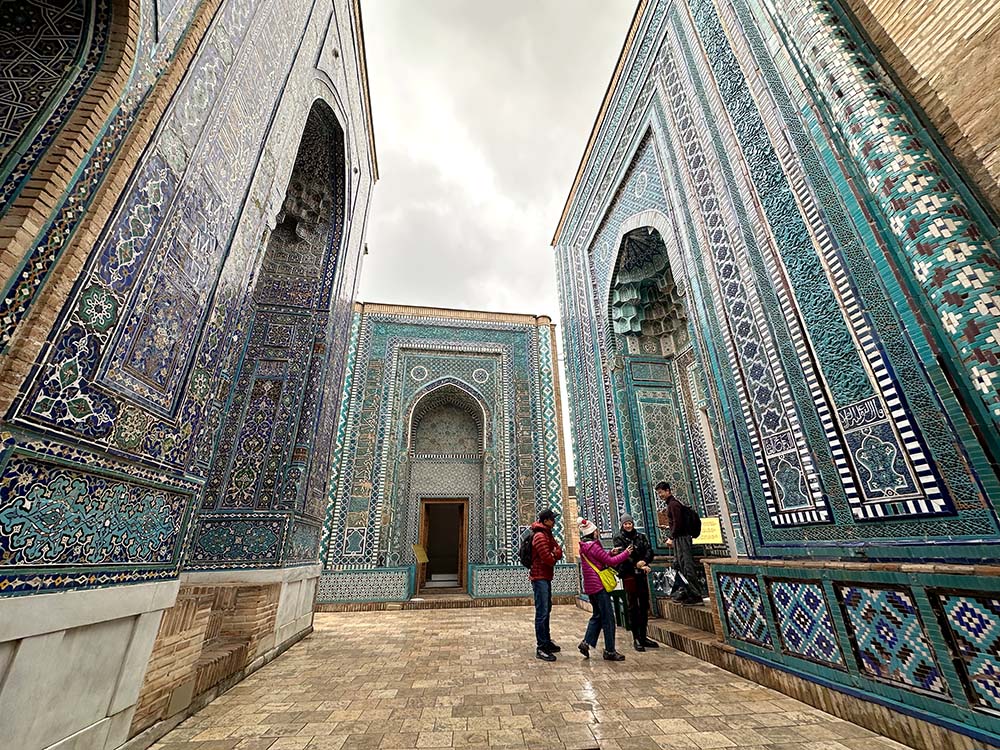
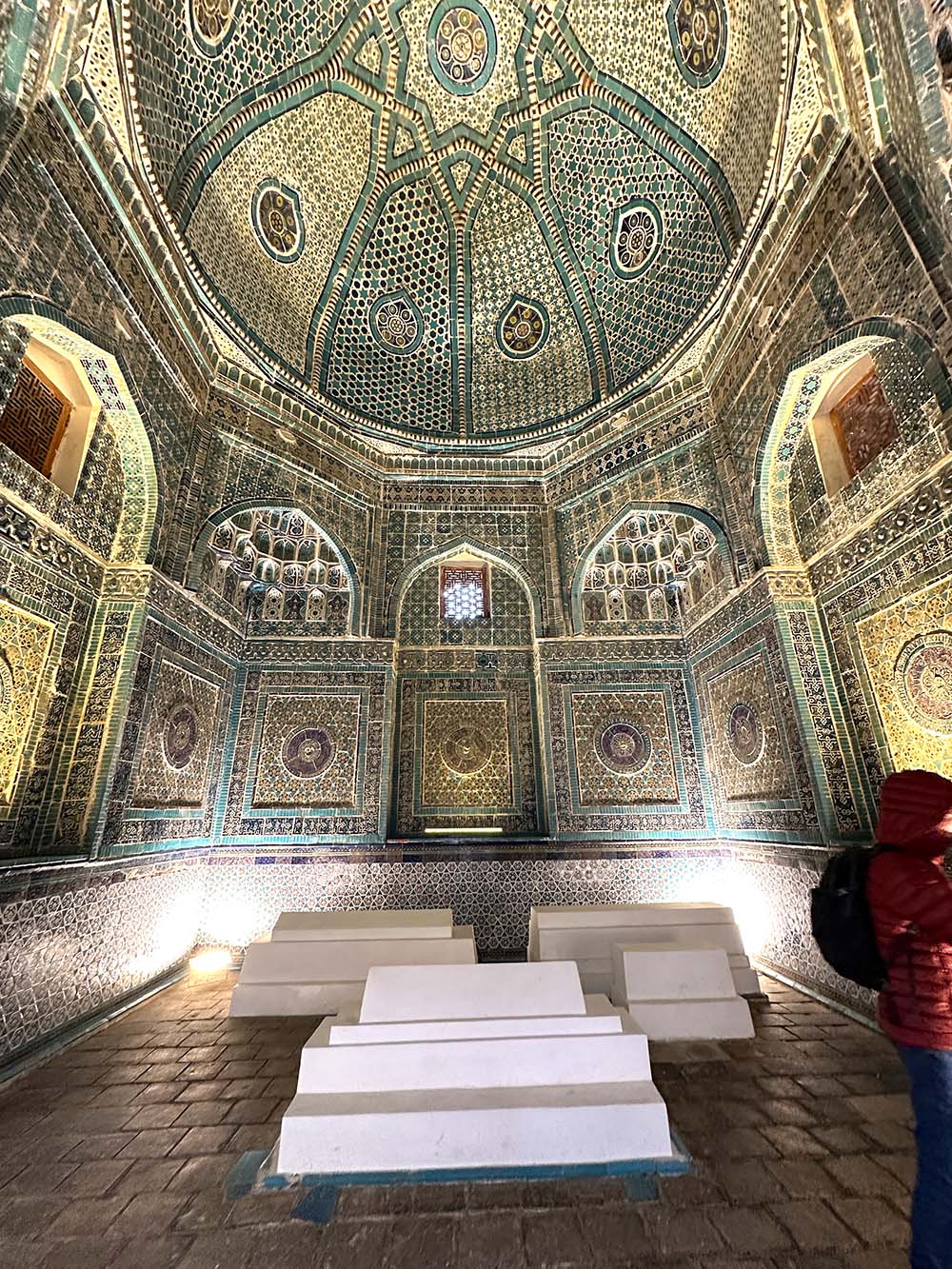
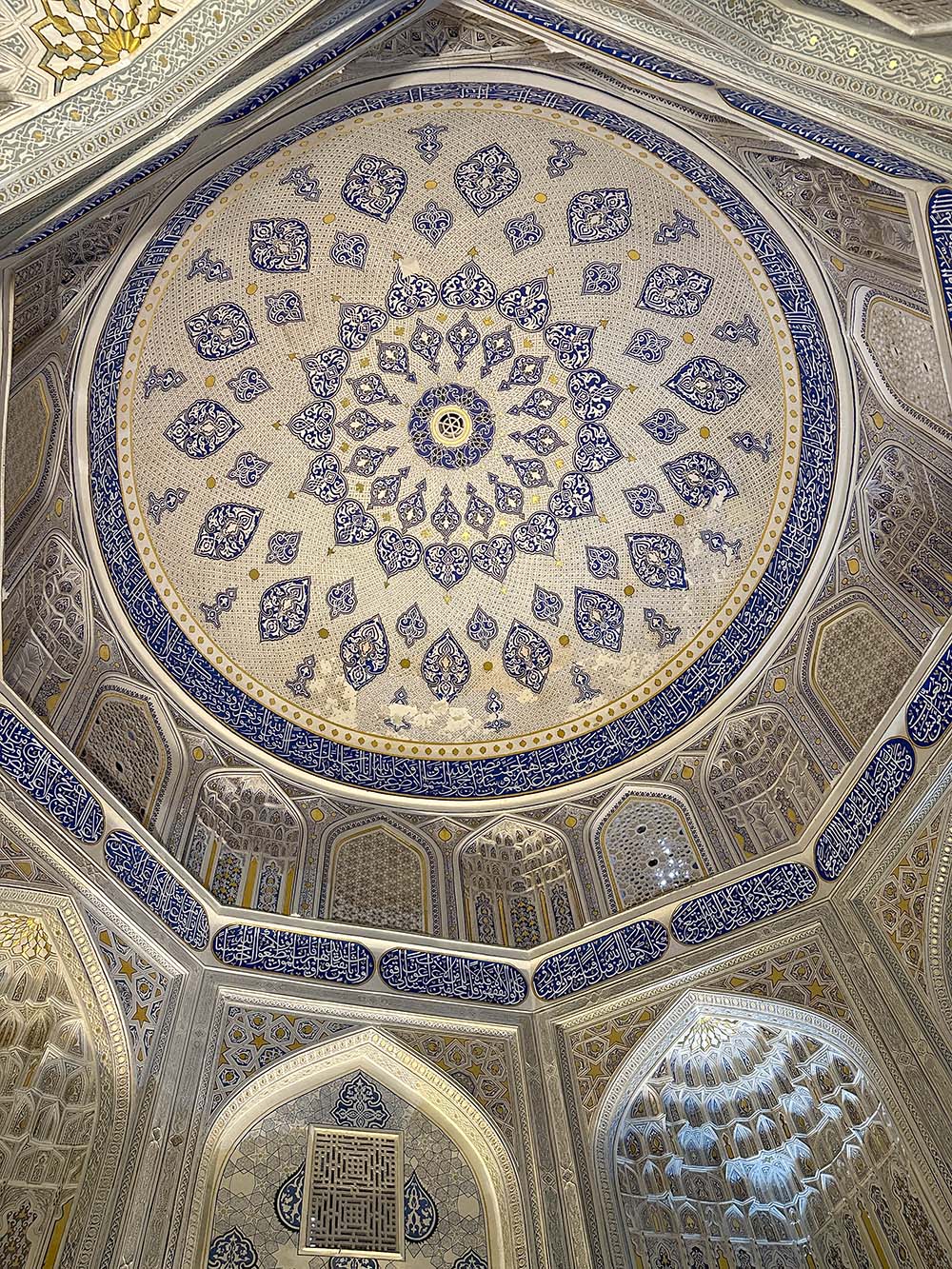
Shah I Zinda Ensemble [Google maps] Entry dee 50,000 UZS, purchased at ticket office at entrance
Ulugh Beg Observatory
We had to take a Yandex Go car to get to the Ulugh Beg Observatory, named for an created by the infamous Ulugh Beg himself, a noted astronomer and mathematician of his day. The museum portion isn’t very big but it goes into some detail about his history and his scientific work – Samarkand was the place for scientific and astronomical discovery back in the day.
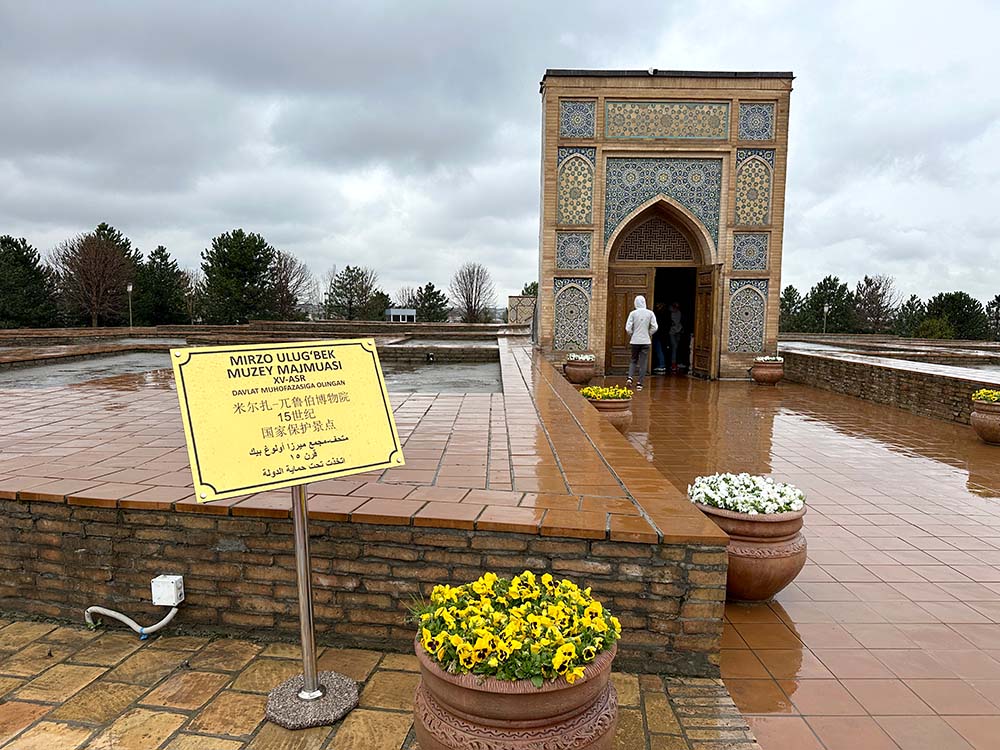
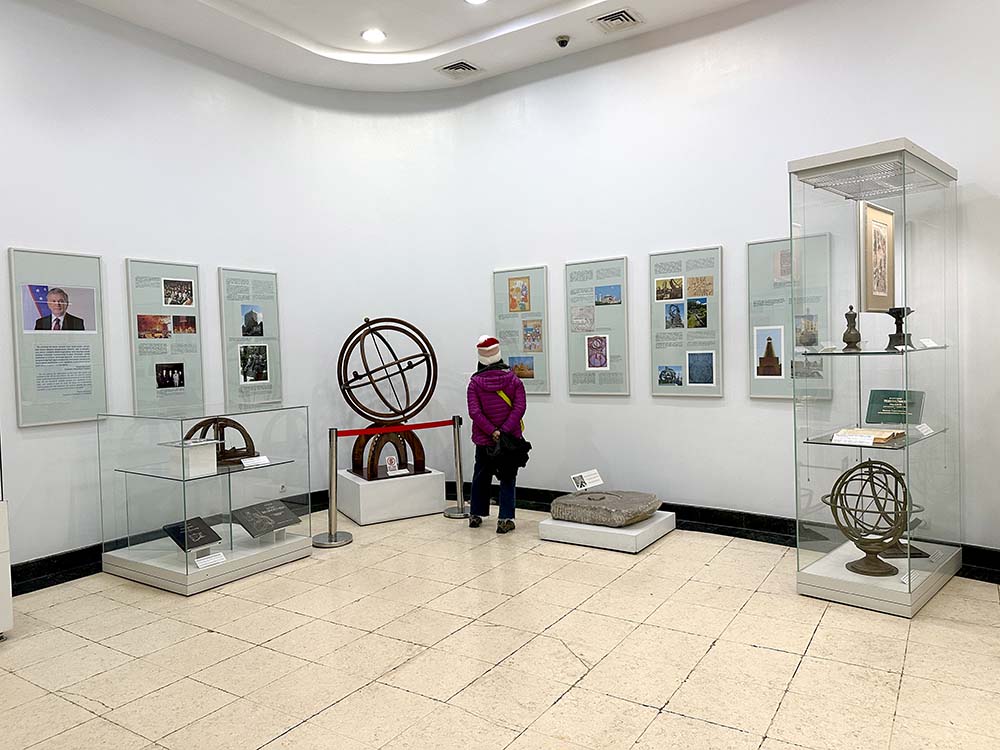
There is a separate section outside to show you a giant sextant that Ulugh Beg built to calculate sun, planet and star movement back in the 1400s. Modern astronomers have checked his work and found that it was actually pretty accurate all things considered, which I think is remarkable given that we have to use computers to do all this today when all he had were some tools and math.
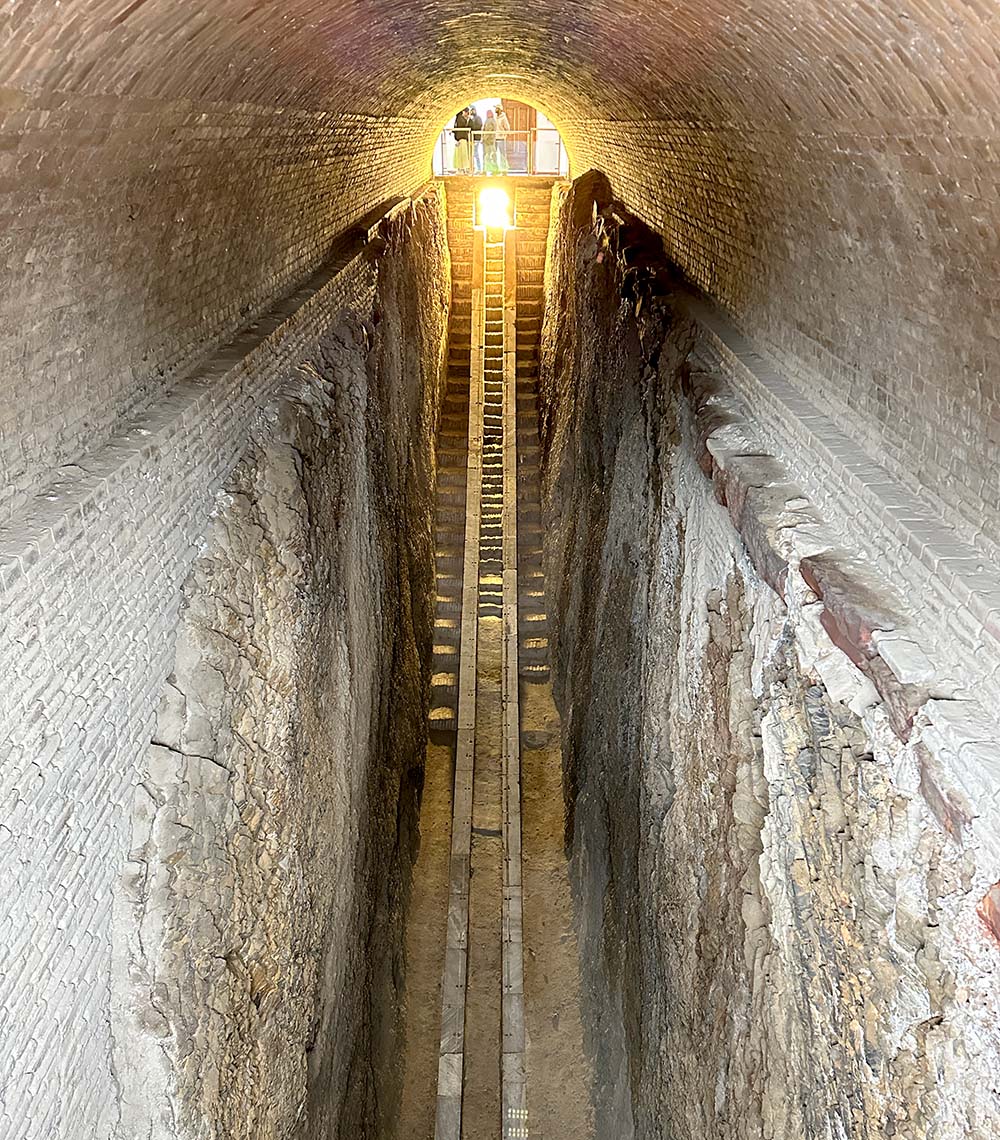
The observatry was destroyed after Ulugh Beg was assassinated in the mid 1400s and only rediscovered in the early 1900s.
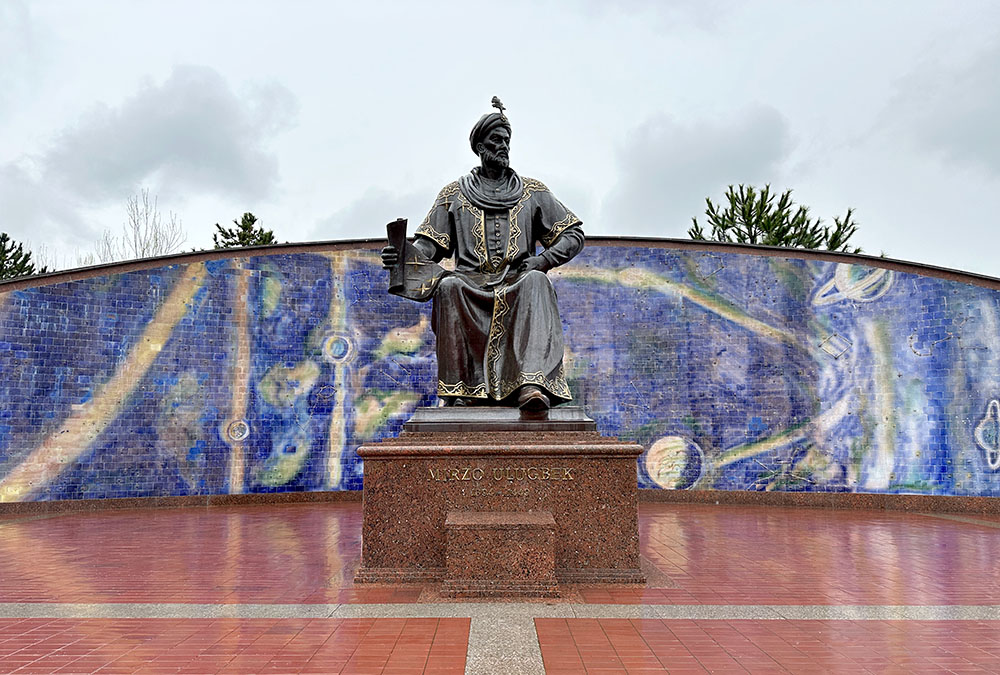
Ulugh Beg Observatory [Google maps] Entry fee 50,000 UZS
Samarkand day trip: Seven Lakes (Tajikistan)
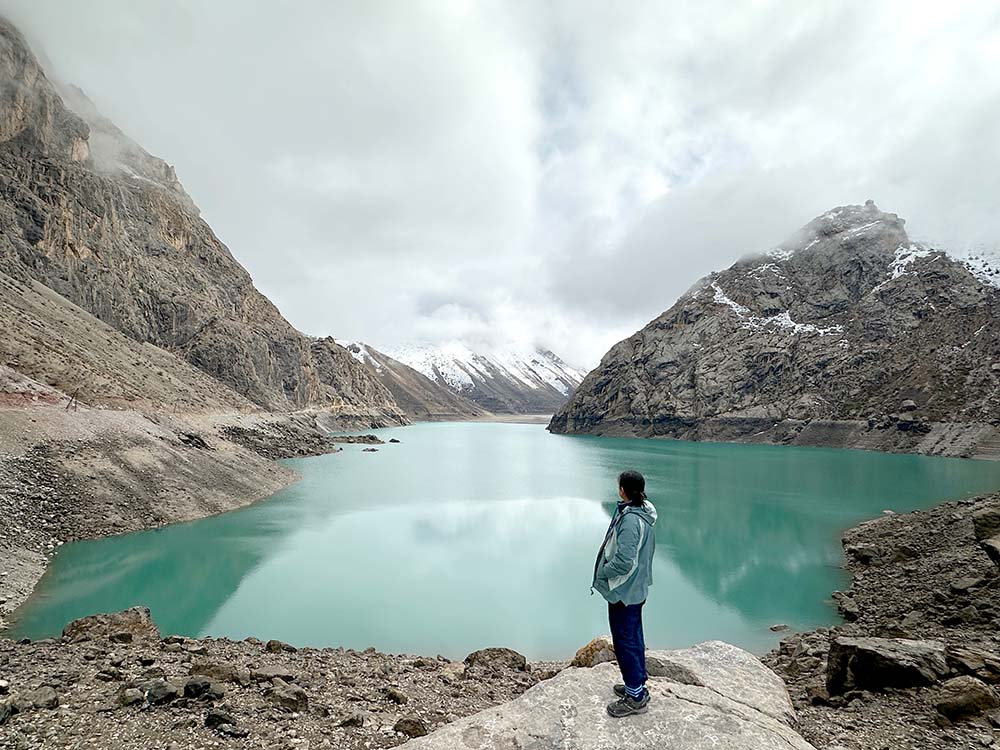
Samarkand is quite close to the border with neighbouring Tajikistan, and we took a private day tour to the Fann Mountains to see the beautiful Seven Lakes and the ancient ruins of Panjakent and Sarazm. Read more about how to do that in my Seven Lakes post.
Where to eat in Samarkand
Historic Cafe
Historic Cafe is a little joint not far away from Registan Square that has local diner vibes and had quite hearty food. Again we were mostly happy just to get out of the rain and cold, but the kebabs, manti (dumplings) and lagman (soup noodles) that we had here were pretty decent.
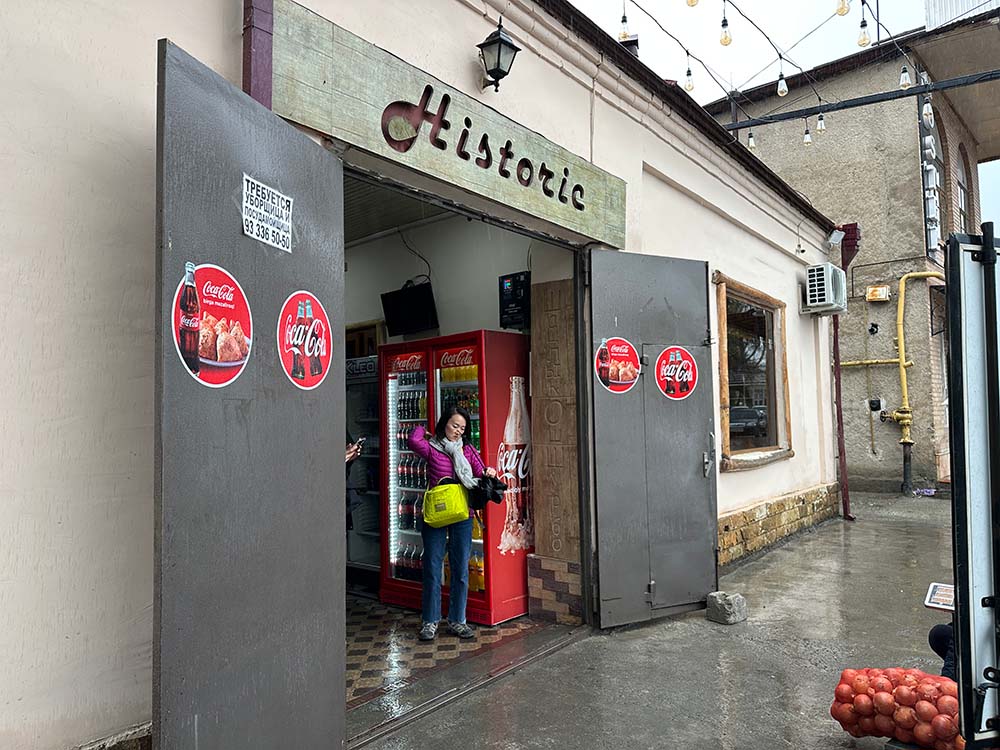
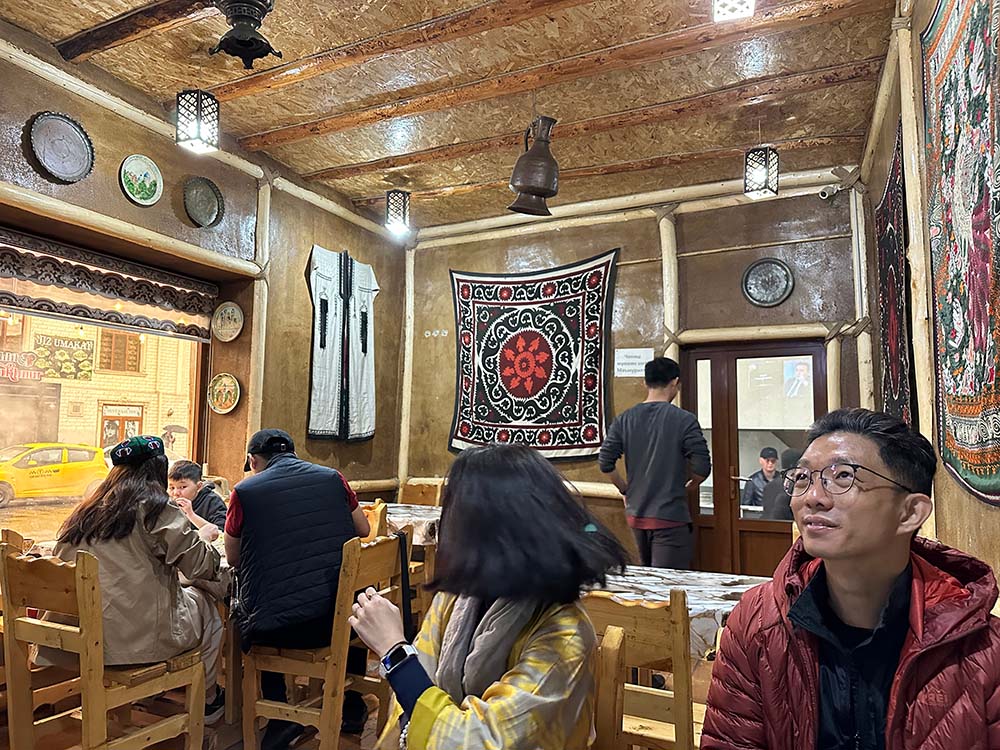
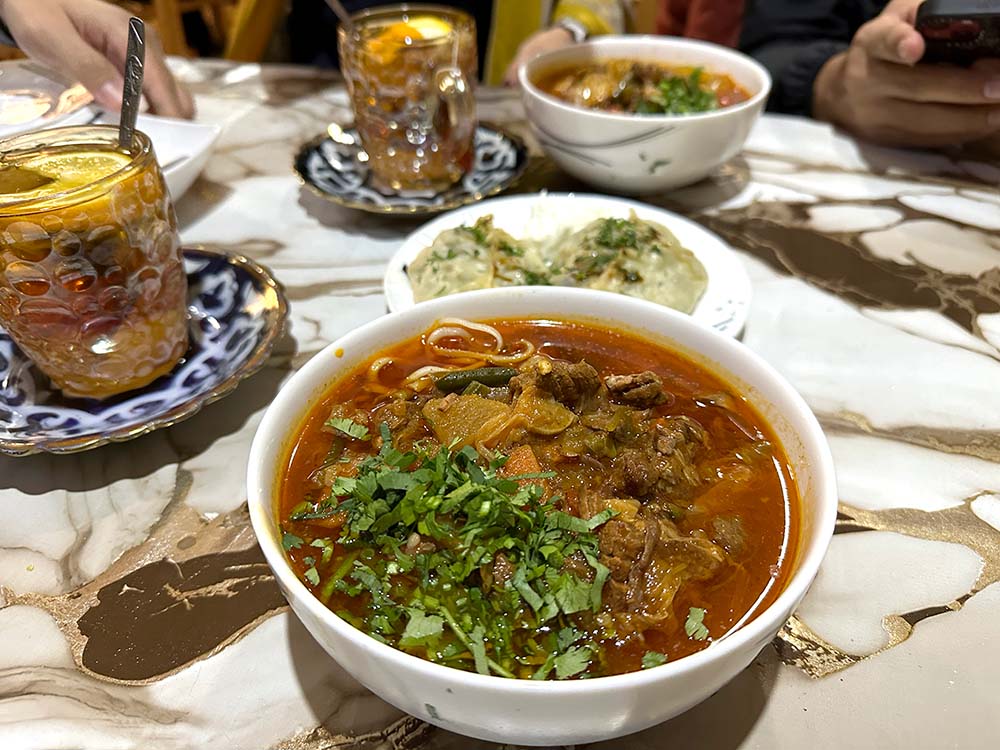
According to Google, this place seems to have closed down! >_<
Samarkand Restaurant
We took a Yandex Go to our dinner at a place called Samarkand Restaurant and this turned out to be a bit more posh that we expected. It just so happened that there was some sort of wedding or event happening here, so we were shown to a private room on the 2nd level instead of dining in the main area. Something about these rooms reminded me of private Karaoke rooms, but it was a pretty cool experience because these Uzbeks really know how to party it up~
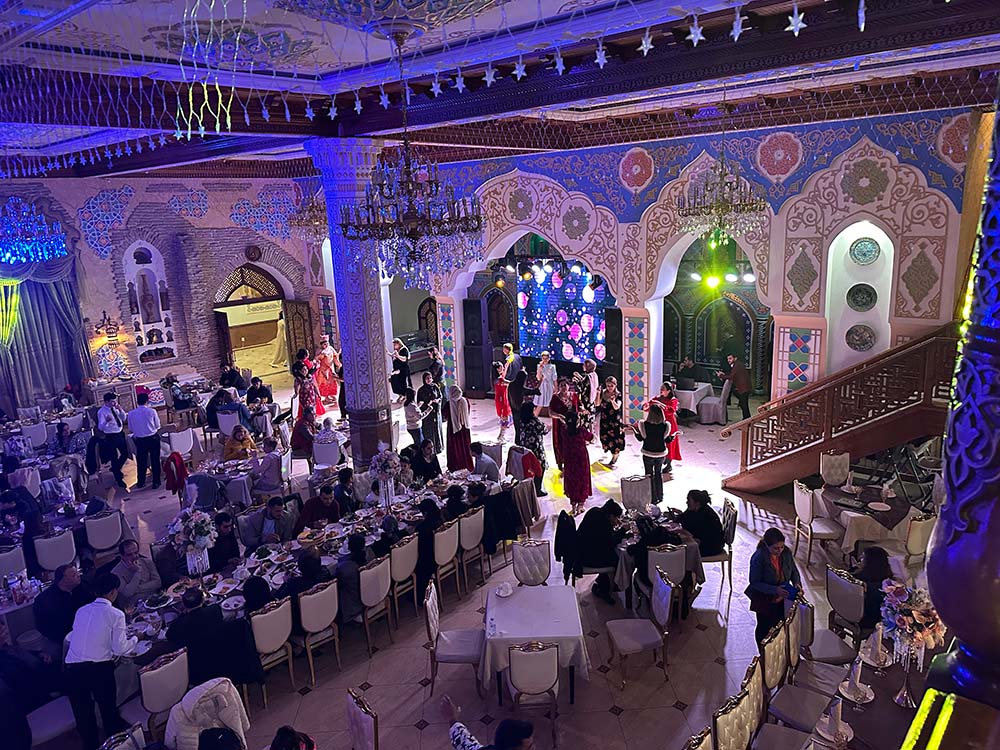
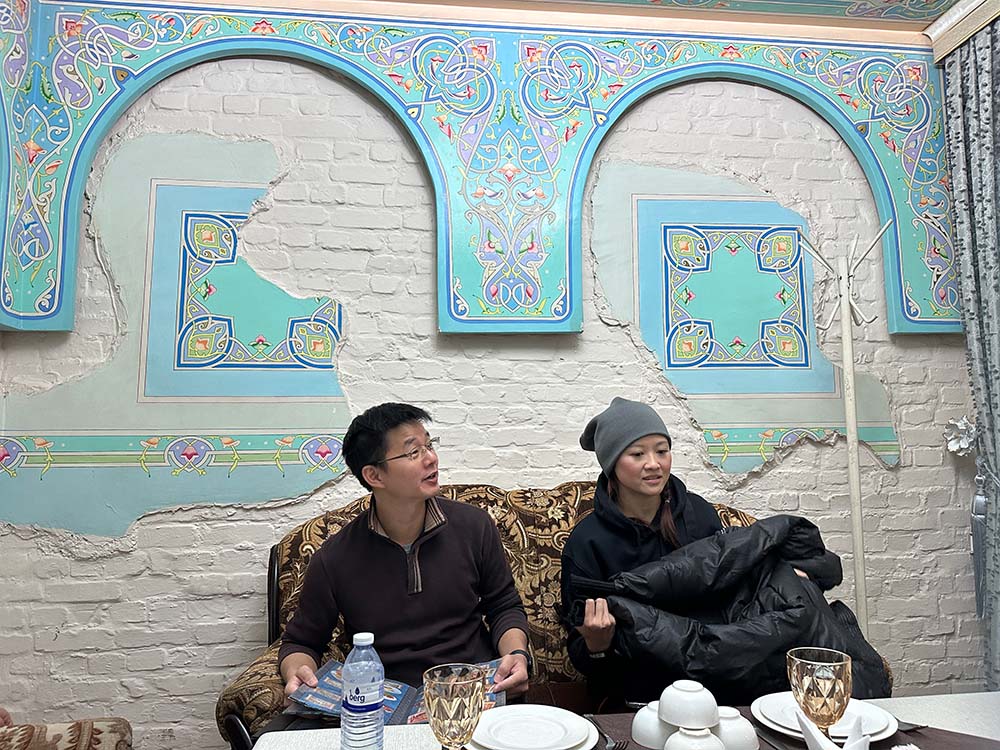
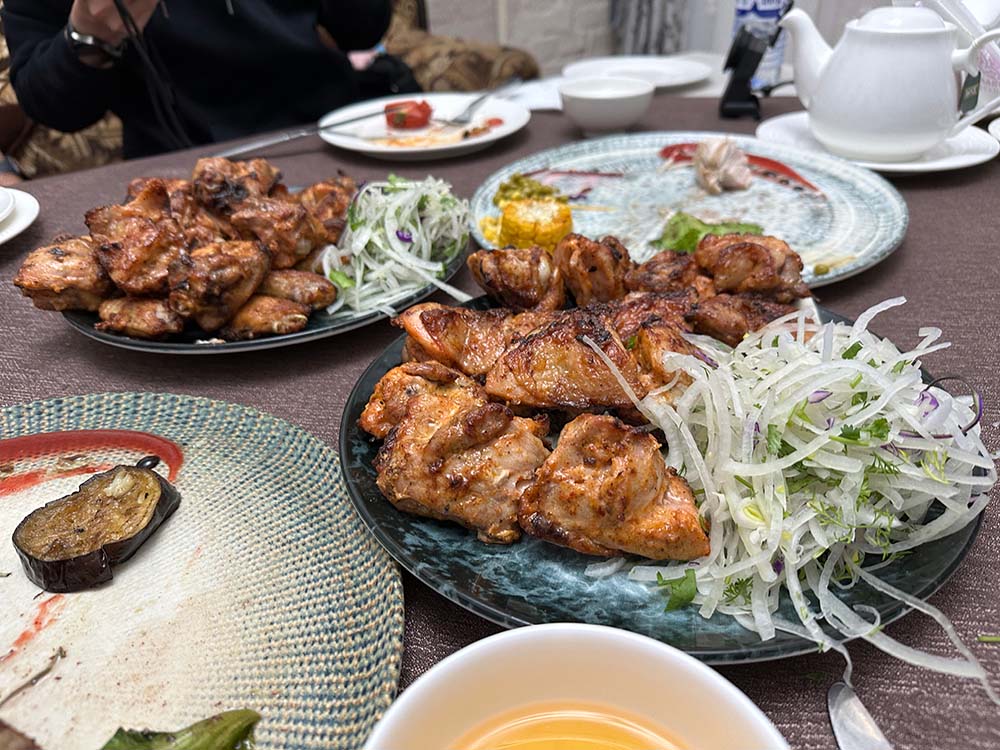
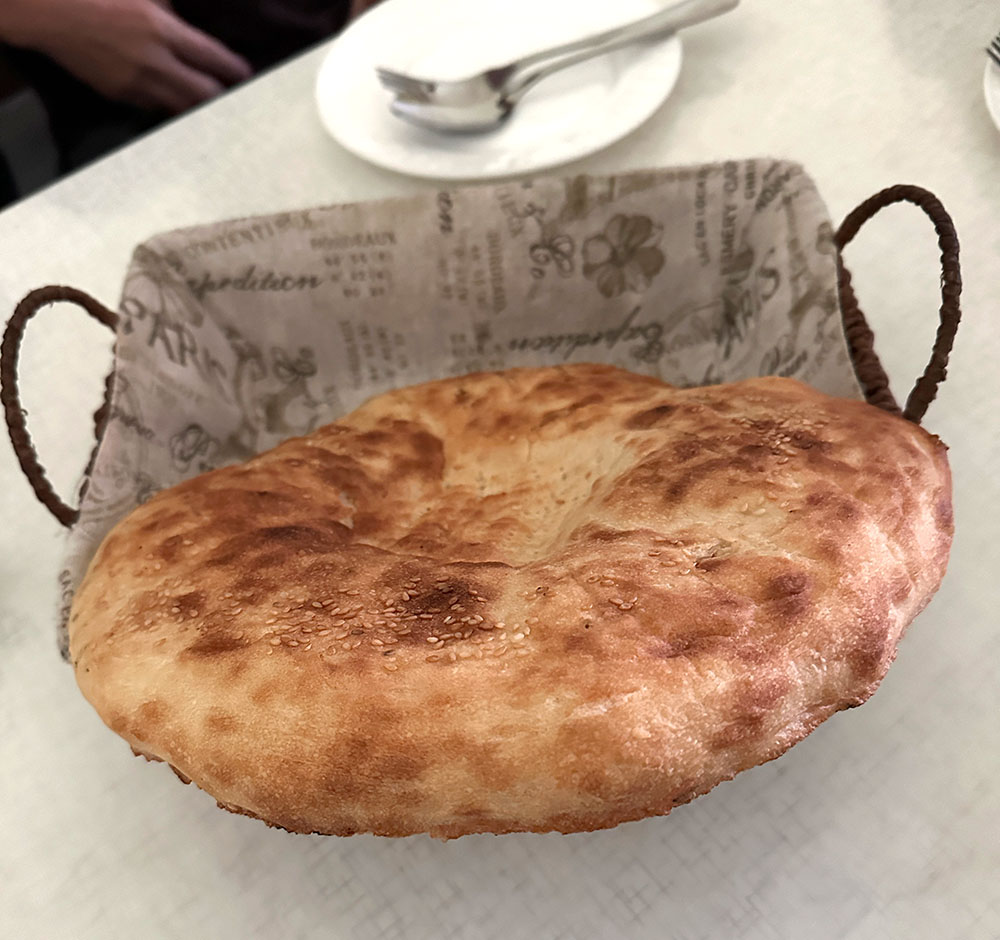
You know it’s a fancier place when the plate the food nicely! We definitely overdid it on the kebabs – we learned that kebab/shashlik sizes are really not very consistent throughout Uzbekistan and so we ended up with a lot more than we expected, oops. Good food though. Each area also has its own type of bread so we tried the Samarkand bread as well, bit too hard for my liking though.
Samarkand Restaurant [Google maps]
Mazhnuntol Shashlychnaya
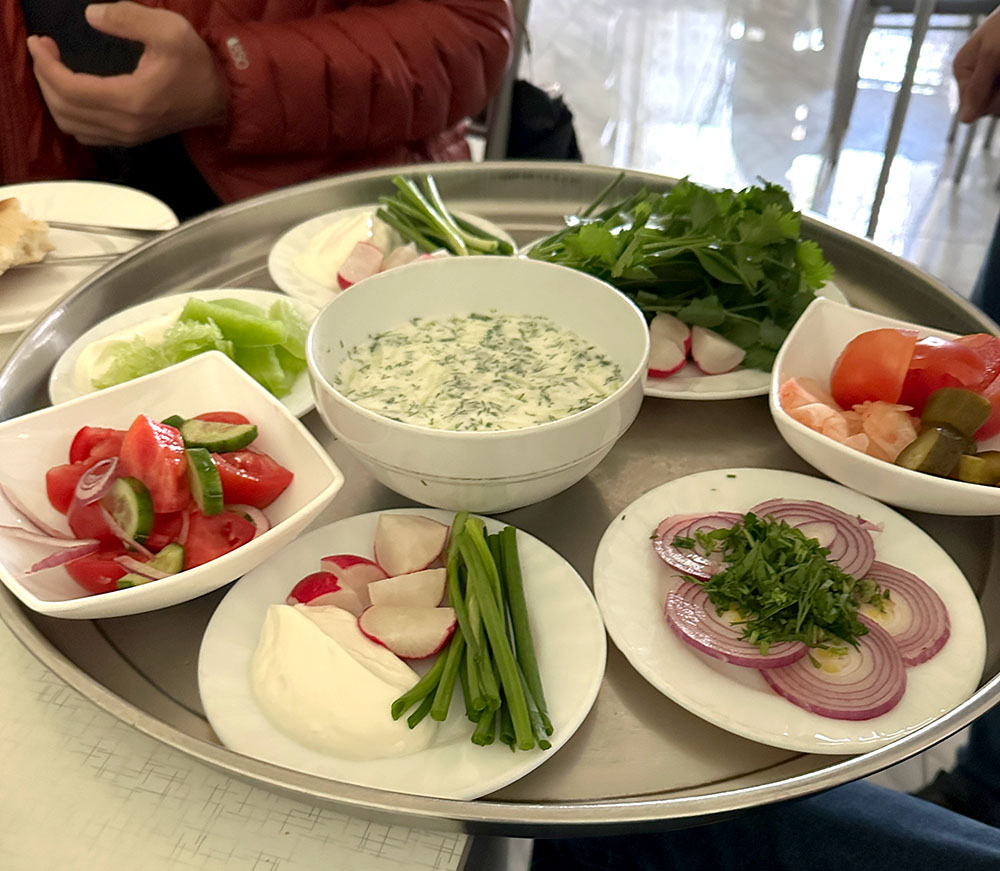
This little eatery (I’m not even sure I got the name right) was somewhere we stumbled upon completely by chance because our original restaurant choice (Oshqand) was closed, likely because of fasting or just some weird quirk. This eatery we ended up in nearby was a very local joint, not much menu options but good local Uzbek fare. We had plov (rice), some sort of clear beef soup and more kebabs.
Mazhnuntol Shashlychnaya [Google maps]
Where to stay in Samarkand
Hotel Billuri Sitora
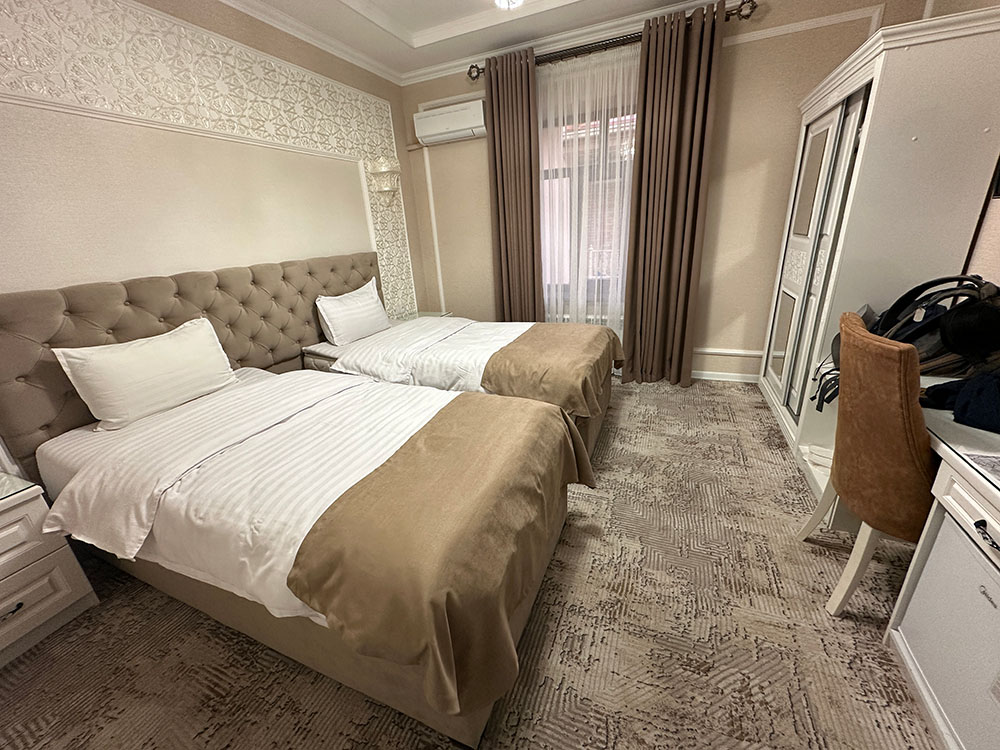
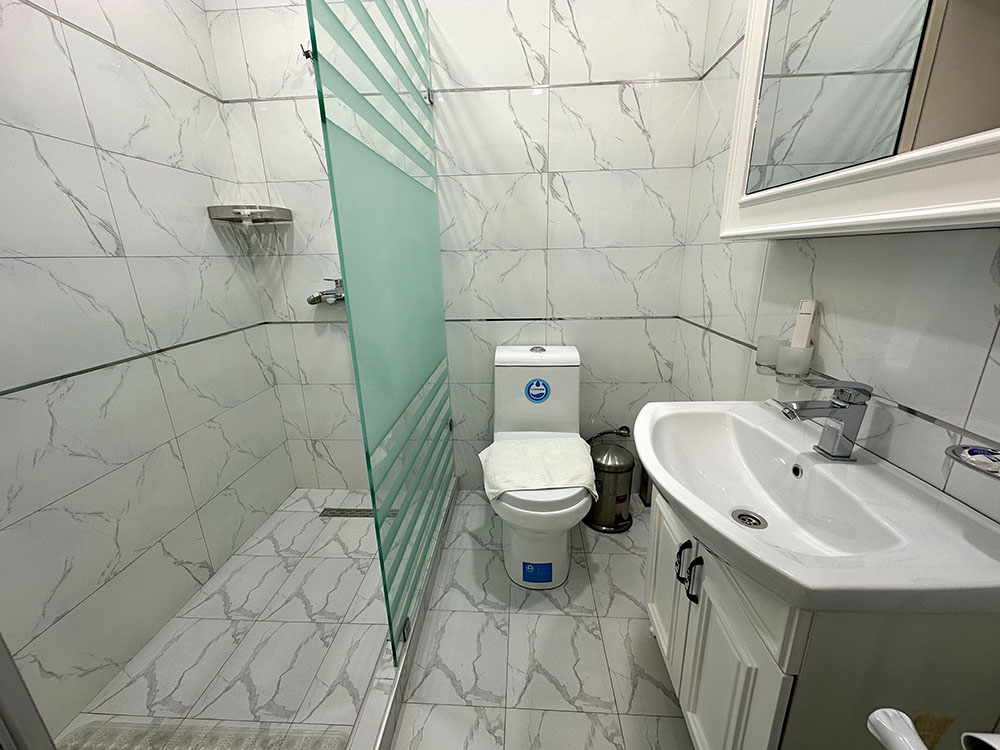
I stayed at Hotel Billuri Sitora in Samarkand – it’s a little bit old school and not that close to the main sights (about 15-20 min walk to get to Bibi Khanym Mosque), but the owner was great and friendly and had lots of good tips for us, and the rooms were comfortable enough.
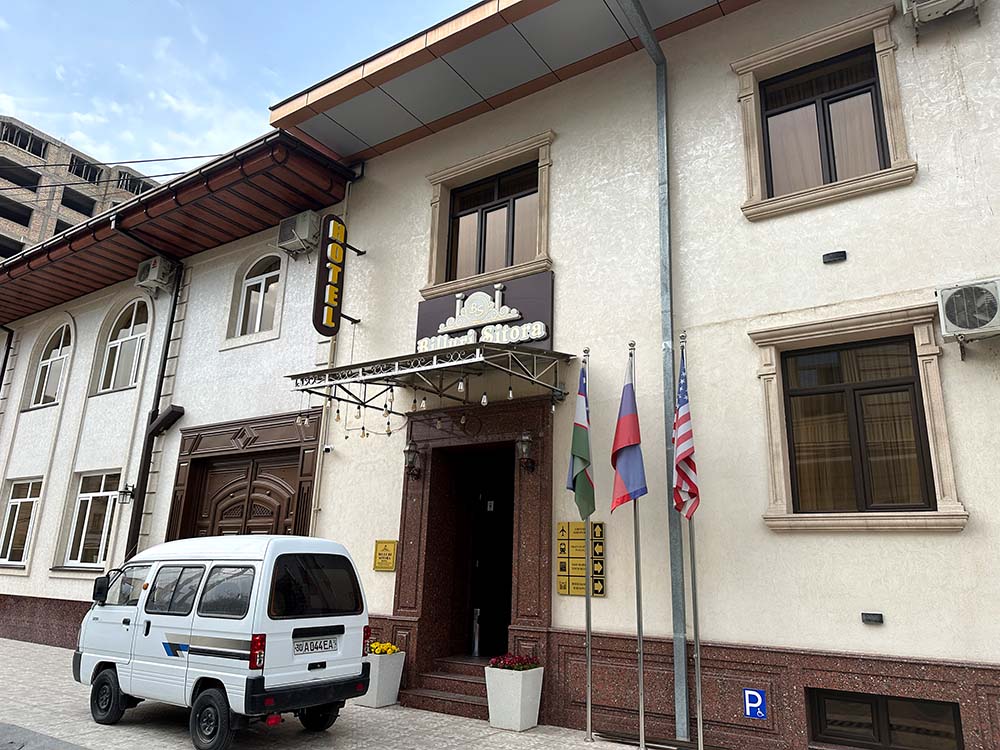
The hotel is a bit bigger on the inside – we were in the back which seemed to be an additional wing that was built. No lift though so we had to lug bags up the stairs, but the room itself was clean and comfortable enough.
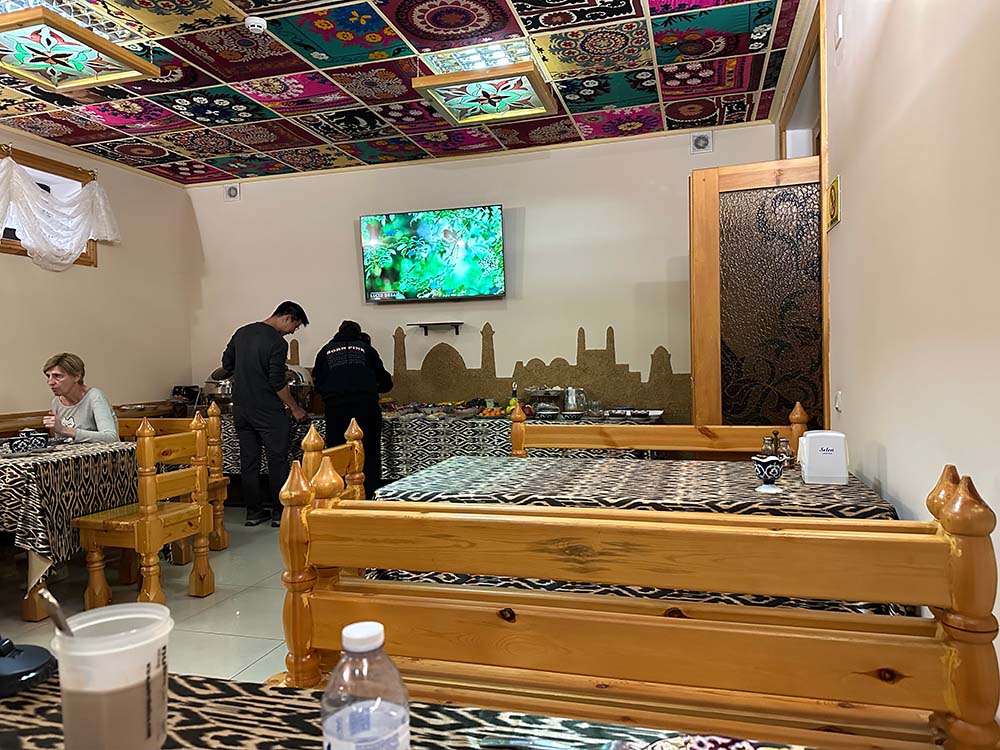
The hotel had a breakfast/dining hall with a decent selection of food as well as prepacked snacks that you could grab if you had a very early morning departure.
Hotel Billuri Sitora on their Instagram – they were on booking.com previously but don’t seem to be anymore, but they’ll give you a good rate if you deal with them directly!
More places to stay in Samarkand
These are some other options that I would consider staying at based on what I know now: [booking.com affiliate links]
- Nursultan Grand Guest House – great location in between Bibi Khanym and Registan Square so very convenient, looks cosy
- Diplomat Premium – close to Registan Square, nice looking rooms
- Old Palace Hotel – also close to Registan Square, cute decor
Have you been to Samarkand? Tell me what I missed in case I ever go back again someday.